Women's Discount Clothing
Paying less is a skill, not luck — timing, quality checks and cost-per-wear turn sales racks into a real wardrobe strategy.
Shop Women's Discount Clothing Now
Shop Women's Discount Clothing on Amazon Shop Women's Discount Clothing on eBayThe Amazon and eBay links on this page are affiliate links. If you make a purchase through them, Apparel Search may earn a commission.
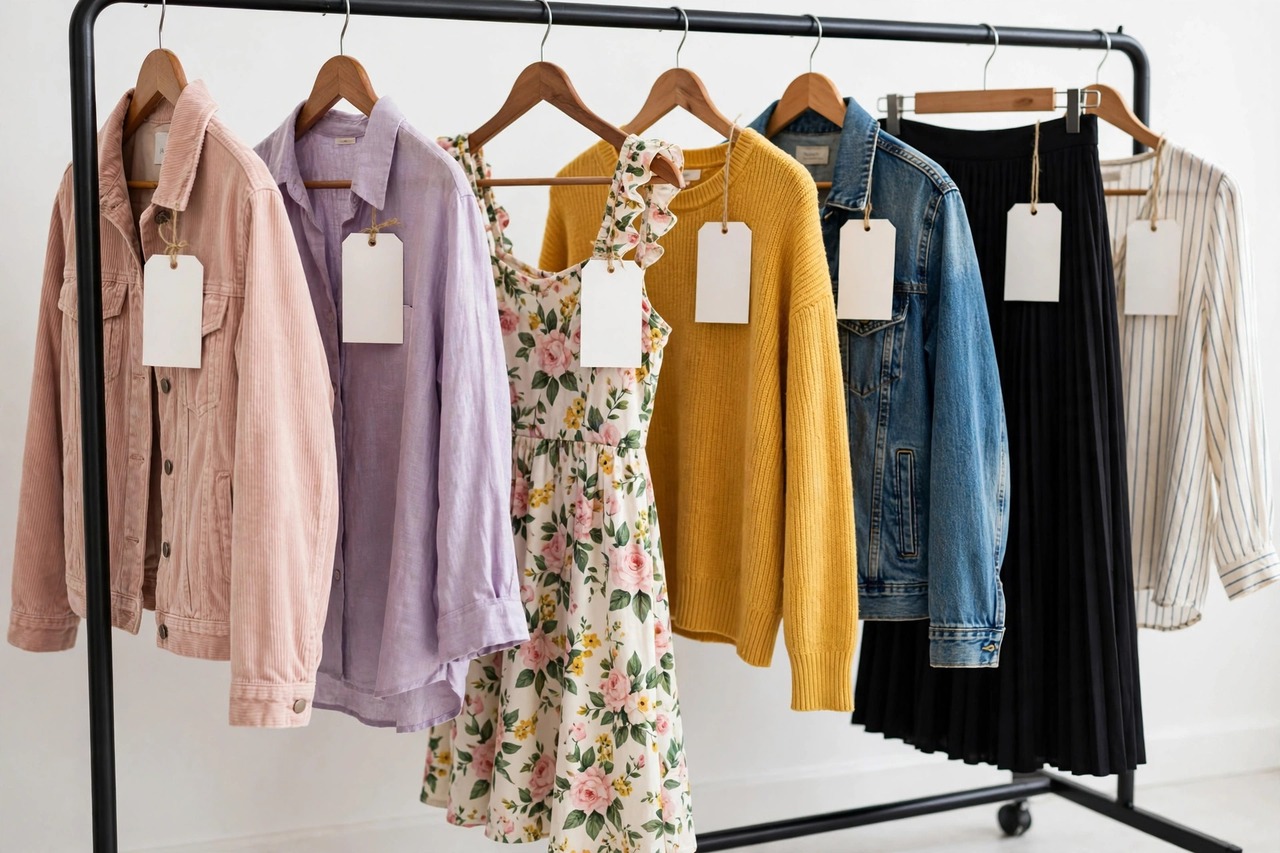
Discount clothing is not a separate category of clothing — it is the same dresses, coats and denim moving through a different channel at a lower price. The skill is knowing which channel you are in, because an end-of-season clearance rack, an off-price store and an outlet mall sell three different kinds of value, and only two of them are always bargains. Shoppers who understand the system buy better clothes for less; shoppers who chase every red tag end up with a closet of almost-right pieces.
This guide covers where discount clothing actually comes from, when to buy it, and how to check quality fast enough to shop a busy sale floor with confidence.
Off-Price Stores, Outlets and Clearance: Know the Difference
Off-price retailers buy overstock, cancelled orders and end-of-season merchandise from brands and department stores, then sell it at steady discounts. The labels are the real thing, the selection is unpredictable, and the best pieces move fast — regular, short visits beat occasional long ones. Clearance is simpler: a store clearing its own remaining stock, usually with the deepest cuts at the very end of a season when sizes are broken.
Outlets require the most caution. Alongside genuine past-season stock, many outlet stores sell made-for-outlet lines: garments produced specifically for the outlet at a lower quality, with a suggested price printed that the item never actually sold for anywhere. Check fabric weight, lining, hardware and stitching against what you know of the brand's main line. A made-for-outlet piece can still be worth its price — just judge it as an unbranded garment, not as a bargain on the real thing.
Timing: The End-of-Season Calendar
The deepest discounts follow the retail calendar, not your needs, so smart discount shopping means buying slightly out of season. Winter coats and boots hit their lowest prices in January and February. Swimwear and summer dresses clear out in August and September. Transitional pieces — light jackets, cardigans, ankle boots — are marked down as the next season's stock arrives, typically late spring and early fall. Holiday and sample sale seasons add spikes: warehouse and sample sales, where brands sell samples and excess stock for a few days, reward shoppers who arrive early, dress for quick try-ons over leggings, and check every seam before paying, since sales are usually final.
Build a short list before each season of the gaps in your wardrobe — the black trousers, the warm coat, the replacement white shirt — and shop the sales against that list. A list converts a sale from an impulse environment into a sourcing trip, and it is the single most effective discount habit there is.
Quality Checks at Low Prices
Low price is only a bargain if the garment lasts, so run a fast quality check before anything goes in the basket. Seams: tug gently at side seams and look for tight, even stitching with no skipped stitches or puckering. Fabric: hold it to the light for thin patches, check that patterns match at seams, and prefer natural fibers or dense weaves that will not pill in three washes. Zippers should run smoothly top to bottom; buttons should be sewn tight, with a spare included. Linings that are cut too small will twist the garment forever, and hems should be even and substantial enough to let out if needed.
Then do the math that matters: cost-per-wear. A coat at half price that you wear a hundred times costs less per outing than a trendy top at eighty percent off that you wear twice. Discount shopping rewards classic, versatile, well-made pieces far more than novelty, because the classics are what you will still be reaching for when the novelty is forgotten.
Returns, Policies and Avoiding Impulse Buys
Discount channels have stricter rules, so read them before you buy. Final-sale and clearance items are often non-returnable, off-price stores may offer short windows or store credit only, and sample sales are almost always sold as-is. Inspect garments under bright light near the register for stains, snags, mismatched dye lots and security-tag damage — once you pay, those flaws are yours. Keep receipts and tags until you have worn the piece once at home.
Finally, protect yourself from the discount itself. A low price triggers urgency that has nothing to do with need. Use the list, set a budget for the trip, and apply a simple test: would you want this at full price, in this fabric, in this fit? If the honest answer is no, the discount is not saving you money — it is spending it. Walked-away bargains are the mark of a good discount shopper, not a missed opportunity.
Related Women's Guides
How Discounts Really Work
Retailers have trained shoppers to rarely pay full price: garments often go on "sale" shortly after reaching the selling floor, and markdowns typically deepen over time — 10% off, then 20%, then 30% or more. Waiting can pay, but it carries a risk: the item may sell out in your size before the deepest discount arrives, so if you really want something, don't wait too long. A discount is a deduction from the usual cost of a garment, which makes the honest comparison a specific garment's price against its own previous price — a drop from $100 to $99 is technically a discount, and a $10 t-shirt is not automatically a better value than a $50 one: fabric, printing and stitching quality can be completely different. Compare apples to apples.
Shoppers should also know the anchor-pricing tactic: a retailer who wants $80 for a sweater may tag it at $100, then advertise 20% off — the customer believes they saved 20% while the store gets exactly its target price. The deepest genuine bargains often come from clothing sample sales — if you live or work near clothing factories, wholesalers or designers, companies periodically sell off extra samples and small amounts of inventory to clear showrooms, offices and warehouses. Our guides to value retailing, outlet clothing stores and clothing closeout companies explain the other end of the discount market.
Looking for Women's Clothing Stores?
This guide helps you choose women's discount clothing by style, fabric and fit. To browse where to buy, visit our women's clothing store directory, where you can find retailers that carry them.