Apparel Search — Apparel Business
Closeout Clothing & Surplus Apparel
Closeout directory: closeout clothing for the surplus clothing trade.
Search Apparel Search
Buyers, sellers and services for closeout clothing, gathered for the off-price and surplus clothing trade.
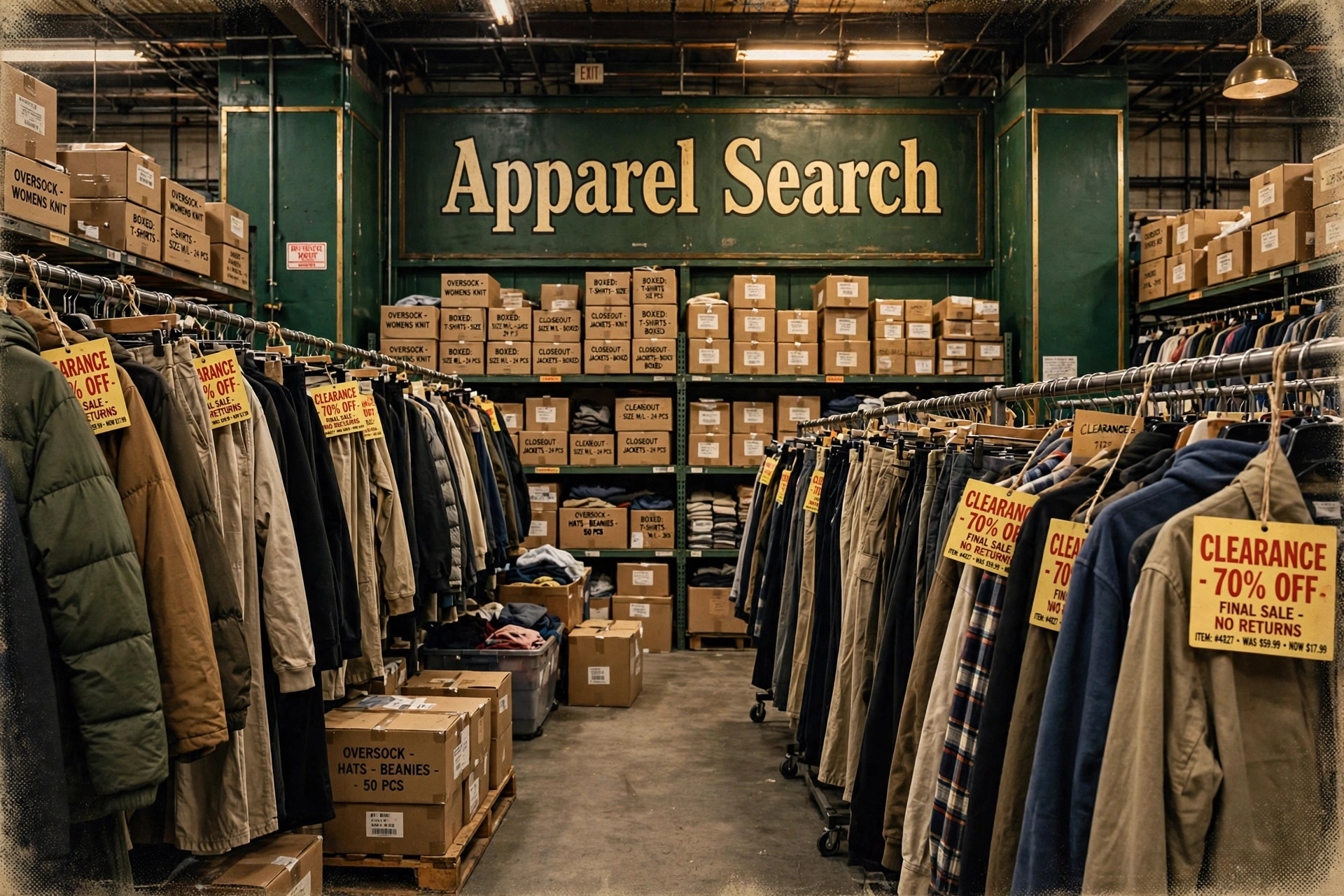
The Apparel Search Closeout Directory has been developed to assist members of the fashion and textile industry with the purchase or sale of excess inventory. This includes overstock clothes, footwear, accessories, and garment trimming such as hangers, zippers, buttons, etc.
In Brief
Closeouts are the clothing trade's second circulation system: overstocks, cancelled orders and surplus move from brands and importers to jobbers and off-price sellers, and on to bargain hunters.
All Closeouts & Surplus
- Apparel Auctions
- Closeout Buyers Directory
- Closeout Sellers Directory
- Closeout Sellers Directory — Page 2
- Closeout Clothing & Surplus Apparel
- Closeout Directories
- Clothing Jobbers & Job Lot Wholesalers
- Garment Refurbishing Services
- Reverse Logistics Services
- Salvage Clothing & Salvage Goods
- Closeout Trade Shows
- Off-Price Clothing Trade Shows
Section 02 / Background
More About Closeout Clothing
In the fashion, footwear, and textile industry, the closeout segment (often referred to as off-price, overstock, or surplus liquidation) refers to the secondary wholesale and retail market dedicated to clearing excess, discontinued, or end-of-season merchandise. Closeouts arise from a variety of everyday supply chain realities: inaccurate demand forecasting, canceled retail orders, packaging updates, minor manufacturing irregularities, or the natural turnover of seasonal collections. Rather than letting unsold garments, shoes, or rolls of deadstock fabric sit idle in warehouses accruing storage fees, manufacturers, brands, and primary retailers sell these goods in bulk—typically at steep discounts ranging from 50% to 80% below original wholesale prices—to specialized closeout jobbers, liquidators, and off-price retail chains.
This segment plays a critical stabilizing role across the entire apparel supply chain. For brands and mills, the closeout market serves as an essential financial safety valve, enabling them to rapidly convert stagnant inventory back into working capital and free up warehouse space for incoming seasonal lines. Simultaneously, it fuels a massive, highly profitable ecosystem of off-price retailers (such as TJX Companies, Ross, and Burlington), independent discount stores, and export brokers who bring recognizable brand-name fashion and footwear to price-sensitive consumers at a fraction of traditional retail prices. In the textile sector specifically, closeout fabric jobbers connect independent designers and smaller manufacturers with high-end deadstock yardage that would otherwise fall below minimum order quantities at primary mills.
Beyond its immediate financial utility, the closeout segment has grown increasingly vital from an operational and environmental standpoint. In an era of heightened regulatory scrutiny and consumer demand for sustainability, dumping or incinerating unsold textiles is both financially wasteful and reputationally damaging. Closeout specialists extend the lifecycle of finished goods and raw materials by matching surplus stock with secondary domestic and international markets where seasonal timing or past-season trends are less restrictive. However, brands must carefully manage this channel—often enforcing brand-protection restrictions like label defacing ("de-labeling") or geographic sales limits—to clear excess inventory without cannibalizing full-price sales or diluting brand equity.
Learn about closeout brand protection.
Before choosing a disposition route, compare your own proceeds and additional costs with the Surplus Disposition & Net Recovery Planner. It keeps remaining stock, timing and review requirements separate from the headline recovery figure.
This section is appropriate for the following conditions.
Factories with overages or cancellations Wholesalers with cancellations or store returns Retailers with customer returns or excess stock Buyers looking to purchase closeout inventory
References & Further Reading
Comparing liquidation with other returned-stock outcomes? Use the Returns Economics & Recovery Calculator to compare user-entered recovery proceeds, processing costs and inventory effects.
More to Explore
- Companies Selling Closeout
- Companies Buying Closeout
- Refurbishing Clothing
- Apparel Auctions
- Jobber Clothing & Textiles
- Salvage Clothing
- Closeout Consultants
- Closeout Educational Info.
- Liquidators of Clothing
- Off-Price Trade Shows
- Closeout Trade Shows
- Closeout Directories
- Closeout B2B Marketplace
- Dollar Days Discount Clothing
- Quality Testing
- Shipping Excess Clothing
- Inventory Control
Common Questions
Questions & Answers
Who buys surplus and salvage clothing?
Off-price retailers, exporters, flea-market and discount sellers, and charity channels all buy surplus stock, graded by condition. Salvage goods may need repair, cleaning or re-labeling before resale.
How can a company be added to this directory?
Clothing industry companies can be submitted through the Apparel Search Add Your Company page. Listings are intended for companies serving the clothing, textile and fashion industry.
More Apparel Business Resources
The business side of Apparel Search: advice, records, money, opinion and surplus from across the clothing trade.