
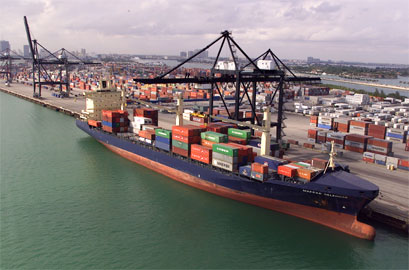
Freight & Shipping for the Apparel and Textile Industry
Your starting point for moving clothing, footwear, accessories and textiles worldwide. Compare freight modes, learn the basics, and find carriers, forwarders and customs help.
Free Freight & Planning Tools
Planning estimates only. Confirm final load plans and costs with your forwarder, carrier or customs broker.
Choose How Your Fashion Freight Will Travel
Every shipment starts with a trade-off between cost, speed and reliability. Pick a mode to find carriers and learn how it works for apparel.
Why Freight Matters to the Fashion & Textile Industry
Freight and transportation are central to the international fashion and textile industry. Apparel Search often reminds visitors that it is not only finished clothing, footwear and fashion accessories that cross borders. Every component moves too: fabric, buttons, zippers, sewing thread, hangtags, clothes hangers, polybags and cartons. Clothing factories source trims and packaging from many locations, produce the garments, and then ship to customers. Factories ship to wholesalers, distributors ship to retailers, and retailers often ship to consumers.
This Shipping / Traffic Department resource from Apparel Search is intended to help fashion brands, retailers, factories and textile companies manage international and domestic freight. Use it to find a freight forwarder, truckers, ocean carriers, air cargo companies and logistics providers, and to learn how the process works.
How Apparel Moves From Factory to Customer
- Source materialsFabric and trims are shipped to the cut-and-sew factory, often across borders.
- Produce & packGarments are packed flat in cartons or on hangers (GOH) with labels and polybags.
- ExportThe forwarder books space and the factory clears export customs.
- Main transitOcean, air, or a combination crosses to the destination country.
- Import clearanceA customs broker files entry and duties are paid.
- DeliverTrucks and rail take goods to a warehouse, distribution center or store.
Comparing Freight Modes for Apparel
| Mode | Best for | Speed | Cost | Apparel notes |
|---|---|---|---|---|
| Ocean | Full production orders, seasonal programs | Slowest (weeks) | Lowest per unit | FCL for volume, LCL for smaller orders; GOH containers for hanging garments. |
| Air | Late orders, samples, high-value or fast fashion | Fastest (days) | Highest | Charged on greater of actual or volumetric weight. |
| Trucking | First and last mile, domestic delivery | Days | Moderate | FTL, LTL and GOH trailers; drayage to and from ports. |
| Rail | Port-to-inland long hauls | Slower than truck, steady | Often lower than truck | Intermodal containers and mini land bridge routes. |
Helpful Transportation Resources
Learn About Freight & Shipping
Practical guides written for apparel and textile shippers.
- How Many Cartons Fit in a Container
- Calculating Volumetric Weight
- Container Sizes & Dimensions
- Shipping & Freight Definitions
Key definitions
Freight Industry Associations
Customs Clearance for Importers
If you are an importer and your product has arrived, it is important to have proper documents and filings. This is a good time to research customs clearance.
Shipping & Transportation Industry Directory
Selected carriers, publications, agencies and tools for fashion shippers. Apparel Search lists third parties for research; contact providers directly.
 APL
Ocean carrier running more than 120 weekly services and calling ports in over 70 countries, with intermodal container transportation.
- CargoLog
Transportation and logistics directory with news, careers, and listings for forwarders, customs brokers, airlines, consolidators, shipping lines and ship agents.
- Federal Maritime Commission
Independent U.S. agency that regulates ocean common carriers and others involved in U.S. foreign commerce under the Shipping Act.
- FreightGate
Internet-based supply chain software for global shippers, forwarders and carriers, operating since 1994.
- Freight World
Professional guide to worldwide freight transportation and logistics.
- International Maritime Organization (IMO)
United Nations body that sets international standards for shipping safety, efficiency and prevention of marine pollution.
- iShip
Multi-carrier tool to price, ship, track and manage parcel shipments across DHL, FedEx, UPS and the U.S. Postal Service.
- Journal of Maritime Law and Commerce (JMLC)
Scholarly publication covering admiralty and maritime law, including the law of the sea.
- Journal of Commerce (JOC)
Business information, news and data for people moving goods in the U.S. and internationally.
- Maritime Administration (MARAD)
U.S. Department of Transportation agency advising on commercial maritime matters, the U.S. maritime industry and strategic sealift.
- SchedNet
Shipping schedules and information for Asia Pacific, from the publisher of the HK Shipping Gazette.
- TradePort
Free resources for businesses conducting international trade to and from California.
- Transportation Research Board (TRB)
Division of the National Research Council promoting innovation and progress in transportation through research.
- U.S. Department of Transportation
The federal department overseeing U.S. transportation policy.
More Tools
- Not finding enough? Search the Clothing B2B website for additional freight companies serving the apparel industry.
- Track packages (UPS, FedEx, etc.)
- Interesting & helpful: Sea Travel Distances · Bureau of Transportation Statistics · U.S. Department of Transportation · National Transportation Library
Shipping Humor


Frequently Asked Questions
What is the best way to ship apparel from overseas factories?
Most apparel ships by ocean freight because it is the lowest cost per unit. Air freight is used when a delivery is late, for samples, or for high-value and fast-fashion programs where speed matters more than freight cost. Many brands use both: ocean for the base program and air for replenishment or recovery.
What does a freight forwarder do for a clothing company?
A forwarder books space with carriers, prepares export and import documents, consolidates small shipments (LCL), arranges trucking and often customs clearance. Apparel specialists also understand garments-on-hanger handling, routing guides and retailer delivery requirements.
Do I need a customs broker to import clothing?
Importers can file their own entries, but most use a licensed customs broker. Apparel classification (HTS chapters 61 and 62), country of origin, labeling and trade-program rules are detailed, and errors can lead to delays or penalties. See the Apparel Search customs pages and broker directory.
How do I calculate air freight cost for garments?
Carriers charge on the greater of actual weight or volumetric (dimensional) weight. Because boxed garments are bulky but light, volumetric weight often applies. Use the Apparel Search volumetric weight guide to calculate it.
How many cartons fit in a shipping container?
It depends on carton size and container type. A 40-foot container offers roughly 67 cubic meters of space, but loadable volume is lower. Use the Apparel Search guide for a worked example, or try the Carton & Container Load Calculator.
Is Apparel Search a freight company?
No. Apparel Search is an independent directory and information resource for the fashion and textile industry. We list freight companies and educational resources so buyers can research providers and contact them directly.
You may wan to learn about starting an importing business.