Ports by Country
(PortFocus)
Apparel Search — Shipping, Freight & Customs
What ports are, how cargo ports work, and port resources for apparel shippers.
A port is where the fashion supply chain changes modes — where containers leave the ship and become truck or rail freight. Apparel imports concentrate in a handful of great cargo ports, and port performance, congestion and labor news can move delivery dates as surely as factory output.
This page explains the kinds of ports, links port resources, and points to the U.S. ports of entry directory and port codes reference used in filings.
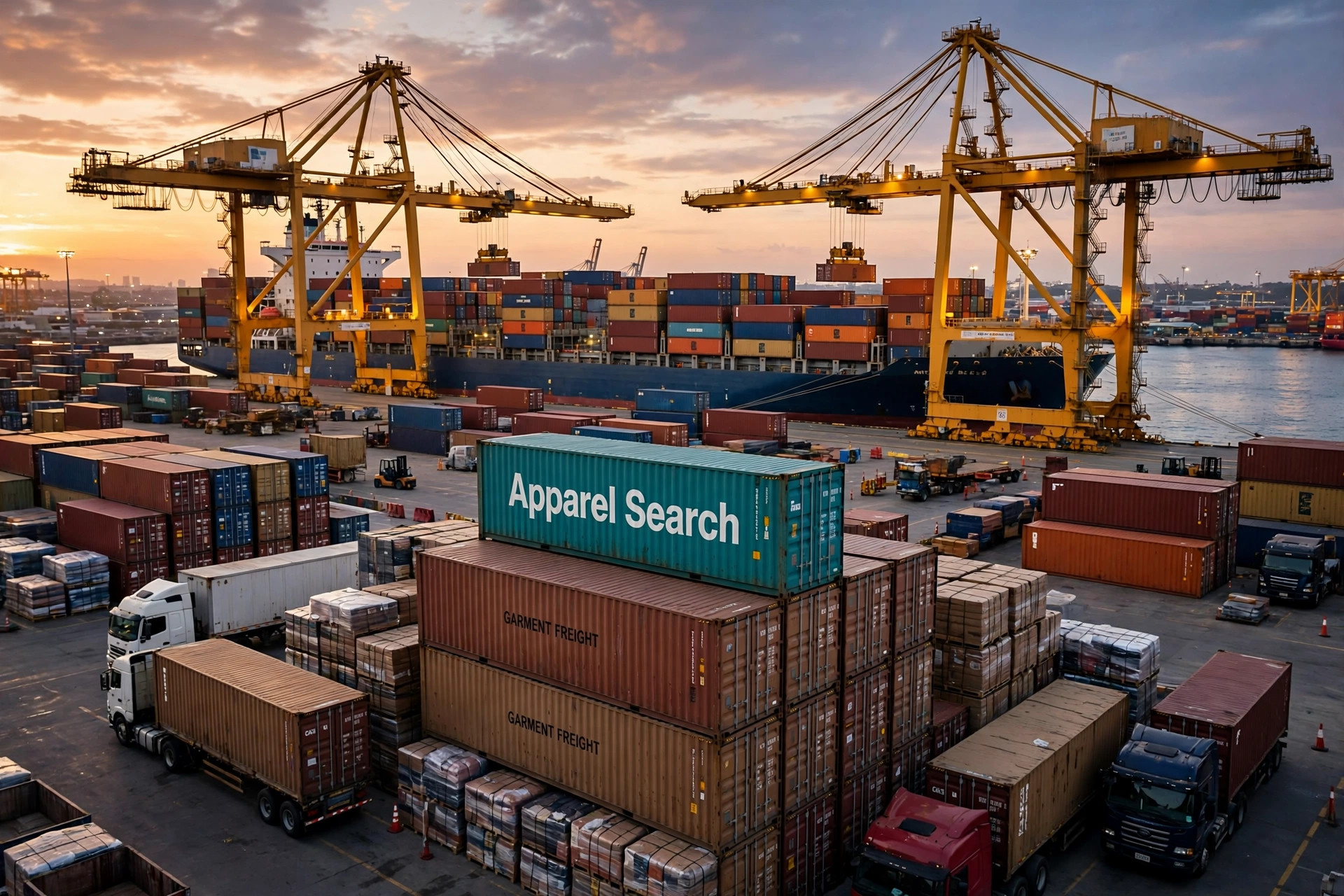
A port is a maritime facility which may comprise one or more wharves where ships may dock to load and discharge passengers and cargo. Although usually situated on a sea coast or estuary, some ports, such as Hamburg, Manchester and Duluth, are many miles inland, with access to the sea via river or canal.
Aseaportis further categorized as a "cruise port" or a "cargo port". Additionally, "cruise ports" are also known as a "home port" or a "port of call". The "cargo port" is also further categorized into a "bulk" or "break bulk port" or as a "container port". In regard to the Apparel & Textile industry, we are interested in "Cargo Ports". Most cargo ports handle all sorts of cargo, but some ports are very specific as to what cargo they handle. Additionally, the individual cargo ports are divided into different operating terminals which handle the different cargoes, and are operated by different companies, also known as terminal operators or stevedores. Aport of callis an intermediate stop for a ship on its sailing itinerary. At these ports, cargo ships may take on supplies or fuel, as well as unloading and loading cargo while cruise liners have passengers get on or off ship.
Do you know where to find information onTruckingApparel around the country?
What is the best way to findRail Freightcompanies for shipping clothing?
Is aConsolidatorreally different than a freight forwarder? Beats me...
I guess you would like to find FreightAssociationsand Organizations ...
Cargo ports are built for freight: container terminals with cranes, yards and rail and truck gates. Cruise ports serve passenger vessels. Many harbors host both, in separate terminals.
The Los Angeles / Long Beach complex is the largest U.S. gateway for Asian apparel imports, with New York / New Jersey, Savannah and other East and Gulf Coast ports handling growing shares via Panama and Suez routings.
The public (or sometimes private) body that owns or administers the port — setting tariffs, leasing terminals to operators and investing in channels, cranes and gates.
Related Apparel Search guides and directories for moving apparel freight.