Women's Cotton Bras Guide
The cotton-rich umbrella — soft cups, breathable jersey, and gentle fabrics for everyday wear and sensitive skin.
Shop Women's Cotton Bras Now
Shop Women's Cotton Bras on Amazon Shop Women's Cotton Bras on eBayThe Amazon and eBay links on this page are affiliate links. If you make a purchase through them, Apparel Search may earn a commission.
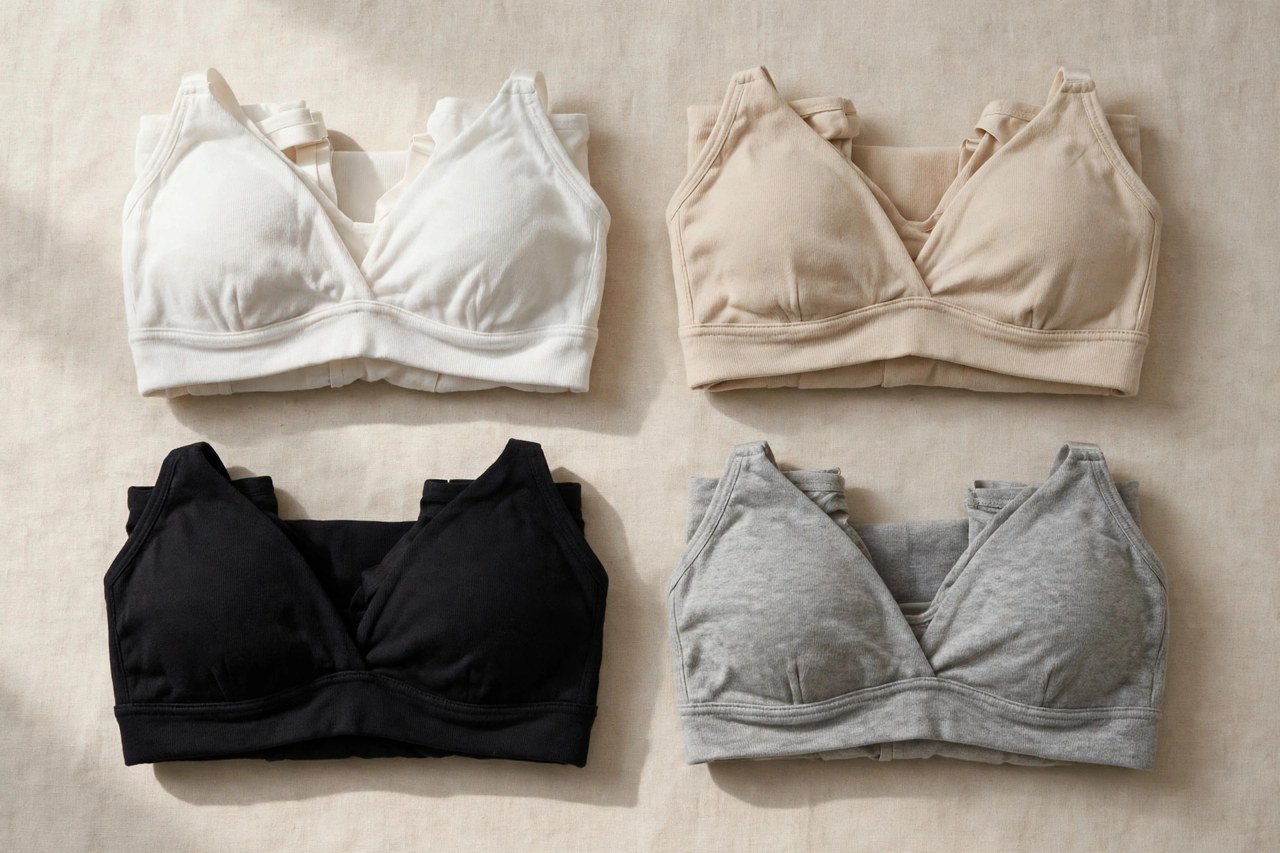
This page is the umbrella for women's cotton bras: the soft-cup, wire-free, and cotton-rich styles sold for everyday comfort rather than for shaping or sport. A cotton bra is rarely 100 percent cotton. Most use a cotton-rich jersey or interlock knit blended with a small percentage of spandex or elastane for stretch and recovery, plus nylon or polyester in straps, bands, and closures where strength matters. What defines the category is that cotton touches the skin across the cups and band, giving the bra its breathable, low-irritation character. Shoppers reach for cotton bras for casual days, for sleeping or lounging in light-support styles, after skin irritation from synthetic fabrics, and as a first step away from heavily padded or wired designs. This guide explains the blends, constructions, and care that separate a genuinely comfortable cotton bra from a flimsy one.
Why Cotton: Breathability and Sensitive Skin
Cotton is hydrophilic, meaning its fibers absorb moisture and let air move through the knit, so a cotton cup feels cooler and drier against the skin than a fully synthetic cup in warm weather or a heated room. For sensitive skin, the advantage is simpler: cotton jersey has a smooth, matte surface with fewer chemical finishes than many performance fabrics, and it is less likely to trap heat and sweat in the band area where redness commonly starts. That does not make cotton hypoallergenic for everyone, and elastics, latex in some bands, dyes, and metal hardware can still irritate, so check trims if you react easily. Look for styles that line the band and cups fully in cotton, use covered elastic, and skip scratchy lace at the skin line. Undyed or lightly dyed natural shades also reduce the finish load for the most reactive wearers.
Knit Types: Jersey, Interlock, and Rib
Most cotton bras are cut from single jersey, the same smooth knit used in T-shirts, sometimes with a brushed or combed cotton face for softness. Combed cotton has had short fibers removed, so the yarn is smoother, pills less, and feels cooler. Interlock is a double knit, thicker and more opaque than jersey, with the same face on both sides; it holds shape better in a cup and is common in better soft bras. Rib knits appear in bralette-style cotton bras, where the vertical ribs provide natural stretch that reduces the need for elastane. Slub jerseys, with slightly uneven yarns, show up in casual styles but can wear thin faster. Whatever the knit, check opacity and recovery: stretch the cup gently and release it. A good cotton-rich knit snaps back flat, while a tired or very low-cotton blend bags and stays rippled after a few wears.
Styles Under the Umbrella: Soft Cup, Bralette, and Light Support
Soft-cup bras use seamed or molded fabric cups without underwire, relying on band tension and cup shaping for light to medium support. Seamed cups, built from two or three cut panels, shape more precisely and suit a wider range of sizes. Bralettes are the simplest form: pullover or lightly hooked, often ribbed, best for smaller cup sizes, lounging, and layering. Cotton camisole-style bras add length below the band for a smoother torso line. None of these replaces a structured underwire or sports bra for high support needs. The specialized pages that follow cover demi cups, jog bras, posture backs, and seamless underwire designs in cotton-rich versions.
Fit Basics for Soft Cotton Bras
Fit starts with the band, which provides most of the support in any bra. On the loosest hook when new, it should sit level and snug, because cotton-rich bands relax noticeably with wear and washing; starting on the loosest setting lets you tighten over the bra's life. Cups should contain without spilling at the top or gaping at the sides, and in seamed styles the seams should lie smoothly rather than puckering, which signals a cup that is too large. Straps should stay up without digging; wide, cotton-covered straps distribute pressure better than thin elastic on sensitive shoulders. Because cotton knits give more than woven or firm synthetic fabrics, sizing can feel generous compared with a structured bra in the same labeled size. If you are between sizes, the smaller band with the larger cup usually serves cotton soft bras better than simply sizing everything up.
Care: Washing Cotton Bras So They Last
Cotton-rich bras age mainly through their elastic, not their cotton. Heat breaks down spandex, so wash in cool or warm water, use a mesh lingerie bag to protect hooks and straps, and air dry flat or hanging by the band rather than tumble drying. Fasten hooks before washing so they do not snag the knit. Cotton itself tolerates washing well and softens over time, though dark colors fade gradually and white cotton can grey if washed with darker loads. Expect modest shrinkage in the first wash if the garment was not pre-shrunk, mostly in band length, which is another reason to buy on the loosest hook. Rotate at least two or three bras so elastic rests a day between wears. With that simple routine, a well-made cotton bra keeps its shape and comfort through a long season of everyday use.
More to Explore on Apparel Search
Photos

Looking for Women's Clothing Stores?
This guide helps you choose women's cotton bras by style, blend and support level. To browse where to buy, visit our women's clothing store directory, where you can find retailers that carry them.