Women's Solid Rib Cotton Bikini Underwear Guide
The bikini cut knitted in rib — vertical knit columns that stretch across the hip, in plain solid colors with a smooth, trim-free finish.
Shop Women's Solid Rib Cotton Bikini Underwear Now
Shop Women's Solid Rib Cotton Bikini Underwear on Amazon Shop Women's Solid Rib Cotton Bikini Underwear on eBayThe Amazon and eBay links on this page are affiliate links. If you make a purchase through them, Apparel Search may earn a commission.
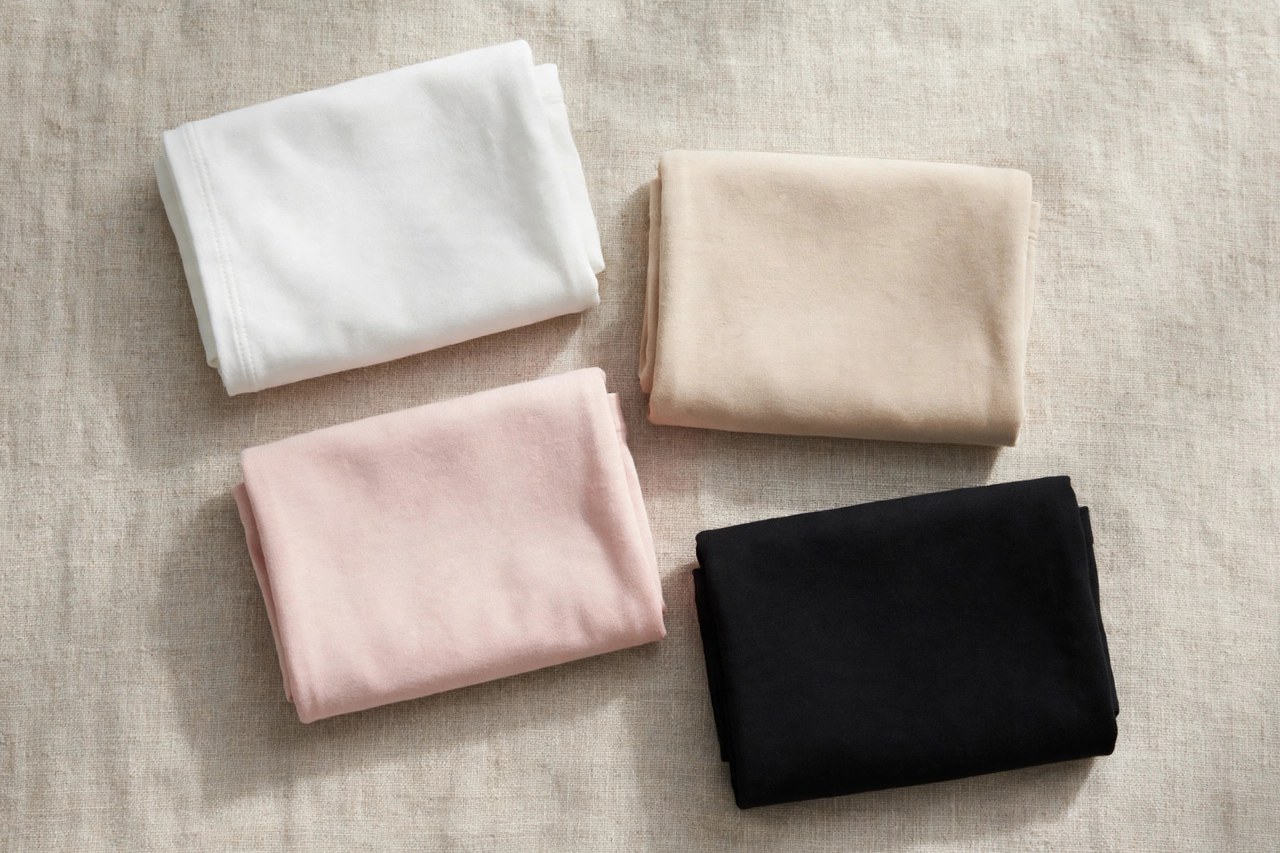
Solid rib bikini underwear takes the standard bikini brief pattern — a below-waist rise, a moderately high leg line, and moderate coverage — and knits it in ribbed cotton instead of smooth jersey. Rib knit is a fabric structure of alternating vertical columns of raised and recessed stitches, most commonly a 1x1 or 2x2 rib in underwear, and it changes how the garment behaves: a rib stretches substantially across its width and recovers well, so the fabric itself provides much of the fit that smooth jersey gets from added elastic. The solid part of the name is a color specification: these products are sold in plain, single colors without prints, stripes, or trim contrast. This guide explains what the rib structure does in wear, how the garment is finished, and how it compares with the smooth-jersey bikini it sits beside in most ranges.
Rib Knit Structure: Crosswise Stretch and Recovery
In a rib knit, the columns run vertically on the garment, and the geometry between them acts like a shallow accordion across the width. Pulled sideways, the columns separate and the fabric extends readily; released, they draw back together. This gives rib cotton a natural crosswise stretch and recovery that plain single jersey does not have, which is why rib underwear often uses less elastane, or occasionally none in the body, while still fitting closely through the hip. The same structure makes rib slightly thicker and more textured than jersey at equal yarn size, with a soft, matte surface and a faint vertical striping that is a texture rather than a printed pattern. Rib also resists edge curling, so hems and bands cut from it lie flat, a property garment makers use for self-fabric waistbands and leg bands on this style.
Why Solid Colors: The Product Logic
Rib bikini underwear is merchandised in solids for practical reasons. The rib texture is itself the design detail, and prints sit poorly on a columned surface, distorting as the fabric stretches; piece-dyed solid colors show the texture cleanly and remain consistent as the garment moves. Solid packs also serve the core function of a basic: they coordinate with anything, replace individually, and can be reordered season after season in the same shades. Typical assortments run through white, black, and skin-tone neutrals, then seasonal colors. One care consequence follows from piece dyeing: saturated solids can release dye in early washes, so new packs should be laundered with like colors first. For buyers building a uniform everyday drawer, the solid rib bikini is deliberately the simplest product in the range — one cut, one texture, a row of plain colors.
Waistband, Leg Finish, and Gusset in Rib Styles
Because rib lies flat and recovers well, many rib bikinis use self-fabric bands at waist and leg: a folded strip of the same rib, stitched to the body, giving an unusually smooth, uniform garment with no exposed elastic anywhere except where a maker adds it at the waist for extra hold. Other versions use a narrow covered elastic inside a rib channel. Either is sound; the check is that the band recovers flat after stretching and that the stitching joining band to body is even, since that seam flexes constantly. The gusset follows the category convention: a cotton lining panel at the base, in rib styles often smooth cotton jersey rather than rib, because a flat panel is preferred there. Side seams are overlocked, and in some premium versions the body is knitted in a tube with no side seams at all, which the rib structure accommodates well.
Rib Bikini Versus Smooth Jersey Bikini
Set against the standard smooth-jersey bikini, the rib version differs in four practical ways. Fit: rib conforms across a slightly wider size range within one nominal size, because its stretch is structural; wearers between sizes often find the rib cut more accommodating, though the same property means a well-worn rib pair can feel softer in hold than a firm jersey-and-elastane pair. Surface: rib has a fine texture that is marginally more visible under very thin, tight outer fabrics than smooth jersey, though under ordinary clothing the difference is negligible. Hand feel: rib reads as cushier and more substantial. Durability: rib's recovery is mechanical rather than dependent on elastane, so it degrades more gracefully with heat and washing, though the cotton itself thins at the same rate. Neither version is superior overall; they are two fabric answers to the same pattern, and many rotations include both.
Sizing, Care, and Reordering
Size rib bikinis by the brand hip chart, expecting a forgiving fit across the middle of each size band; if a wearer is at the very top of a band and prefers a firm hold, the next size in a jersey style or the same size with an elastic waistband variant will feel more secure. Care is standard cotton practice: machine wash warm or cool with like colors, inside out for dark solids, and dry on low heat or line dry. Rib knit holds its structure well in the wash and does not need special handling, but avoid hanging wet pairs by the waistband, which can stretch the columns while the cotton is heavy with water; fold over a rail or dry flat. Because the product is a continuing basic in most ranges, reordering the same size and colors is usually possible, making it a low-maintenance staple to standardize on once fit is confirmed.
More to Explore on Apparel Search
Looking for Women's Clothing Stores?
This guide helps you choose women's solid rib cotton bikini underwear by color, size and band finish. To browse where to buy, visit our women's clothing store directory, where you can find retailers that carry them.