Women's Cotton Bikini Briefs Guide
The mid-coverage everyday cut — a moderate rise, a higher leg line, and soft cotton jersey that works under most wardrobes.
Shop Women's Cotton Bikini Briefs Now
Shop Women's Cotton Bikini Briefs on Amazon Shop Women's Cotton Bikini Briefs on eBayThe Amazon and eBay links on this page are affiliate links. If you make a purchase through them, Apparel Search may earn a commission.
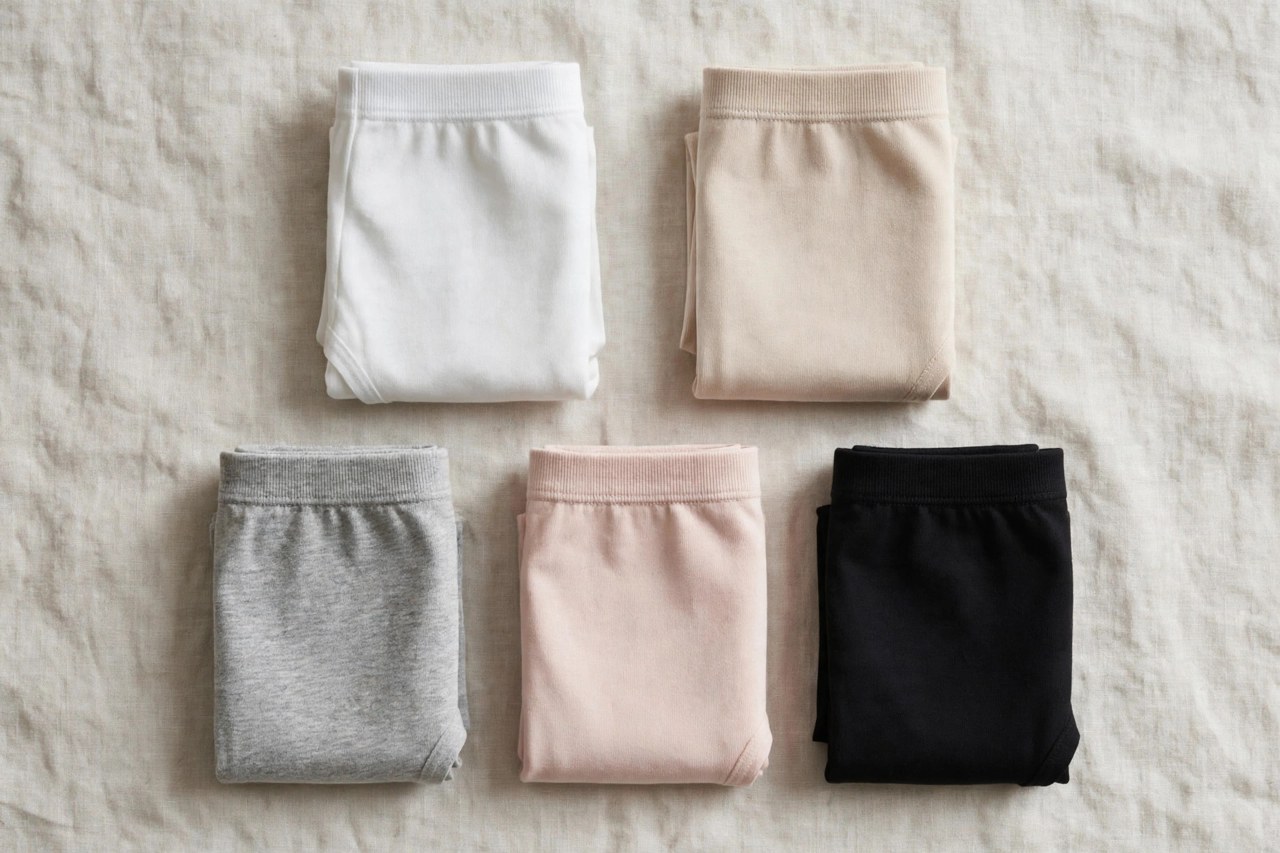
A cotton bikini brief is a standard underwear cut defined by two measurements: a waistband that sits below the natural waist, typically on the upper hip, and a leg opening cut higher than a full brief but lower than a high-cut or French-cut style. Front and back coverage is moderate — narrower than a classic brief, fuller than a thong or string style — which is why the bikini brief has become the default everyday cut in most multipacks. In cotton, the garment is usually cut from single jersey, a smooth knit that is breathable, absorbent, and easy to launder. This guide defines the cut precisely, explains the fabrics and gusset constructions used, and covers sizing, pack buying, and care in practical product terms.
Rise and Leg Line: How the Cut Is Defined
Rise describes where the waistband sits. Bikini briefs are a low-to-mid rise style: the band rests roughly two to three inches below the navel on most size charts, low enough to sit under the waistbands of regular jeans and trousers without folding over, yet high enough to stay in place during ordinary movement. The leg line is scalloped upward at the front, which lengthens the visual line of the garment and reduces fabric bulk under fitted clothing. Back coverage typically covers most of the seat with a curved seam or a simple folded edge. Compare the cut with its neighbors before buying: a hipster sits similarly low but has wider side panels and a straighter leg, while a full brief rises to the natural waist with a lower leg opening. Choosing between them is a matter of waistband height and side width, not quality.
Cotton Jersey, Blends, and Fabric Weight
Most cotton bikini briefs use combed cotton single jersey, often between 140 and 180 GSM, which balances softness with enough body to hold shape through a day of wear. Pure 100 percent cotton versions exist and suit buyers who want no synthetic content in the main panel, but they rely on covered elastic at the waist and leg for fit, and they can relax slightly as the day goes on. The more common construction adds a small elastane content, typically three to seven percent, blended through the jersey. That elastane provides stretch recovery, so the leg openings and waistband return to shape after washing and the garment does not sag. Ribbed jersey and cotton-modal blends appear in premium packs, offering a smoother hand feel. Whatever the blend, the product label should state the fiber percentages clearly; a high cotton share is what delivers the breathability and moisture absorption cotton buyers are choosing the fabric for.
Gusset Construction and Seams
The gusset is the lined panel at the base of the garment, and it is a useful quality marker. In cotton bikini briefs the gusset is almost always 100 percent cotton even when the main body includes elastane or modal, because cotton is absorbent and comfortable for the panel that sits closest to the skin. Construction varies: a floating gusset is sewn at front and back only, a fully sewn gusset is stitched on all sides, and some styles add a double-layer gusset for durability. None is inherently superior; a neatly finished gusset with flat, non-chafing seams matters more than the pattern. Leg and waist finishes also differ — folded fabric bands give the smoothest edge under clothing, covered elastic gives the firmest hold, and lace or picot trim, where present, should be soft-backed so it does not irritate. Flatlock or overlocked seams throughout reduce bulk and are the standard to look for.
Sizing, Fit Checks, and Multipack Buying
Size bikini briefs by hip measurement first, using the brand size chart rather than a dress size, because cut dimensions vary between makers. A correct fit sits flat at the waistband without digging, the leg elastic rests in the natural crease without riding, and the back panel stays centered during walking and sitting. If the waistband rolls, the rise is likely too low for the trousers worn over it; if the leg edges creep, try the next size up before blaming the cut. Bikini briefs are sold predominantly in multipacks of three to ten pairs, in solid assortments, mixed colors, or prints. Multipacks lower the per-pair cost substantially and simplify rotation, but buy one pack first to confirm size and fabric, since cut and GSM differ enough between brands that a favorite size in one line is not a guarantee in another.
Care and Replacement
Cotton jersey underwear tolerates regular machine washing better than most garment categories, which is part of its practical appeal. Wash in warm or cool water with like colors, and expect dark and saturated shades to release a little dye in the first washes. Tumble drying on low is generally acceptable for cotton-rich styles, though line drying preserves elastic life: heat is the main cause of waistband and leg elastic degrading and eventually waving or snapping. Cotton itself softens with repeated washing and will thin gradually at stress points, so inspect pairs during folding. As a working rule, a pair worn in a weekly rotation lasts one to two years before the fabric loses recovery or the elastic relaxes. Replace pairs that no longer stay in position, since a garment that shifts during wear has simply reached the end of its service life.
More to Explore on Apparel Search
Photos

Looking for Women's Clothing Stores?
This guide helps you choose women's cotton bikini briefs by rise, fabric blend and pack size. To browse where to buy, visit our women's clothing store directory, where you can find retailers that carry them.