Women's Bikini Brief Guide
Lower rise, higher leg, everyday ease — the bikini brief is the brief lighter sibling, made for low-rise clothes and warm days.
Shop Women's Bikini Briefs Now
Shop Women's Bikini Briefs on Amazon Shop Women's Bikini Briefs on eBayThe Amazon and eBay links on this page are affiliate links. If you make a purchase through them, Apparel Search may earn a commission.
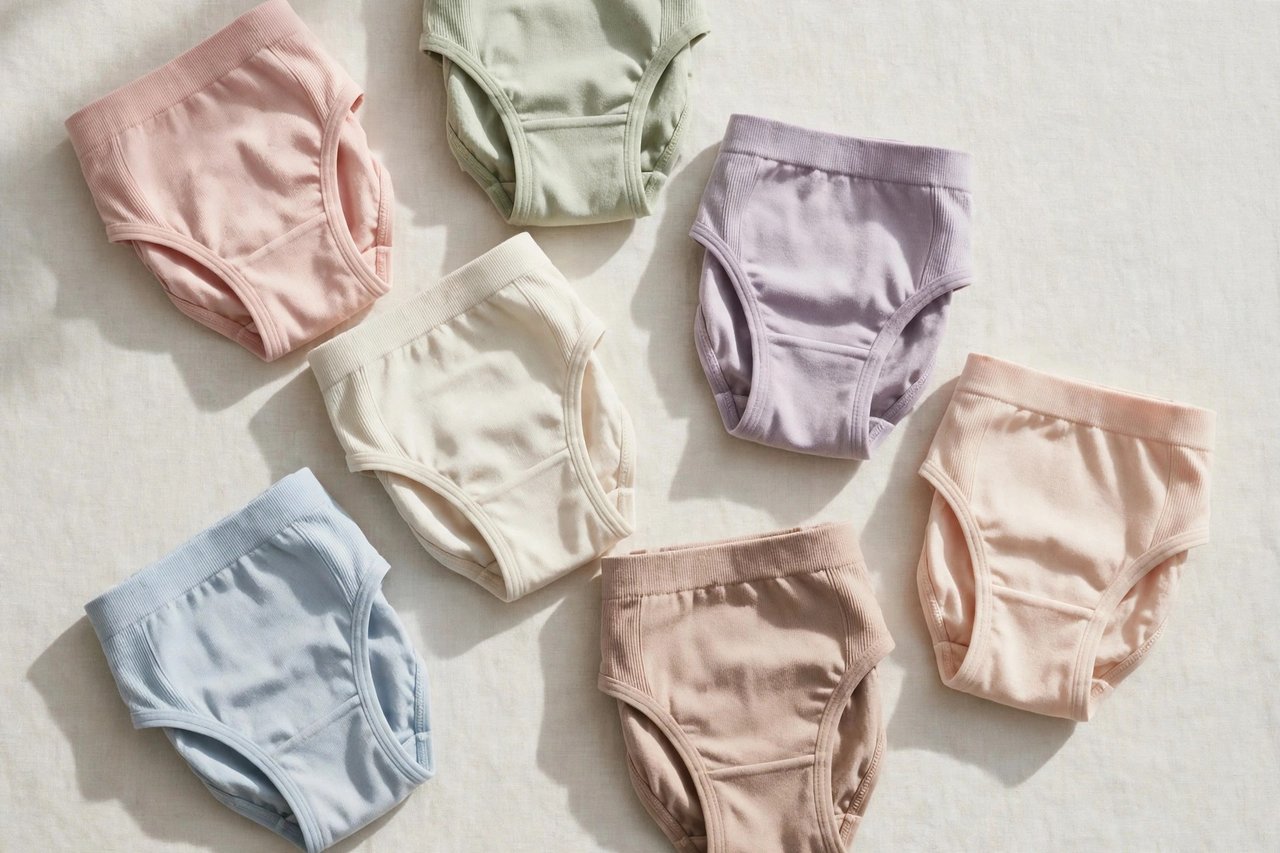
The bikini brief takes the reliable brief pattern and streamlines it: a lower rise that sits on the hip bones rather than the waist, narrower side panels, and a somewhat higher-cut leg opening. It keeps the practical virtues of a brief — real back coverage, a proper gusset, a garment that stays where it is put — while shedding the fabric that makes a classic brief visible or uncomfortable under low-rise and lightweight clothing. For many wearers it is not a special-occasion style but the daily default.
The style descends from the swimwear silhouette it is named for, adapted for everyday underwear in the decades when waistlines dropped and stayed down. This guide explains exactly how the bikini brief differs from the briefs and bikini panties around it, which fabrics and leg finishes work best, the fit checks that prevent the two classic bikini brief failures — waistband roll-down and coverage drift — and when this cut is genuinely the right choice under your clothes rather than merely the fashionable one.
How the Bikini Brief Cut Differs
Three changes define the cut. The rise drops to sit roughly two to three inches below the natural waist, resting on the hips, so the waistband hides under low and mid-rise jeans, trousers, and skirts instead of peeking above them. The sides narrow, sometimes to a slim panel of an inch or two, which reduces fabric bunching under fitted clothing. And the leg opening rises a little along the crease, giving the leg a longer line and more freedom of movement than the classic brief lower finish.
Crucially, back coverage stays substantial — that is what separates a bikini brief from the skimpier members of the bikini family covered in our bikini underwear guide. The result is a balanced middle garment: less coverage than a brief, more than a tanga or string style, with a silhouette that reads modern without sacrificing the stay-put practicality that makes briefs the benchmark. Some brands cut a moderate version with slightly wider sides for wearers who want the low rise with maximum security, and that variant is often the best first pair to try.
Fabrics and Leg Finishes
Because the bikini brief sits lower and shows less fabric, smoothness matters: microfiber and seamless knits dominate the category for invisible wear under clothing, while cotton and cotton-modal versions remain the breathable everyday choice. Stretch lace side panels and waistbands add a decorative finish that still lies flat, and mesh inserts appear in sportier versions. Whatever the body fabric, a cotton-lined gusset is the detail to insist on for daily wear, and finer brands keep it even in their sleekest seamless styles.
The leg finish decides comfort more than any other detail. Thin encased elastic gives a secure, traditional feel but can leave a line under very fitted fabrics; bonded, laser-cut edges in seamless styles disappear entirely but rely on fabric recovery to stay placed; soft lace edges split the difference, lying flat while gripping gently. Waistbands follow the same logic — a narrow, soft elastic or a wide comfort band on athletic versions. Match the finish to the tightest clothing you plan to wear over it, and the bikini brief will reward you by vanishing completely.
Fit Checks That Prevent Problems
Fit a bikini brief by hip size at its fullest point, since the garment anchors there rather than at the waist. The waistband should sit level on the hips without rolling when you sit or bend — roll-down almost always means the size is too small or the rise is wrong for your torso, not a defective band. Leg openings should follow the crease without cutting in, and the back should stay fully covering the seat through a sit, a squat, and a flight of stairs in the fitting room test at home.
Because there is less fabric to hold the garment, elastic quality is non-negotiable: a bikini brief with tired leg elastic becomes unreliable within hours. When trying a new brand, wear one pair for a full day before buying more, and wash it once to check that the low waistband does not twist in the laundry. Wearers between sizes usually do better sizing up in this cut, since the low band has less tolerance for tightness than a waist-high brief. A correct bikini brief feels like very little — and stays exactly like that all day.
When to Choose It: Low-Rise and Low-Profile Clothing
The bikini brief earns its drawer space under specific clothes. Low-rise and mid-rise jeans and trousers are the headline case: the band sits safely below the clothing waistline with no show-through and no adjustment stops. It is equally valuable under low-profile outfits generally — slim skirts, fitted shorts, lightweight summer dresses, and workout leggings — anywhere a high waistband would print, peek, or add a visible horizontal line across the stomach. In warm weather, the reduced fabric simply feels cooler than a full brief.
It is not the universal answer. Under high-rise clothing, a high-rise brief often feels better matched; for maximum smoothness under a body-conscious dress, a seamless high-cut style or a brief in bonded microfiber may beat it; and anyone who simply prefers waist-level coverage will find the low band a distraction. Think of the underwear drawer as matched to the wardrobe: the more low-rise and fitted pieces you own, the more bikini briefs you need, in nude-to-you tones for light fabrics and darker shades under denim.
Buying, Multipacks, and Care
Bikini briefs are sold singly by lingerie brands and in excellent-value multipacks by everyday labels, and the multipack route suits a daily-wear style. Test one pack first for rise and roll behavior, then standardize on the cut that passes, since standardizing makes laundry and reordering effortless. A rotation of eight to ten pairs covers a weekly laundry cycle, and mixing two finishes — cotton for ordinary days, seamless microfiber for fitted outfits — covers nearly every outfit a wardrobe produces.
Care follows the fabric: cotton pairs wash warm and wear hard; microfiber and seamless pairs last longer washed cool in a mesh bag and air dried, since heat is the enemy of the fine elastic this low-cut style depends on. Skip fabric softener on synthetic pairs to preserve stretch recovery, fold pairs flat, and retire any whose leg edges have gone wavy or whose waistband twists after washing. Looked after this way, a set of bikini briefs delivers the style's whole point for years: low, light, invisible under clothes, and entirely forgettable on the body.
Related Women's Guides
More to Explore
Photos

Looking for Women's Clothing Stores?
This guide helps you choose women's bikini briefs by style and fabric. To browse where to buy, visit our women's clothing store directory, where you can find retailers that carry them.