Women's Bikinis Guide
Two pieces, endless combinations — a guide to bikini tops, bottoms, and the art of mixing sizes and prints.
Shop Women's Bikinis Now
Shop Women's Bikinis on Amazon Shop Women's Bikinis on eBayThe Amazon and eBay links on this page are affiliate links. If you make a purchase through them, Apparel Search may earn a commission.
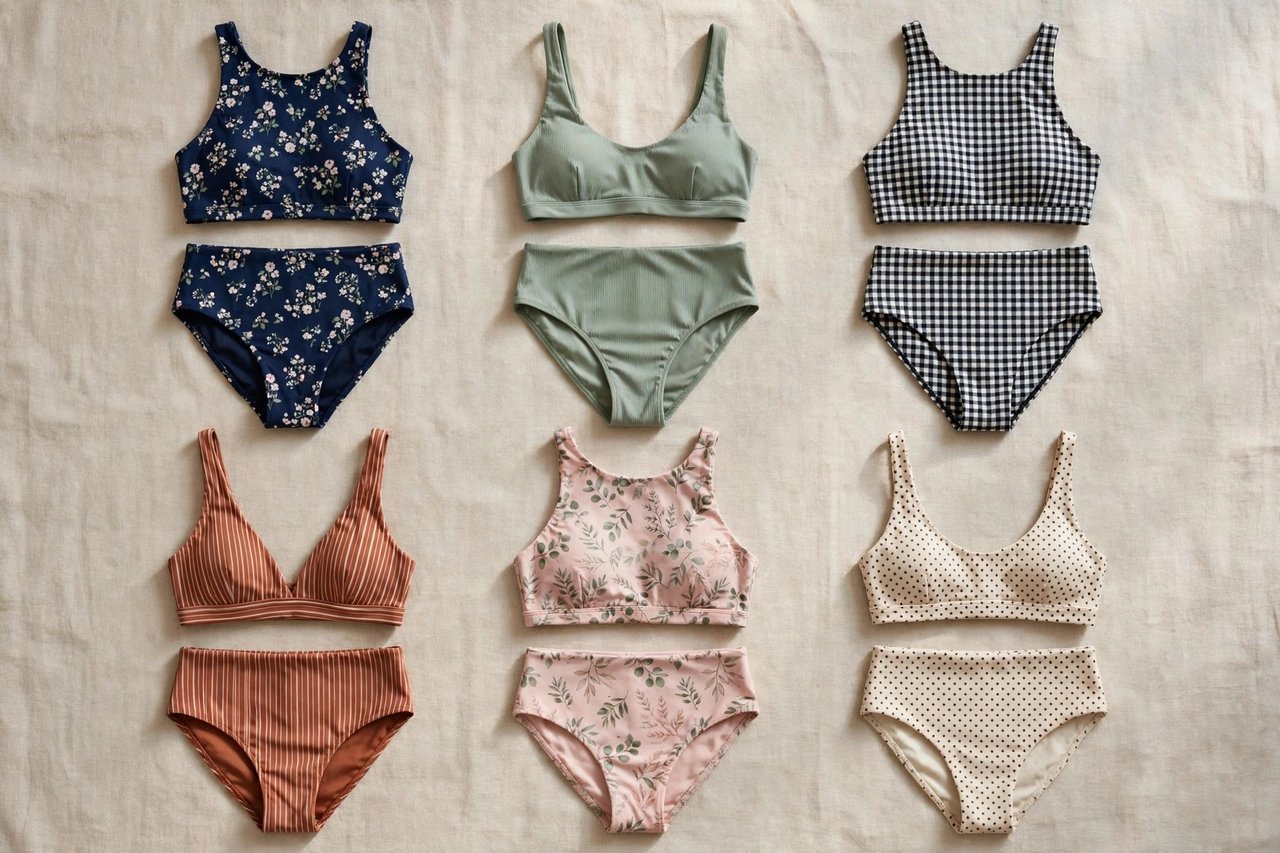
The bikini is the most flexible idea in swimwear: two separate pieces, each chosen on its own merits, combined into a suit that fits two different halves of the body exactly as they need. That separateness is the whole point. A woman who needs a supportive, bra-sized top and a small bottom — or the reverse — is no longer forced into a single compromise size, and a wardrobe of three tops and three bottoms quietly becomes nine different suits. This guide walks through the bikini as a style: where it came from, the top and bottom shapes worth knowing, how mix-and-match sizing actually works, and how to buy pieces that cooperate with each other across a whole summer instead of clashing after one trip to the beach.
A Short History of a Small Suit
Two-piece swim costumes existed in ancient art and in the early twentieth century, but the modern bikini debuted in Paris in the summer of 1946, when designer Louis Réard named his daring design after Bikini Atoll, betting it would be as explosive in the headlines as the news from the Pacific. It was — the suit was banned on many beaches, worn mainly by performers and models at first, and only gradually accepted through the 1950s and 1960s as film stars, surf culture, and changing norms carried it into the mainstream. By the 1970s it was the default beach silhouette in much of the world, and designers have been reinventing its straps, cuts, and coverage ever since. Today's high-waist bottoms and longline tops would surprise Réard, but the principle is unchanged: maximum adjustability from minimum fabric.
Bikini Tops: Shapes and Support Levels
Top styles trade support against simplicity. The triangle top — sliding cups on strings — is the icon: adjustable, packable, and best for smaller busts and sunbathing rather than sport. Halter tops lift and center with wide neck ties and suit fuller busts, though neck ties can ache on long days. Bandeau tops go strapless for clean tan lines, with gripper edges and optional straps. Underwire and molded-cup tops, often sold in bra sizes, deliver real support and shaping for larger busts. Sport and longline tops extend below the bust with wide bands and racer backs for surfing and volleyball. Adjustable straps, removable padding, and secure clasps matter more than decoration: test any top by reaching overhead and bending forward, the two moves that expose a weak fit instantly.
Bikini Bottoms: Coverage From Minimal to High-Waist
Bottoms set the suit's coverage and character. Classic tie-side bottoms adjust at the hip and pack flat. Brief bottoms offer moderate, athletic coverage with a clean, fixed waistband. High-waist bottoms rise to the natural waist, smoothing the midsection, channeling vintage glamour, and pairing especially well with longline and underwire tops. Cheeky and Brazilian cuts narrow the back for minimal coverage and fewer tan lines, while hipster and boyshort bottoms extend coverage downward for sport and modesty. Rise matters as much as back coverage: low-rise bottoms sit on the hip bone, mid-rise splits the difference, and high-rise lengthens the leg line visually when the leg opening is cut slightly high. Buy bottoms for the activity honestly — a string tie that is charming on a towel can untie itself in real surf.
Mix-and-Match Sizing, Done Strategically
The bikini's superpower is independent sizing, so use it deliberately. Start with your anchor pieces: one or two bottoms in versatile solids — black, navy, or a deep jewel tone — that fit perfectly, then add printed and bright tops that all coordinate with them. Or reverse the strategy with a printed bottom and solid tops. Bra-sized tops should be fitted like bras, with the band doing the support work; letter-sized tops should be snug, since swim knit relaxes when wet. When a set is sold together in one size, check whether the brand offers separates before settling. Building a small capsule — say, two bottoms and three tops in a shared color story — keeps packing light, multiplies outfit options, and means one worn-out piece never retires the whole suit. Replace the piece, keep the system.
Fabrics, Fit Checks, and Buying Well
Bikini fabrics mirror swimwear generally: nylon-elastane for a silky feel and vivid color, polyester-elastane for chlorine resistance and longevity, with ribbed, crinkle, and recycled-knit options throughout. Whichever you choose, check for full lining in light colors — white and pale suits can turn translucent when wet if they are lined only in front or not at all. Fit checks before you cut the tags: straps should stay on your shoulders through a swim stroke motion, the band should not ride up your back, cups should contain without spilling when you bend, and bottoms should survive a squat and a brisk walk without adjustment. Sanitary liners stay on while trying at home, and most retailers exclude returns once they are removed, so take the fitting-room tests seriously before committing.
Care and Keeping Colors Bright
Bikinis live a hard life of chlorine, salt, sunscreen, and ultraviolet light, so gentle habits pay off quickly. Rinse both pieces in cool water as soon as you take them off, hand wash with mild detergent, and never wring the fabric — press water out, roll in a towel, and dry flat in the shade. Keep sunscreen and tanning oils off the fabric where possible, since they can stain light colors and degrade elastane; apply, let it absorb, then suit up. Rotate pieces across the week if you swim daily, because elastane needs rest days to recover its snap. Store bikinis flat and untangled, with ties loosened, rather than knotted in a ball at the bottom of a drawer. When the fabric starts to feel thin, baggy, or rough, the elastane has given out — retire that piece and let its mix-and-match partners carry on with a new teammate.
Related Women's Guides
Looking for Women's Clothing Stores?
This guide helps you choose women's bikinis by top style, bottom cut, and size. To browse where to buy, visit our women's clothing store directory, where you can find retailers that carry them.