Women's Bikini Underwear Guide
One name, a whole family — from the classic bikini panty to string and tanga cuts, here is how to tell them apart and choose well.
Shop Women's Bikini Underwear Now
Shop Women's Bikini Underwear on Amazon Shop Women's Bikini Underwear on eBayThe Amazon and eBay links on this page are affiliate links. If you make a purchase through them, Apparel Search may earn a commission.
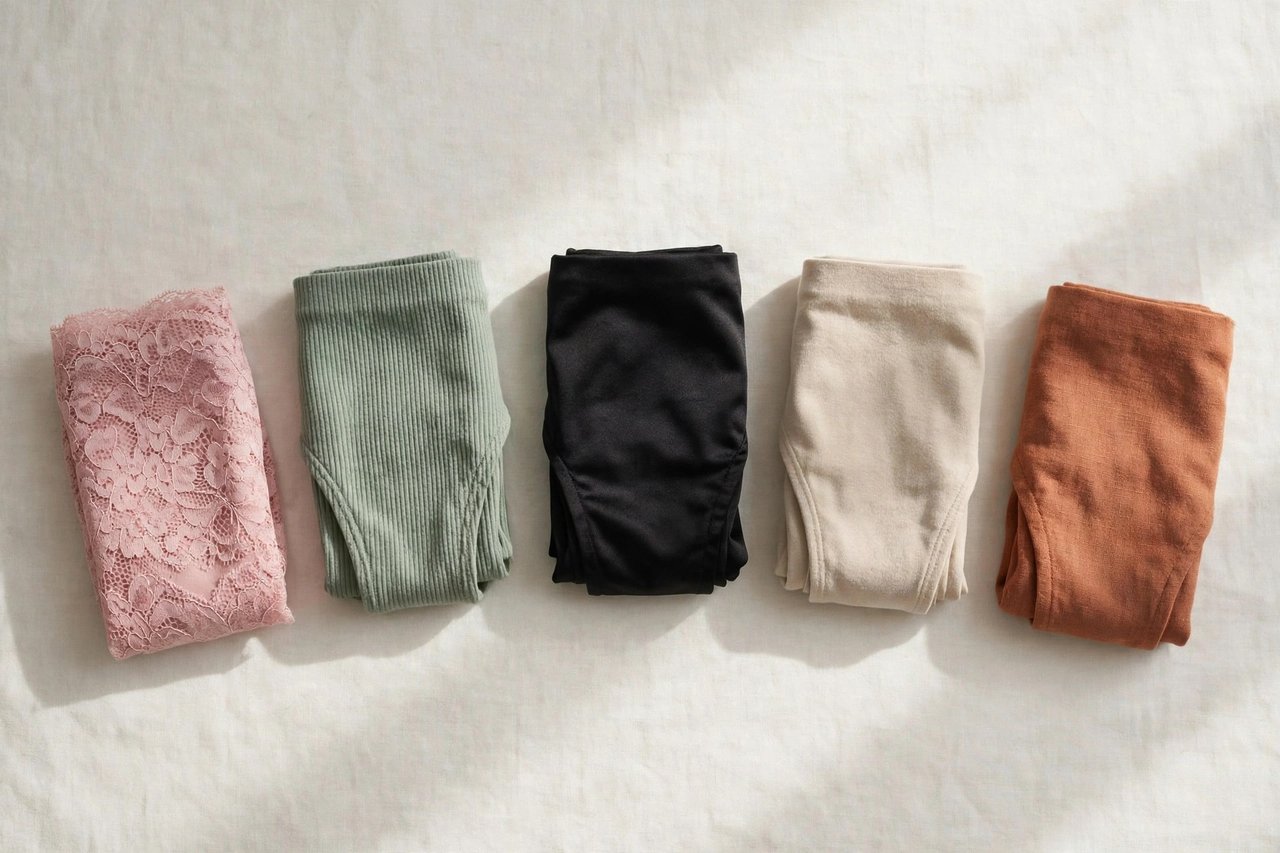
Bikini underwear is best understood as a family rather than a single garment: a group of low-rise panty styles that share the swimwear-inspired silhouette — a waistband on the hips, a higher-cut leg, and less fabric than a classic brief — while differing widely in side width and back coverage. At one end sits the classic bikini panty with moderate coverage that many women wear daily; at the other, string and tanga variants reduce the garment to its essentials for wear under the most demanding outfits.
Understanding the family saves money and frustration, because labels are inconsistent and a style that is perfect under one outfit can be wrong under another. This guide maps the main variants and what each is for, compares the fabrics the family is made in, gives the fit checks that apply across all of them, and explains how to build a small, deliberate rotation matched to your actual wardrobe rather than to a multipack guess. All of it stays practical: coverage, construction, and comfort are what decide whether a pair gets worn weekly or never.
The Classic Bikini Panty
The classic bikini panty is the family anchor: low rise on the hips, side panels of roughly one to two inches, moderate-to-full back coverage, and a leg opening cut a little higher than a brief. It wears like a lighter brief and suits the widest range of bodies and outfits, which is why it anchors most multipacks and why so many wearers who say they wear bikinis mean exactly this style. In seamless microfiber it disappears under fitted clothing; in cotton it is a breathable everyday staple.
Small design choices tune the classic cut. A wider side panel and slightly lower leg make a modern or hipster-leaning bikini that stays exceptionally secure; a narrower side and higher leg make a high-cut bikini that lengthens the leg line and suits vintage and high-leg fashion silhouettes. Waistbands range from thin elastic to lace-trimmed and wide logo-free comfort bands. If you are buying your first pairs in this family, start with the classic cut in two fabric types, wear them under your real clothes for full days, and let that evidence guide any move toward the lighter variants.
String and Tanga Variants
The string bikini replaces the side panels with narrow cords or slim elastic strings, keeping a proper front panel and moderate back coverage while minimizing side fabric to nearly nothing. It excels under garments where any side panel would show or bunch — slim skirts, fitted dresses, smooth trousers — and its minimalism makes it a warm-weather favorite. The trade-off is adjustability: string sides must be sized correctly, since a small fit error has nowhere to hide and the cords will announce it.
The tanga reduces the back instead: a triangular back panel with substantially less seat coverage than the classic bikini, paired with moderate sides. It answers the visible-line problem under fitted bottoms while retaining more front and side substance than a thong, a compromise many wearers prefer. Related high-leg and Brazilian-cut variants rearrange the same fabric budget in slightly different proportions. None of these is better in the abstract; each moves coverage from one place to another, and the right variant is the one that removes fabric exactly where your clothing needs it gone.
Fabrics Across the Family
Cotton and cotton-modal blends are the everyday fabrics: breathable, soft, washable, and forgiving, ideal for the classic cut worn daily. Microfiber and seamless knits serve the invisibility brief — laser-cut edges, no side seams, a finish that slides under clothing without lines — and dominate string and seamless tanga styles. Stretch lace brings decoration that can still lie flat, used for full lace bikinis and for waistband and leg trims; modern stretch lace is far softer than its reputation and survives washing better than expected when handled gently.
Across every fabric, insist on a cotton-lined gusset in daily-wear pairs and check how edges are finished: bonded edges for seamless styles, soft encased elastic for cotton, flat lace for trimmed styles. Sportier members of the family use moisture-wicking synthetics with mesh panels, trading some softness for performance under leggings and training wear. Price tracks construction more than fabric name: a well-finished cotton bikini will outlast and out-comfort a poorly finished lace one at any price point, so inspect seams, edge recovery, and gusset stitching before the fiber label.
Fit Checks for Low-Rise Styles
Low-rise styles are fitted by the hip, not the waist, and the checks are consistent across the family. The band should sit level on the hip bones and stay there through sitting and bending without rolling or migrating; the front panel should lie smooth; leg edges should follow the crease without binding; and the back — whatever its coverage level — should stay as designed rather than shifting within the first hour. In string styles, the sides should rest flat without digging; in tangas, the reduced back should feel intentional, not undersized.
Most disappointment in this family is a sizing error, not a style error. A size too small creates every classic complaint at once: digging strings, rolling bands, lines under clothing. A size too large slides and bunches. Buy single pairs in two sizes when trying a new variant, wear each for a full day, and only then commit to multiples. Also recheck size when a brand changes its pattern — labels quietly revise cuts, and last year perfect multipack may return in a form that no longer suits you.
Matching the Family to Your Wardrobe and Care
Build the rotation from your clothes outward. Low-rise jeans and trousers call for the classic bikini or bikini brief; body-conscious dresses and slim skirts call for seamless classics or string sides; fitted leggings and trousers with line concerns call for tanga backs or seamless edges; high-rise outfits may honestly be served better by briefs, and a well-planned drawer mixes families. Keep nude-to-you shades for light fabrics, black for dark outfits, and treat bright colors and lace as the enjoyable extras they are rather than the workhorses.
Care is uniform across the family and decides its lifespan: wash cool on a gentle cycle inside a mesh bag, use mild detergent, avoid fabric softener on stretch and synthetic pairs because it degrades elastic recovery, and air dry flat or on a line away from heat. Cotton pairs tolerate warmer washing when hygiene requires it. Fold pairs rather than tangling strings and cords in a drawer ball, rotate wear evenly, and retire pairs when edges wave, strings stretch out, or the band twists after washing. Treated well, this most delicate-looking family of underwear proves surprisingly durable in daily service.
Related Women's Guides
Looking for Women's Clothing Stores?
This guide helps you choose women's bikini underwear by style and fabric. To browse where to buy, visit our women's clothing store directory, where you can find retailers that carry them.