Women's Bikini Swimwear Guide
Shopping for swim bikinis that actually stay put — support matched to your plans, from surf sessions to sunbathing.
Shop Women's Bikini Swimwear Now
Shop Women's Bikini Swimwear on Amazon Shop Women's Bikini Swimwear on eBayThe Amazon and eBay links on this page are affiliate links. If you make a purchase through them, Apparel Search may earn a commission.
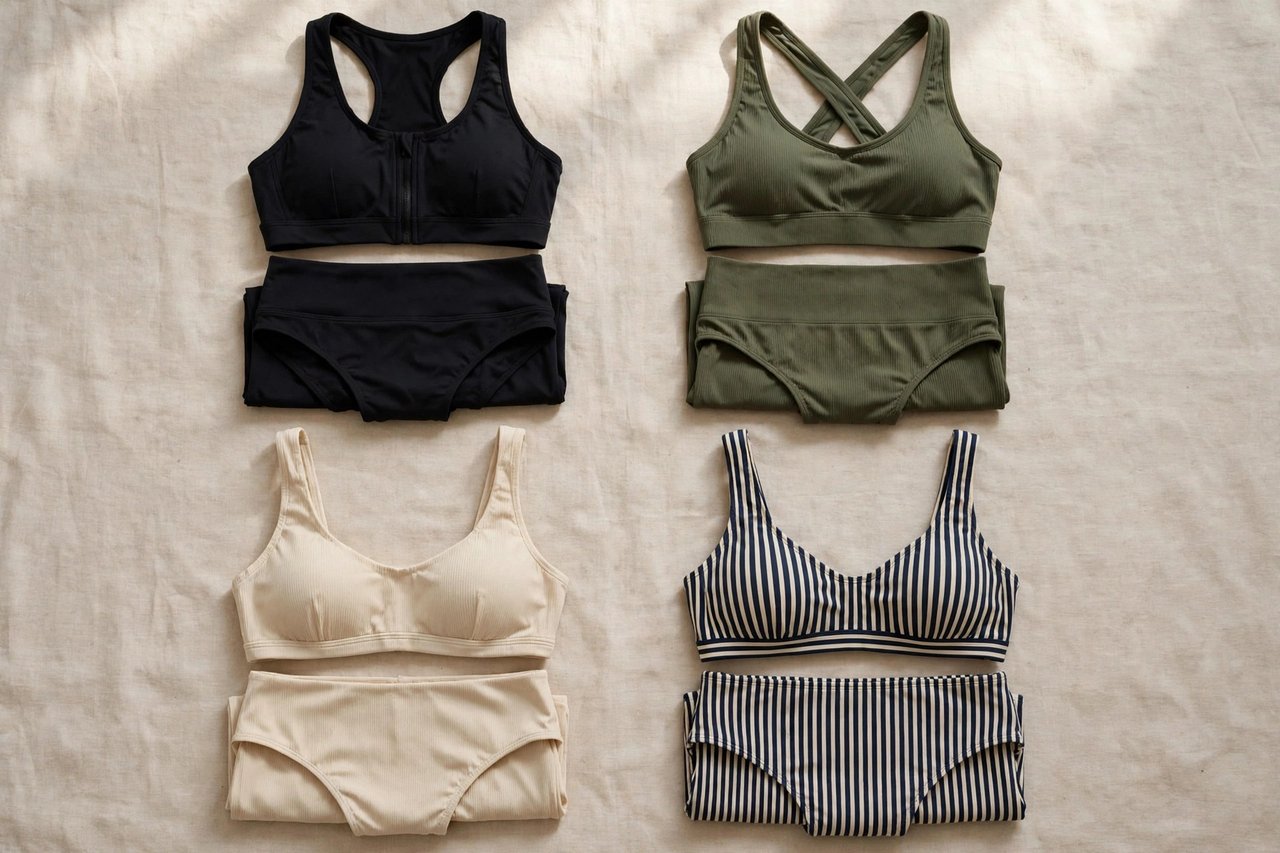
Bikini swimwear shopping goes best when fit leads and fashion follows. A beautiful suit that shifts in the water, digs at the neck, or needs constant adjustment will spend the season in the drawer, while a well-fitted suit disappears from your mind and lets you enjoy the day. This guide is the practical companion to general bikini style advice: it focuses on the hardware of a good swim bikini — strap geometry, closures, support construction, sizing systems, and fabric durability — and on matching those choices to what you actually do at the water. Surfing, lap swimming, beach volleyball, and sunbathing load a suit in completely different ways. Buy for your real activity list and the same bikini that looked fine in the mirror will also perform when the waves, the kids, and the cooler all start demanding attention at once.
Support by Activity: Surf Versus Sunbathing
Rate your plans honestly before you shop. For sunbathing and gentle wading, almost any style works, including string triangles and strapless bandeaus, because the suit is mostly at rest. For ocean swimming and body surfing, step up to fixed straps, a firm underband, and bottoms with a real waistband rather than side ties. For surfing, paddleboarding, and beach sports, treat the bikini like athletic gear: a sport top with wide straps or a racer back, high or well-secured neckline, and a bottom that grips the hip, ideally tested with a jump and a duck-dive motion in the fitting room. Resort and pool days with kids sit in the middle — you will bend, lift, and chase, so choose secure but comfortable construction. Matching support to activity prevents both wardrobe malfunctions and buyer's remorse.
Straps, Closures, and Construction That Stay Secure
Security lives in the details. Straps should be wide enough to distribute weight, adjustable in length, and anchored so they cannot slide off the shoulder mid-stroke; cross-back and racer-back designs are the most reliable for sport. Closures matter just as much: a sturdy clasp or a tie that locks with a double knot beats a decorative hook, and an underband should fasten firmly on the loosest hook when new, since swim fabric relaxes over time. Look inside the top for boning at the sides, a shelf bra or molded cups, and silicone gripper tape on strapless styles. Bottoms stay put better with a slightly higher rise, a drawstring at the waist, or a wide, flat waistband. Seams should be smooth and fully finished, and hardware should be plastic or coated metal that will not rust, heat up in the sun, or pinch skin.
Sizing Systems: Bra Sizes Versus Letter Sizes
Bikini swimwear comes in two sizing languages. Bra-sized tops — a band number plus a cup letter — offer the most precise support and are the best route for fuller busts, asymmetry, or anyone who wears a structured bra daily. Letter sizes (extra small through extra large) assume a standard proportion between band and cup, which works well for many wearers and keeps prices lower, but can fail when your band and cup needs diverge. Bottoms follow hip measurements; when between sizes, choose based on use — the snugger size for sport, the comfortable size for lounging — remembering that fabric relaxes when wet. One-piece habits do not transfer: always fit the top and bottom separately, even in a set. If a brand's size chart gives measurements, trust the tape over your usual dress size, because swim sizing runs notoriously inconsistent across labels.
Fabrics and Durability for Frequent Swimmers
If your bikini will swim weekly rather than vacation twice a year, fabric choice becomes a budget decision. Polyester-elastane blends resist chlorine and ultraviolet damage far longer than standard nylon, holding color and elasticity through a full season of pool use. Nylon-elastane feels softer and drapes prettier, making it a fine choice for occasional swimmers and sun-first suits. Higher elastane content gives a snappier, more supportive fit but tires faster under chlorine exposure. Textured knits — rib, seersucker, and crinkle — disguise wear and fit forgivingly, while smooth knits show every sign of fiber fatigue sooner. Check lining quality too: a fully lined suit keeps its shape and opacity, and power-mesh lining in a top adds genuine support. For heavy use, owning two mid-priced durable suits in rotation outlasts one delicate designer piece worn daily.
A Fitting-Room Checklist Before You Buy
Give every candidate suit the same five tests. One: reach and bend — arms overhead, then fold forward; cups should contain and straps should stay. Two: the band test — the underband should feel firm and level, not riding up between the shoulder blades. Three: the bottom test — squat, lunge, and walk briskly; the waistband should not roll and the leg openings should not creep. Four: the light test — check pale colors in bright light and, if possible, dampen a hidden spot to judge wet opacity. Five: the comfort test — sit for two full minutes, because digging straps and pinching clasps announce themselves on a delay. Keep the sanitary liner in place while testing so the suit stays returnable, and do not talk yourself into a near-fit: in swimwear, near-fit becomes no-fit the moment the fabric gets wet and heavy.
Care That Protects Fit and Elasticity
A secure fit is a perishable asset, and care habits decide how fast it fades. Rinse the suit in cool water immediately after swimming to remove chlorine and salt before they attack the elastane, then hand wash with a small amount of mild detergent. Never twist or wring a structured top, which can bend underwires and crack molded cups; press water out gently and reshape the cups while damp. Dry flat or on a line in the shade, never in a hot dryer and never draped over a metal railing in full sun. Keep the suit away from rough pool edges and hot tub jets, both of which snag and stress knit fibers. When straps stop recovering, the band feels loose on its tightest setting, or the fabric turns baggy at the seat, the support you bought is gone — replace the piece and demote the old one to the hot tub at your own risk.
Related Women's Guides
Looking for Women's Clothing Stores?
This guide helps you choose women's bikini swimwear by support level and activity. To browse where to buy, visit our women's clothing store directory, where you can find retailers that carry them.