Women's Silk Underwear: Types, Fabrics & Buying Basics Guide
Silk underwear is the general category of undergarments made with silk — briefs, thongs, French-cut styles, slips and thermal underlayers — valued for smoothness, breathability and temperature regulation.
Shop Women's Silk Underwear: Types, Fabrics & Buying Basics Now
Shop Women's Silk Underwear: Types, Fabrics & Buying Basics on Amazon Shop Women's Silk Underwear: Types, Fabrics & Buying Basics on eBayThe Amazon and eBay links on this page are affiliate links. If you make a purchase through them, Apparel Search may earn a commission.
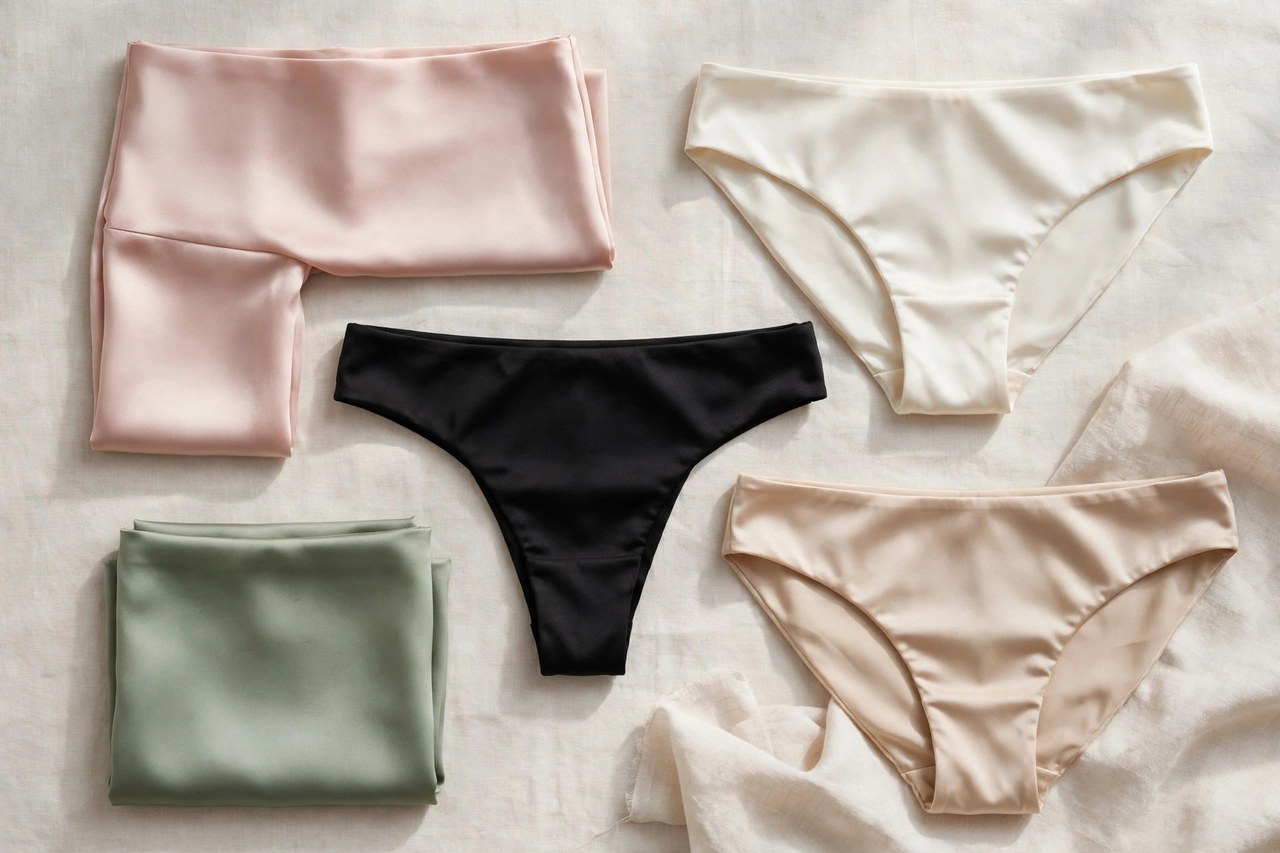
Silk underwear is the general category of undergarments made with silk — briefs, thongs, French-cut styles, slips and thermal underlayers — valued for smoothness, breathability and temperature regulation. As the category overview, this product guide explains undergarment types, where silk is used in each, sizing from measurements, and washing, in plain terms.
This guide covers silk underwear: types, fabrics & buying basics in the order a careful buyer needs it: what the garment is made from, how it is constructed, how it should fit, how to choose it for real use, and how to care for it so it lasts. Apparel Search has published guides to women's clothing for decades, and this rebuilt page keeps the subject focused — measurable details, named materials and checks you can perform in a shop or on a parcel's arrival, rather than general fashion language.
Fabrics and Construction
Silk used in silk underwear: types, fabrics & buying basics is chosen for a smooth surface, light weight and natural temperature regulation, and it appears in a small set of constructions: woven charmeuse and crepe de chine for most pieces, silk satin weaves for a glossier face, and knitted silk jersey where stretch and crease-resistance are wanted. Weight is quoted in momme: lighter cloth (around 16 momme) feels cooler and dries faster, while 19–22 momme cloth is more opaque, more durable and the better buy for anything washed weekly. Blends add cotton for softness or elastane for recovery; the fibre label states the percentages, and a garment described only as 'silk-feel' or 'satin' is not silk at all.
Construction decides how the garment performs in use. Seams should be soft and flat — French seams or fine flatlock in knits — because raised seam ridges are felt through the night or under clothing. Elastics should be covered or plush-backed so no bare rubber touches skin, and straps and waistbands should adjust without hardware that digs in. Smooth flat finishes matter most in an underlayer: seams, elastics and straps should lie flat so nothing prints through outer clothing, and gussets should be cotton-lined. Gussets and linings follow hygiene standards for the garment type (cotton-lined gussets are standard in underwear), and dyes should be even, since silk shows patchy dyeing more clearly than almost any other fibre.
Fit and Sizing
Fit in silk underwear: types, fabrics & buying basics is taken from body measurements, not dress size or habit: bust, waist and hip measurements matched against the brand's own chart, because silk has little or no stretch in woven form and sizing varies between makers. For sleep garments, ease is functional — the garment must allow turning, reaching and sitting without seams pulling — so choose the size that matches your largest relevant measurement. For undergarments, the band or waist measurement and the cup or hip measurement do different jobs, and both must be right; a garment that fits in one and not the other will not become comfortable with wear.
Knitted silk pieces fit closer and rely on the knit's recovery: check elastane content or rib structure, because pure silk jersey relaxes through wear and washing. Waistbands should stay in place without pressure marks, straps should stay on the shoulder without sliding (silk is slippery against itself), and leg elastics should lie flat without rolling. If you are between sizes in a woven silk garment, the larger size is usually correct: woven silk under constant tension fails at the seams, while slight ease costs nothing in a product of this type.
Choosing the Right Product
Choose silk underwear: types, fabrics & buying basics by measurable criteria: fibre content and momme weight first, then construction (seam type, elastic finish, lining), then the care routine you can sustain, because a garment that needs hand washing will not survive a household that machine-washes everything — washable-silk versions exist for exactly that reason. Colour has practical consequences: pale silk shows marks and can yellow with age and sunlight, dark silk shows lint and salt marks, and mid-tones are the low-maintenance middle. Buy multiples in rotation if the garment is worn nightly or daily; silk lasts far longer rested between wears and washes.
Compare like with like when judging price: silk percentage, cloth weight, seam finishing and hardware quality explain most price differences in this category, and a low price usually means a thin cloth, a low silk percentage or minimal finishing. In practice, rank the checks above in the order your own use demands — frequency of wear first, then weather, washing facilities and budget — because that order differs by household, and it is the real reason two careful buyers can correctly choose differently from the same shelf. Keep the size chart and care label from anything bought online until you have washed the garment once — silk sizing and wash behaviour are the two things most often different from expectations, and both are returnable problems only if caught early.
Washing and Storage
Wash silk of this type gently and it will repay it: hand wash in cool water with a pH-neutral or silk-specific detergent, or use the maker's stated washable-silk machine programme in a mesh bag. Never use chlorine bleach or hot water, wash dark colours separately at first, and do not wring — press water out in a towel. Roll or flat-dry away from radiators and direct sun, which fade the colour and can set water-spot rings on satin-weave faces. Fabric softener should be avoided on stay-up bands and elastics, which it coats and weakens.
Smooth the garment as it dries and iron only if needed, on the reverse at a low silk setting. Store silk clean and dry, folded in a drawer away from sunlight and from rough items that can snag fine cloth or knit; cedar or lavender sachets help deter the moths that target protein fibres. Rotate pieces so no single garment is washed twice as often as the others, and retire elastics that have lost recovery — in undergarments and sleepwear the elastic usually ends the garment's life before the silk does. Followed consistently, this routine keeps silk smooth, opaque and comfortable for years.
Related Women's Guides
More to Explore on Apparel Search
Women’s Clothes Guide by Letter: Women's Apparel Directory N · Women's Clothes Directory O · Women's Clothing Directory P · Women's Apparel Directory Q · Women's Fashion Directory R · Women's Clothes Directory T
References & Further Reading
Looking for Women's Clothing Stores?
This guide helps you choose women's silk underwear: types, fabrics & buying basics. To browse where to buy, visit our women's clothing store directory, where you can find retailers that carry them.