Women's Cotton Panties Guide
The umbrella category in one guide — briefs, bikinis, hipsters, boy shorts, and minimal cuts compared by rise, leg line, and coverage.
Shop Women's Cotton Panties Now
Shop Women's Cotton Panties on Amazon Shop Women's Cotton Panties on eBayThe Amazon and eBay links on this page are affiliate links. If you make a purchase through them, Apparel Search may earn a commission.
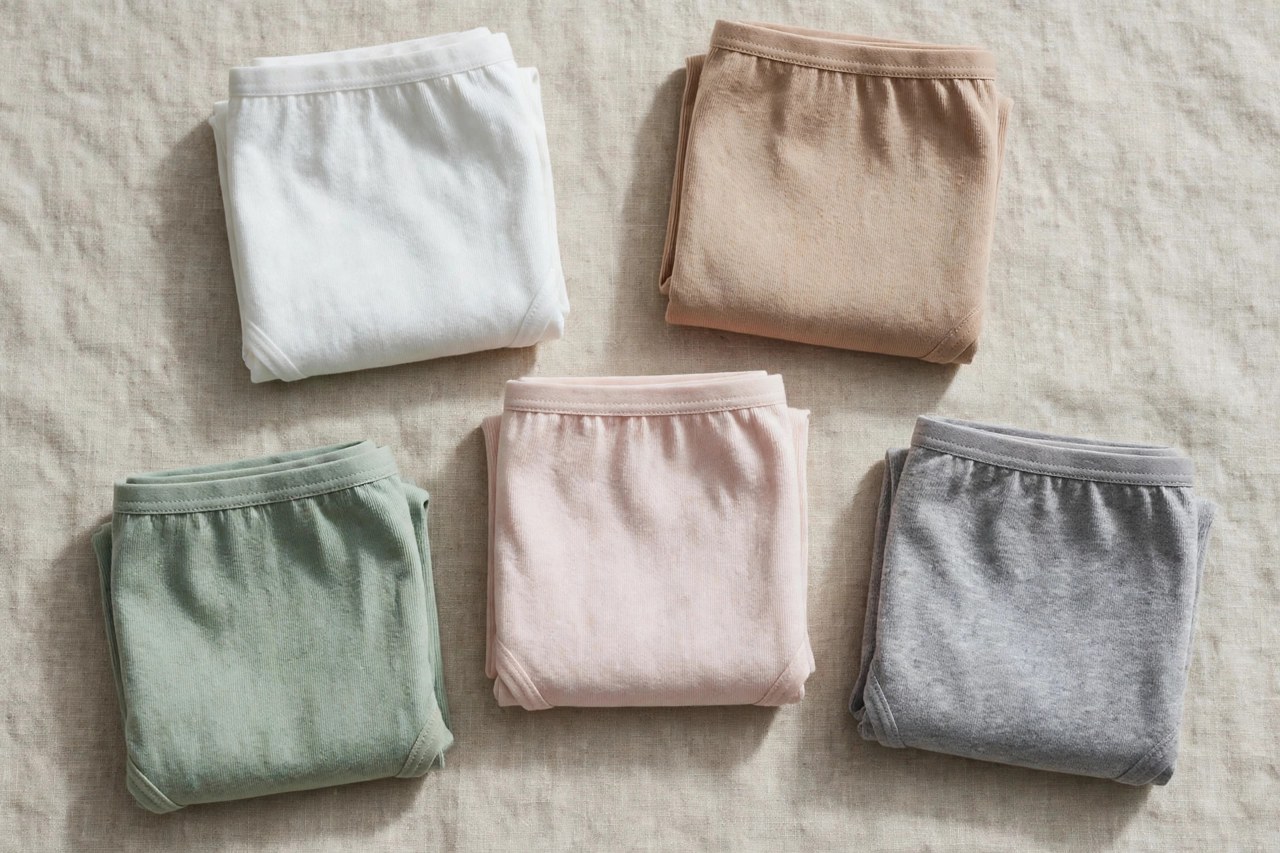
Panties is the general retail term for women's underwear, and cotton panties form the largest part of that market because cotton jersey is breathable, absorbent, soft against skin, and able to withstand the frequent hot washing this garment category requires. Within the umbrella, products differ by cut — the pattern geometry of rise, leg opening, and coverage — and by fabric blend and waistband construction. Choosing well is mostly a matter of matching cut to clothing and preference, then confirming fabric specification and size. This umbrella guide maps the main cuts side by side, explains the cotton blends and gusset conventions shared across them, and sets out a practical approach to multipack buying, rotation, and care that applies to the whole category. Individual cuts are covered in depth in their own guides, linked at the foot of this page.
The Main Cuts Compared
The full brief rises to the natural waist with a low leg opening and the most coverage of any standard cut; it is the reference point for comfort under high-waisted clothing. The bikini brief sits below the waist with a higher leg line and moderate coverage, and is the best-selling everyday pattern. The hipster sits at a similar height to the bikini but with wider sides and a straighter leg, giving a smooth line under fitted trousers. Boy shorts extend a short leg down the thigh and provide the fullest coverage in a close-fitting knitted style. Thongs and G-strings remove the seat panel entirely for a no-show result under fitted clothing. Rise variants, especially low-rise versions of the bikini, hipster, and boy short, cut across the whole list. No cut is objectively best; each is a different distribution of fabric, and wardrobes commonly hold two or three cuts for different clothing.
Cotton Jersey and Blend Standards
Across all cuts, the standard body fabric is cotton single jersey, with combed cotton in better products, at weights around 140 to 190 GSM depending on cut and season. Elastane is blended at roughly three to ten percent in most mainstream products to give recovery at the waist, leg, and, in boy shorts, along the extended leg. One hundred percent cotton versions are available in briefs and bikinis for buyers avoiding synthetic content in the panel, with fit provided by covered elastics. The gusset — the lined base panel — is 100 percent cotton in nearly all products regardless of body blend, a convention worth verifying on the label of budget packs. Rib knits, interlock, and cotton-modal blends form the premium tier, offering a smoother or softer hand at a higher per-pair price. Whatever the tier, stated fiber percentages are the reliable comparison tool between products.
Waistbands, Leg Finishes, and Seams
Construction choices repeat across cuts and are worth learning once. Waistbands come as self-fabric bands, which are soft and low-profile; exposed woven elastic, which holds firmest and often carries branding; and narrow covered elastic, the traditional finish on briefs and bikinis. Leg openings are finished with folded fabric bands for smoothness, covered elastic for hold, or trim such as picot or soft lace on dressier styles. Seams are overlocked as the industry standard, with flatlock stitching in premium and athletic-leaning ranges to reduce any ridge under clothing. The quality indicators are consistent: even stitching, a gusset attached flat without puckering, elastic that recovers fully when stretched and released, and no loose threads at junctions. These checks take seconds per pair and predict service life better than brand or price alone.
Building a Drawer: Rotation and Multipack Strategy
Underwear is a rotation garment, and the economical way to stock it is by multipack: three to ten pairs per pack, in solid assortments or prints, at a per-pair cost well below single-pair buying. A practical core holding is enough pairs of the main everyday cut for a full week plus laundry margin, supplemented by smaller numbers of task-specific cuts — boy shorts for dresses and skirts, minimal cuts for fitted outfits, low-rise pairs for low-cut clothing. Buy one pack in a new brand or cut before scaling up, because sizing and rise are not standardized across makers and the same nominal size can differ by an inch or more in rise. Replace on condition rather than calendar: loss of elastic recovery, thinning fabric at stress points, and waistbands that no longer lie flat are the objective end-of-life signs across every cut.
Washing, Hygiene Practice, and Care
Cotton's tolerance of thorough washing is one of its functional advantages in this category. Machine wash warm with like colors; cotton jersey handles standard detergents and, where needed for white assortments, oxygen-based laundry boosters without damage. Dark and printed packs should be washed inside out and separated from whites for the first cycles while loose dye clears. Tumble dry on low to medium, or line dry to maximize elastic life, since repeated high heat is the main cause of waistband and leg elastic failure. Delicate minimal styles and lace-trimmed pairs last longer in a mesh bag. Cotton softens progressively with washing and remains serviceable until the knit thins; there is no special storage requirement beyond a clean, dry drawer. Followed consistently, these basics keep a cotton underwear rotation in service for one to two years per pair at typical weekly wear.
More to Explore on Apparel Search
Looking for Women's Clothing Stores?
This guide helps you choose women's cotton panties across every cut, blend and pack format. To browse where to buy, visit our women's clothing store directory, where you can find retailers that carry them.