Women's Cotton Slacks Guide
Semi-tailored, business-casual, and distinctly American — slacks sit between jeans and a fully tailored trouser.
Shop Women's Cotton Slacks Now
Shop Women's Cotton Slacks on Amazon Shop Women's Cotton Slacks on eBayThe Amazon and eBay links on this page are affiliate links. If you make a purchase through them, Apparel Search may earn a commission.
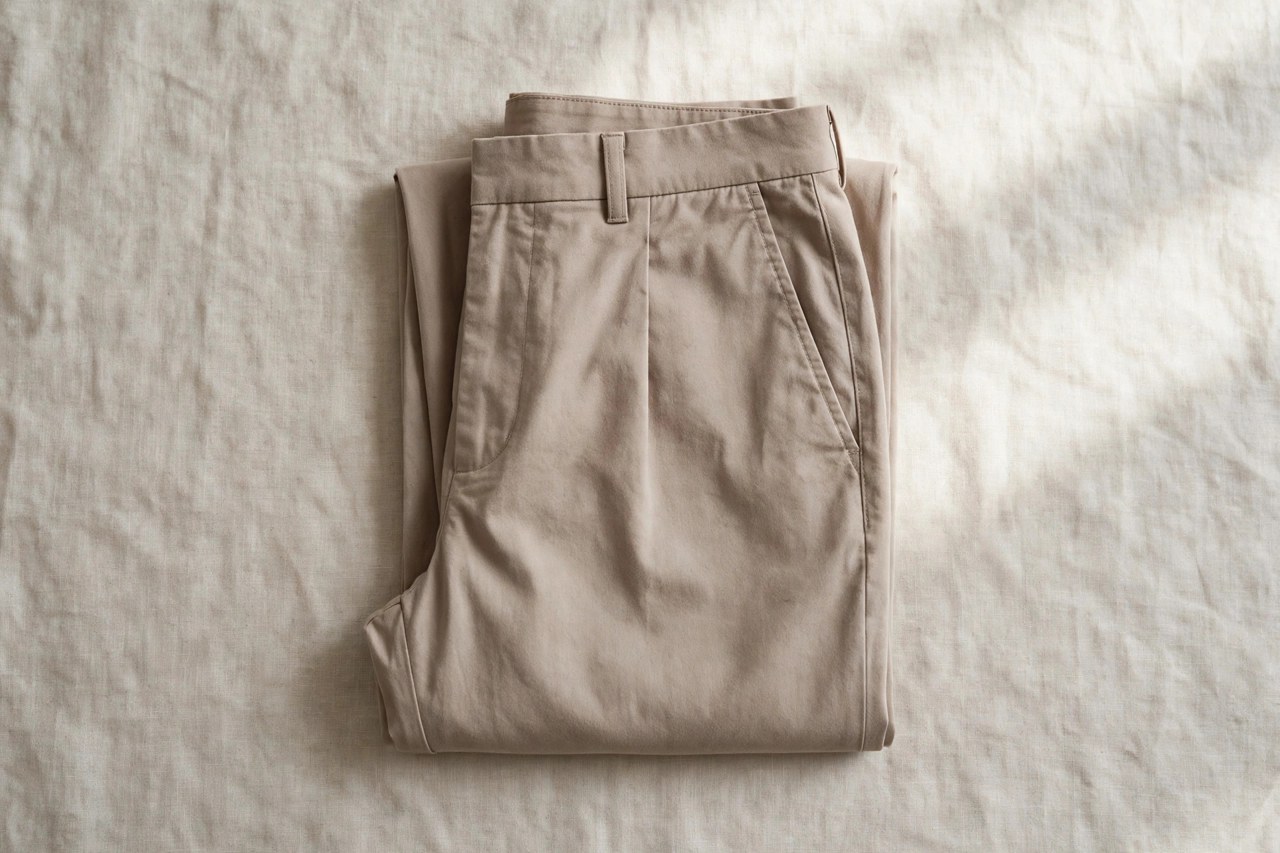
Slacks is an American word with an American attitude: a semi-tailored pant that looks tidy enough for work and feels relaxed enough for everywhere else. The name itself comes from an old word for loose, and that hint of ease still defines the garment. A women's cotton slack typically sits at or just below the natural waist, runs clean and flat through the front, falls straight or gently tapered to the ankle, and skips the formality signals of a dress pant — no sharp pressed crease, no pleats, no cuffed hem as standard. Cotton twill and cotton sateen are its classic fabrics, usually with 1 to 3 percent elastane woven in for sitting comfort. If your wardrobe needs one pant that handles an office morning, a school run, and dinner without a costume change, this unassuming category is probably the answer.
Slacks, Trousers, and Dress Pants: The Distinction
These three pages exist because the three words are not interchangeable, even though shops blur them. Slacks are the semi-tailored middle: neat, mostly flat-front, designed for business-casual life rather than formal tailoring. Trousers, covered on their own page in this guide, are the classic tailored garment — the term leans British and formal, and the cut more often includes pleats, a defined crease, a higher rise, and suit-adjacent fabrics and finishes. Dress pants push sharpness furthest: the crispest cotton sateens and twills, a pressed crease, and styling aimed at polished office wear. A useful test is the shoe pairing. Slacks sit happily with loafers, ballet flats, and clean trainers; trousers ask for a more deliberate shoe; dress pants expect one. None of the three is better — they are three points on one formality scale, and owning the differences helps you buy the point you actually live at.
Fabrics: Twill, Sateen, and a Touch of Stretch
Cotton twill is the workhorse slack fabric: a diagonal weave, typically 200 to 280 GSM in women's slacks, that resists wrinkling better than plain weaves, hides minor creasing through a workday, and softens gradually without going limp. Cotton sateen weaves the yarns to float on the surface, giving a smooth, faintly lustrous face that reads a degree dressier and photographs well, at the cost of showing scuffs and seat shine sooner. A cotton gabardine, a tighter steeper twill, appears in better slacks and sheds light rain surprisingly well. Nearly all modern cotton slacks include a little elastane; insist on recovery, not just stretch, by checking that knees return flat after a day of sitting. Heavier twills suit autumn and winter offices, while a lighter twill or a twill-poplin blend handles summer, though very light cotton slacks can look under-structured with a tucked blouse — a partial tuck or a belt restores the line.
Fit and the Details That Read as Tailored
A slack earns the word tailored in small details rather than dramatic shaping. Look for a contoured waistband that follows the curve between waist and hip so the back does not gape when you sit, a hook-and-bar or button closure that lies flat under knit tops, and slash or welt pockets that stay closed instead of flaring open. Belt loops should be stitched down firmly; a slack worn with a belt instantly reads one notch smarter. Length is the detail most often wrong: a full-length slack should break just once over the shoe or end clean at the ankle bone for a tapered or cropped cut, never pool. Because cotton twill shrinks slightly in length — around 2 to 3 percent, less in pre-shrunk or garment-washed pairs — wash before hemming, and buy long rather than exact if you plan to tumble dry.
Styling Slacks for Business-Casual Life
The cotton slack is the anchor of the American business-casual uniform precisely because it pairs in every direction. With a cotton poplin shirt and loafers it is office-ready in most workplaces; with a fine cotton crew sweater and flats it handles client lunches; with a plain tee, an open overshirt, and trainers it drops to weekend errands without looking like you forgot to change. Navy, khaki, stone, olive, and black cover the rotation, with the khaki twill slack carrying the strongest casual signal and black sateen the strongest evening one. Cotton slacks also bridge seasons well: the same twill pair works with sandals in June and ankle boots in October.
Care: Keeping Twill Crisp Without Fuss
Cotton slacks ask for simple, regular care. Wash in cold or warm water with similar colours, inside out to protect the sateen face or twill surface, and remove promptly so set wrinkles do not need a fight with the iron. Twill releases most creases with a short tumble on low and a hang while still slightly warm; sateen benefits from a proper press along the leg, though slacks, unlike dress pants, do not need a razor crease — a smooth flat leg is the correct finish. Hang by the waistband or fold over a hanger bar rather than creasing at the knee in a drawer. Expect gradual, even fading, fastest at the seat, knees, and pocket edges; rotating two pairs doubles the life of both. When the inner thigh twill wears thin or the seat begins to shine on sateen, the pair has honestly finished its tailored life and can retire to casual duty.
Looking for Women's Clothing Stores?
This guide helps you choose women's cotton slacks by fabric and fit. To browse where to buy, visit our women's clothing store directory, where you can find retailers that carry them.