Women's Cotton Tennis Socks Guide
The cushioned sport construction story — padded soles, firm arches, and a court heritage in white cotton.
Shop Women's Cotton Tennis Socks Now
Shop Women's Cotton Tennis Socks on Amazon Shop Women's Cotton Tennis Socks on eBayThe Amazon and eBay links on this page are affiliate links. If you make a purchase through them, Apparel Search may earn a commission.
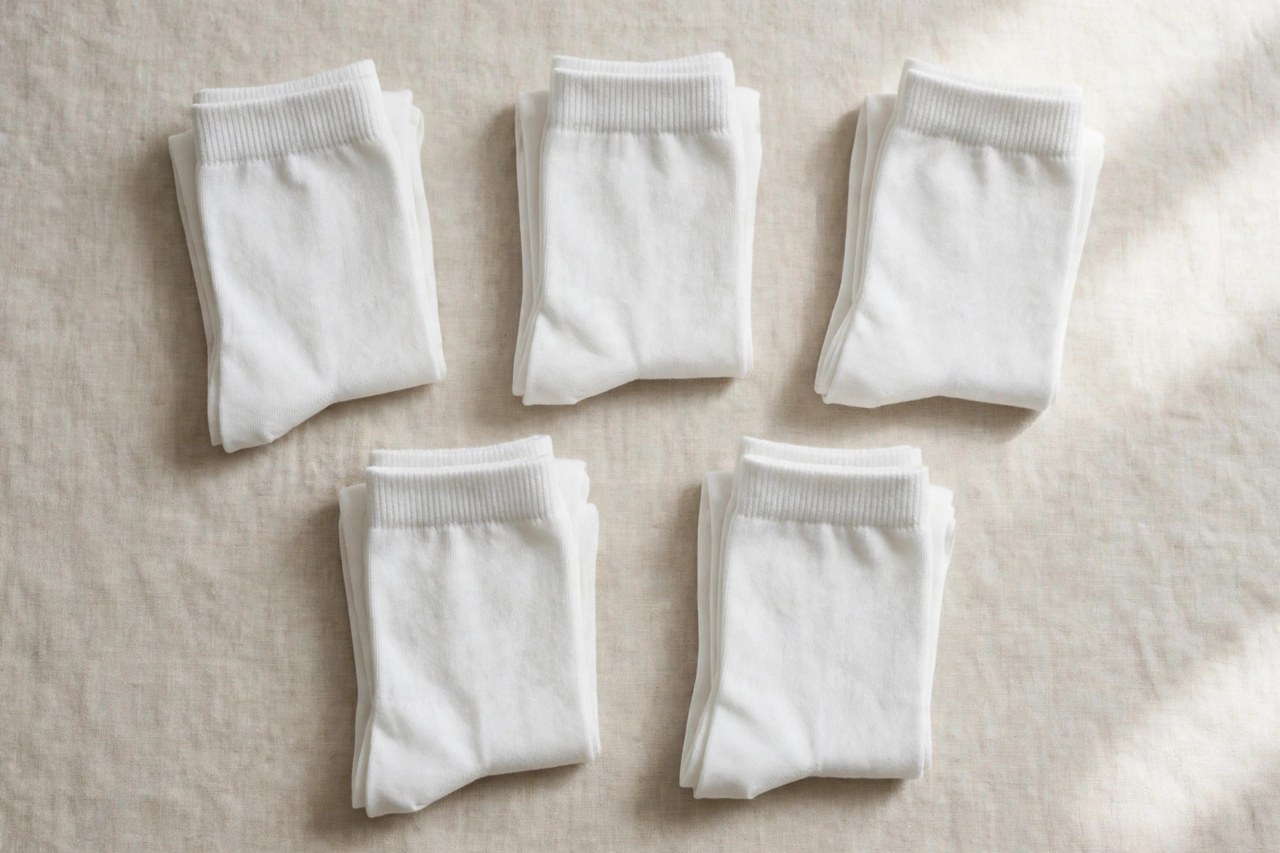
Tennis socks are cotton's sporting classic: cushioned, cotton-rich socks built for the stop-start, side-to-side movement of court play, traditionally white, and sold in crew and quarter lengths. Long before technical synthetic socks existed, tennis was played in thick cotton socks, and the design that emerged, dense terry cushioning where the foot strikes, a firm arch, and a cuff that survives constant direction changes, still defines the category. Modern women's cotton tennis socks blend cotton with nylon and elastane for durability and fit, and many add a small share of performance yarn, but the cotton body remains the point for players who prefer its soft, familiar feel. This guide explains the cushioning map of a tennis sock, the crew-versus-quarter choice, how cotton behaves honestly during hard play, and how these socks differ from the everyday crew socks covered on the neighboring page.
Targeted Cushioning: Padding Where the Court Demands It
A tennis sock cushions by map, not by overall thickness. The heaviest terry looping sits under the heel and the ball of the foot, the two impact zones in serving, sprinting, and abrupt stops, with extra padding sometimes rising over the toes, where forward lunges jam the foot against the shoe's front. The arch is knitted tighter, often with a distinct compression band that hugs the midfoot and stops the sock shifting during lateral slides, the movement that separates tennis from straight-line running. The top of the foot and the leg stay thinner, so the shoe still fits and heat escapes. Turn a tennis sock inside out and read that map in the loops: thick where you land, smooth where you do not. True tennis construction concentrates its cotton where the game actually happens.
Crew or Quarter: Length on Court
Crew tennis socks rise to mid-calf and are the traditional court length, protecting the back of the ankle from shoe friction during deep lunges and giving the classic white-sock silhouette associated with the sport. Quarter socks end just above the shoe collar, covering the ankle bones without the crew's height; they feel cooler and have become the more common modern choice in warm climates. Both lengths should have a cuff engineered to stay put through a match: a ribbed, elastane-rich top that neither slides into the shoe during play nor strangles the leg between games. Choose by comfort and club custom rather than performance theory, since cushioning and arch fit matter far more than the extra inches of leg. On gritty hard courts, the crew's extra coverage does keep fine court dust off the skin, a small but real point.
Cotton in Play: Comfort First, With Limits
Cotton's case on court is feel: it is soft from the first step, does not develop the slickness some synthetics show when wet, and many players trust the familiar grip of a cotton sole inside the shoe. The limits are the familiar ones. Cotton absorbs perspiration and holds it, so in a long, hot match the sock grows heavy, its cushioning mats down as the terry saturates, and wet cotton is more blister-prone than a wicking synthetic on tender feet. For club play of an hour or so, social doubles, and cooler conditions, cotton tennis socks serve perfectly well, which describes most tennis actually played. For tournament days, summer singles marathons, or feet that blister easily, a synthetic performance sock is the practical upgrade; many players keep cotton pairs for ordinary sessions and one technical pair for the hardest days.
Tennis Socks Versus Everyday Crews
Beside an everyday crew sock, a tennis sock reveals its purpose in three ways. First, cushion placement: the crew spreads a moderate, even half-cushion for all-day standing and walking, while the tennis sock concentrates dense padding under heel and ball with a thinner instep. Second, the arch: tennis construction grips the midfoot firmly to resist twisting during lateral movement, noticeably snugger than a casual crew. Third, durability: nylon reinforcement targets the toe front and heel strike zones worn by court movement. The everyday crew wins on versatility across the whole wardrobe, where the tennis sock is a specialist that looks out of place in a loafer. Serious players buy by the multipack in white and rotate strictly for sport; occasional players can let a firm, full-cushion crew cover both jobs, accepting slightly less lateral security on court.
Fit and Care for Court Socks
Fit a tennis sock inside your court shoe, not a casual shoe, because court shoes are built wider and more stable, and the combined volume decides comfort. The heel pocket should seat exactly on your heel with the cushion map aligned, toes flat without excess fabric bunching at the front, since bunched wet cotton is a blister factory. Wash after every session; cotton holds sweat and court grit deep in the terry, and grit left in the loops abrades the yarn from inside. Wash inside out in warm water, air dry or tumble low to protect the arch elastane, and avoid softener, which coats the loops and reduces absorbency. Replace tennis socks when the ball-of-foot cushion compresses to a hard, flat pad; at that point the sock is a cotton liner, not a tennis sock.
Related Women's Cotton Guides
More to Explore on Apparel Search
Photos

Looking for Women's Clothing Stores?
This guide helps you choose women's cotton tennis socks by cushioning and length. To browse where to buy, visit our women's clothing store directory, where you can find retailers that carry them.