Women's Cotton Sportswear Guide
Sportswear in the classic American sense — coordinated cotton separates you mix, match, and live in, not uniforms you compete in.
Shop Women's Cotton Sportswear Now
Shop Women's Cotton Sportswear on Amazon Shop Women's Cotton Sportswear on eBayThe Amazon and eBay links on this page are affiliate links. If you make a purchase through them, Apparel Search may earn a commission.
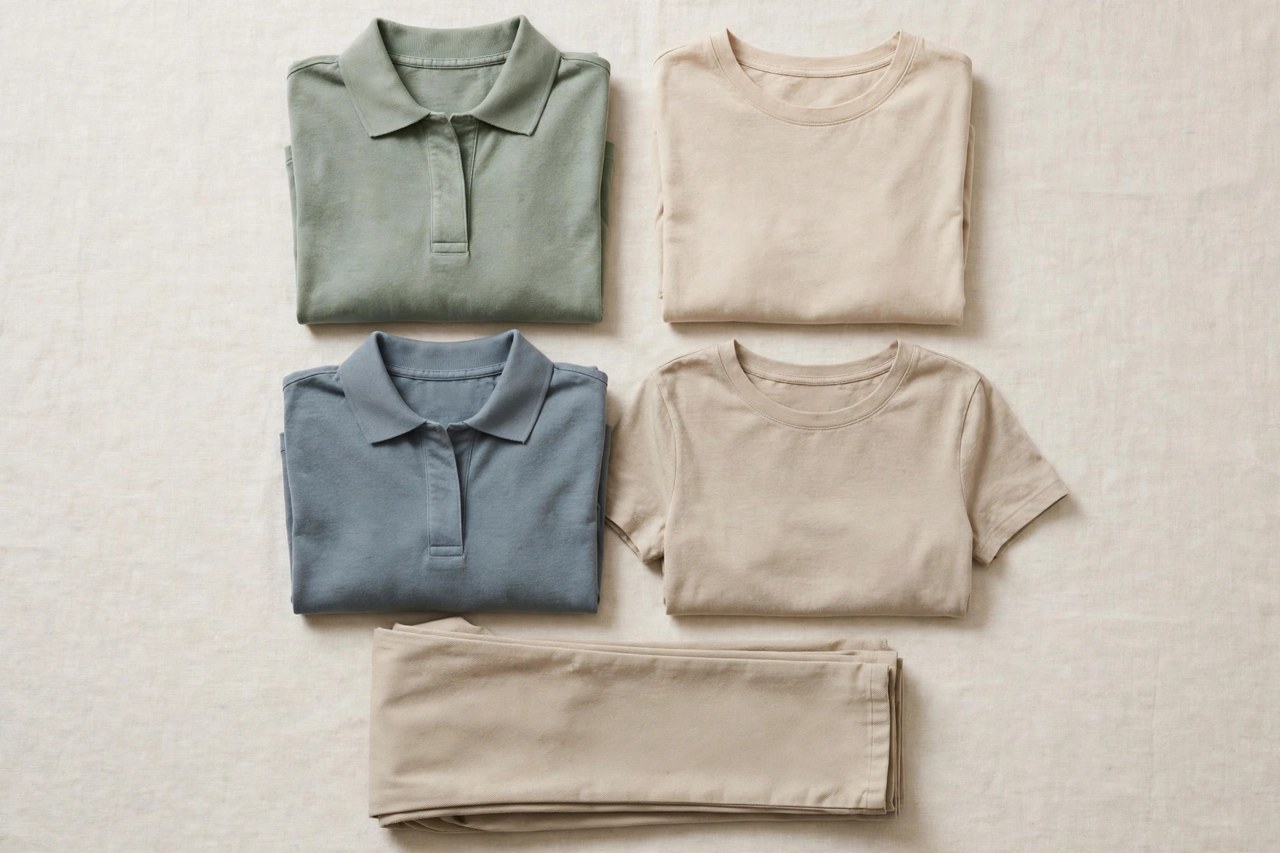
If sportswear sounds like it should involve a finish line, that is a modern misunderstanding. In the American fashion sense — the sense department stores have used for a century — sportswear means casual, coordinated separates: the tops, bottoms, skirts, and light jackets a woman mixes into outfits for everyday life. Cotton is the historic fabric of the category, from twill trousers and pique polos to jersey tees and denim. This guide explains what makes a garment sportswear rather than athleticwear, the cotton fabrics the category runs on, and how the separates system works, so you can shop a sportswear department with the logic its designers intended.
Athleticwear Is for Sport; Sportswear Is for Life
The distinction is functional. Athletic apparel — covered on our cotton athletic apparel page — is engineered for activity: warm-ups, training, and movement, with moisture and motion as design problems. Sportswear borrows the relaxed look and easy fabrics of sports clothing but aims them at ordinary days: school runs, casual offices, travel, weekends, and lunches where jeans feel too rough and a dress feels like effort. A cotton polo, twill pants, and a jersey blazer are sportswear; the same polo worn to actually play golf edges toward athleticwear. Neither is better; they simply answer different questions. Shoppers who understand the split stop expecting sportswear to perform like gym kit, and stop wondering why their gym kit never quite looks like an outfit.
The Separates System
Sportswear's real invention is coordination. Pieces are designed in color families — a navy group, a khaki-and-white group, a seasonal coral group — so that every top works with every bottom, and a handful of purchases yields a week of outfits. A classic cotton sportswear capsule might include twill trousers, a twill skirt, cotton shorts, two pique or jersey polos, a striped cotton tee, a chambray or poplin shirt, and a cotton cardigan or soft jacket. Because the fabrics share a matte, natural character and the colors are planned together, mixing reads as intentional rather than assembled. When shopping, buy into a color story you already own rather than chasing single statement pieces; sportswear rewards the wardrobe thinker, not the impulse buyer.
The Cotton Fabrics of Sportswear
Each classic sportswear fabric is a cotton weave or knit with a job. Twill — the diagonal weave of chinos — gives trousers and skirts durability and a clean drape, softening beautifully with washing. Pique, the textured knit with a fine waffle surface, makes polos breathable and keeps collars presentable. Cotton jersey supplies tees and casual dresses; interlock and ponte versions hold enough structure for soft jackets and pull-on trousers that still read as clothing rather than loungewear. Denim anchors the casual end, canvas and duck appear in jackets and totes, and seersucker, madras, and poplin rotate in for summer. Nearly all of it machine-washes, which is the category's founding promise: clothes that look considered and ask almost nothing in return.
A Short History of American Sportswear
American designers built sportswear into a fashion philosophy in the 1930s and 1940s, rejecting Parisian formality in favor of clothes for active everyday lives — women who drove, worked, traveled, and played tennis on the same day. Designers of that era championed interchangeable separates, easy fabrics, and pockets, ideas so successful they now seem obvious. Postwar decades added the polo shirt, the chino, and the twinset to the everyday uniform, and cotton was there throughout because it dyed in clear colors, washed at home, and felt familiar. Modern sportswear departments descend directly from that movement. When a store today groups cotton separates by color family under a sportswear sign, it is running a system nearly a hundred years old — one built on the radical idea that comfort and coordination are not opposites.
Wearing and Caring for Cotton Sportswear
The styling rule is balance: pair one relaxed piece with one structured piece, so a soft jersey top meets a twill trouser, or a crisp poplin shirt meets cotton shorts. Tuck or half-tuck tops to give separates a finished line, and let a third piece — cardigan, soft blazer, denim jacket — pull the color story together. Because sportswear cottons are everyday fabrics, care is everyday simple: wash like colors together in cool or warm water, expect a small first-wash settling of one to three percent on untreated pieces, and smooth twills and poplins by hand as they come off the line to skip most ironing. Fade is part of cotton's charm in this category — a gently weathered chino reads classic, not tired — but washing inside out slows it where you want color to last.
More to Explore on Apparel Search
Photos

Looking for Women's Clothing Stores?
This guide helps you choose women's cotton sportswear as coordinated casual separates. To browse where to buy, visit our women's clothing store directory, where you can find retailers that carry them.