Women's Tees Guide
Tees is the everyday short name for T-shirts: casual knitted short-sleeved tops, from plain basics to printed and graphic styles, worn as tops, layers and sleepwear.
Shop Women's Tees Now
Shop Women's Tees on Amazon Shop Women's Tees on eBayThe Amazon and eBay links on this page are affiliate links. If you make a purchase through them, Apparel Search may earn a commission.
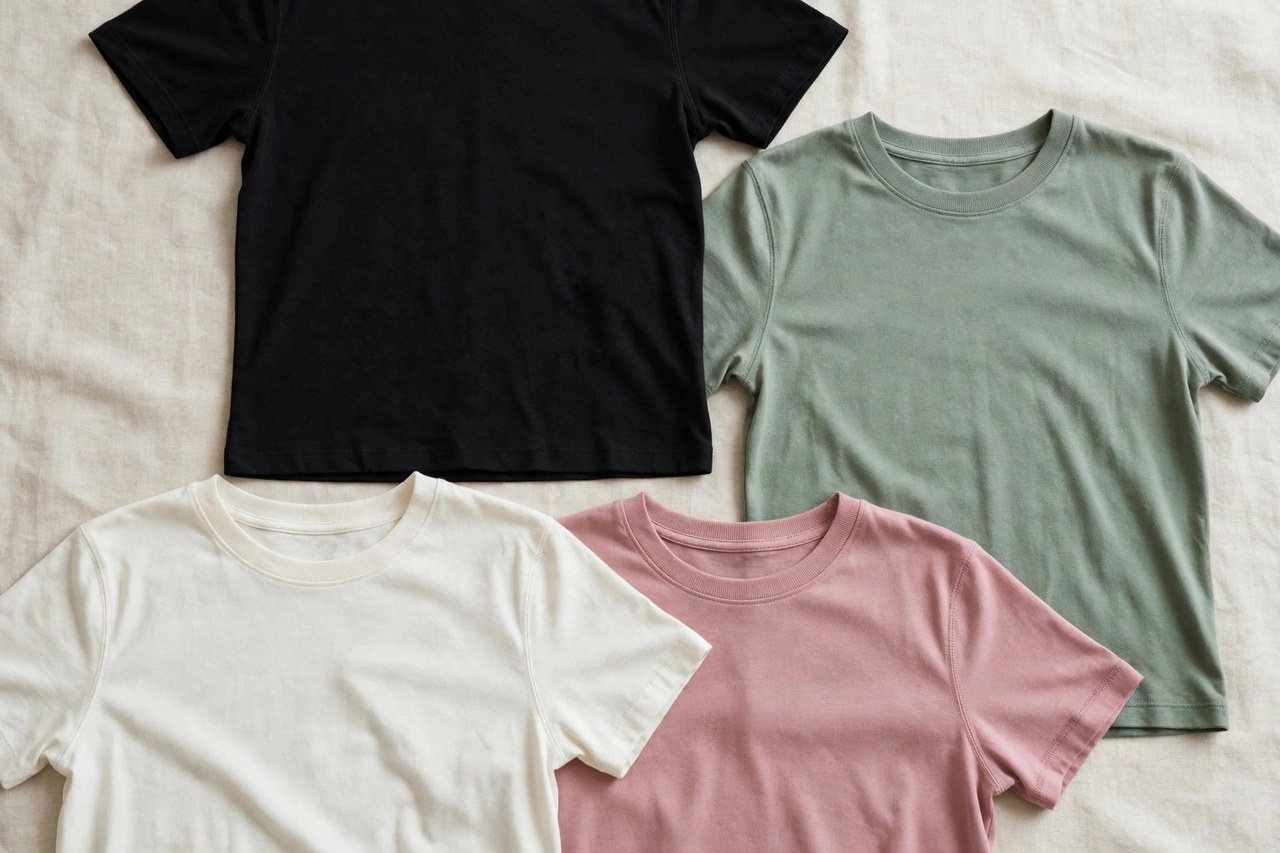
Tees is the everyday short name for T-shirts: casual knitted short-sleeved tops, from plain basics to printed and graphic styles, worn as tops, layers and sleepwear. Where the T-shirt guide on this site covers construction, this guide takes the buying angle on tees as they are actually shopped for — multipacks, graphic and slogan prints, fashion cuts and seasonal colours — and how quality varies across those formats.
This guide covers tees in the order a careful buyer needs it: what the product is made from, how it is constructed, how it should fit, how to choose it for real use, and how to care for it so it lasts. The focus is on measurable details, named materials and checks you can perform in a shop or on a parcel's arrival, rather than general fashion language.
Fabrics and Construction
The fabrics used for tees divide first by structure. Knitted jerseys and interlocks stretch mechanically, recover with elastane, and are cut close without closures; woven versions in cotton poplin, linen, crepe or silk hold a fixed shape and need darts, seams or ease to fit. Fibre then adjusts behaviour: cotton is absorbent and easy to wash but slow to dry, linen creases characteristically and breathes well, wool regulates temperature, and synthetics add durability and moisture movement at the cost of odour retention in some knits.
Construction details separate the price levels more reliably than fibre alone. Look for even stitching at a density the fabric can support, seams finished against fraying or rubbing, necklines and edges stabilised so they cannot stretch out in the first wash, and pattern pieces cut on the grain so the garment hangs straight. Printed tees carry a second product besides the garment: the print itself, which should feel flexible and be tested by stretching — a print that cracks on the rail will crack in the wash. Held to the light, a better cloth is even: thin patches, slubs that were not intended, and dye variation across panels all predict a short life.
Fit and Sizing
Fit in tees is judged at the garment's working points — shoulder, bust, waist and the length that suits the proportions of the wearer — against the brand's own measurement chart, because lettered and numbered sizes are not standardised between makers. Knit versions should skim without relying on maximum stretch, which shows strain as shine and distorted seams; woven versions need honest wearing ease, typically checked by sitting, reaching and lifting the arms in the fitting room.
Length and proportion deserve the same attention as width. A top's hem decides what it can be worn with, a knit that is too long pulls at the hip, and one that is too short rides up in wear. Between sizes, choose the one whose seams sit where the pattern intended — shoulder seams on the shoulder point, darts at the bust — since a garment worn a size off rarely fails everywhere, it fails at exactly those landmarks.
Choosing and Wearing
Choose tees by role before style: a layering piece is bought for smoothness under other garments, a standalone piece for finish and opacity, and an active piece for moisture behaviour and freedom of movement. Colour follows the same practical logic — white and pale shades need opacity checks against skin and underwear, mid-tones carry a wardrobe, and dark shades show lint and fading first, which matters in dark knitwear especially.
Value is wear divided by price, and the checks above are how wear is predicted. In practice, rank these checks in the order your own use demands — frequency of wear first, then weather, washing facilities and budget — because that order differs by wardrobe, and it is the real reason two careful buyers can correctly choose differently from the same rail. Compare like with like — fabric weight, seam finishing and fibre content explain most price differences in this category — and treat any garment you try on as a specimen of its production batch: if the rail sample is twisted, shiny at the seams or unevenly dyed, the one in the bag will be too.
Care and Storage
Care for tees starts with the label, because fibre and construction together set the rules: most cotton and synthetic knits machine-wash cool with similar colours, wool and silk versions want gentle or hand washing, and anything with structure should be dried flat or on a shaped hanger rather than tumble-dried into a new shape. Wash dark colours inside out, close fastenings so they cannot snag other garments, and reshape knits while damp.
Storage is the other half of care. Knitwear rests better folded than hung, since hangers stretch shoulders into points; woven pieces hang well on shaped hangers out of direct sunlight, which fades one shoulder at a time. Keep everything clean before long storage — moths target soiled natural fibres — and rotate favourites rather than wearing one piece to exhaustion, because fibres recover between wears and a rested garment measurably lasts longer.
Related Women's Guides
Photos

Looking for Women's Clothing Stores?
This guide helps you choose women's tees. To browse where to buy, visit our women's clothing store directory, where you can find retailers that carry them.