Women's Jersey Shirts Guide
Shirts built around one fabric: jersey, the weft knit that began in wool on the Isle of Jersey and now makes everything from polo shirts to team uniforms.
Shop Women's Jersey Shirts Now
Shop Women's Jersey Shirts on Amazon Shop Women's Jersey Shirts on eBayThe Amazon and eBay links on this page are affiliate links. If you make a purchase through them, Apparel Search may earn a commission.
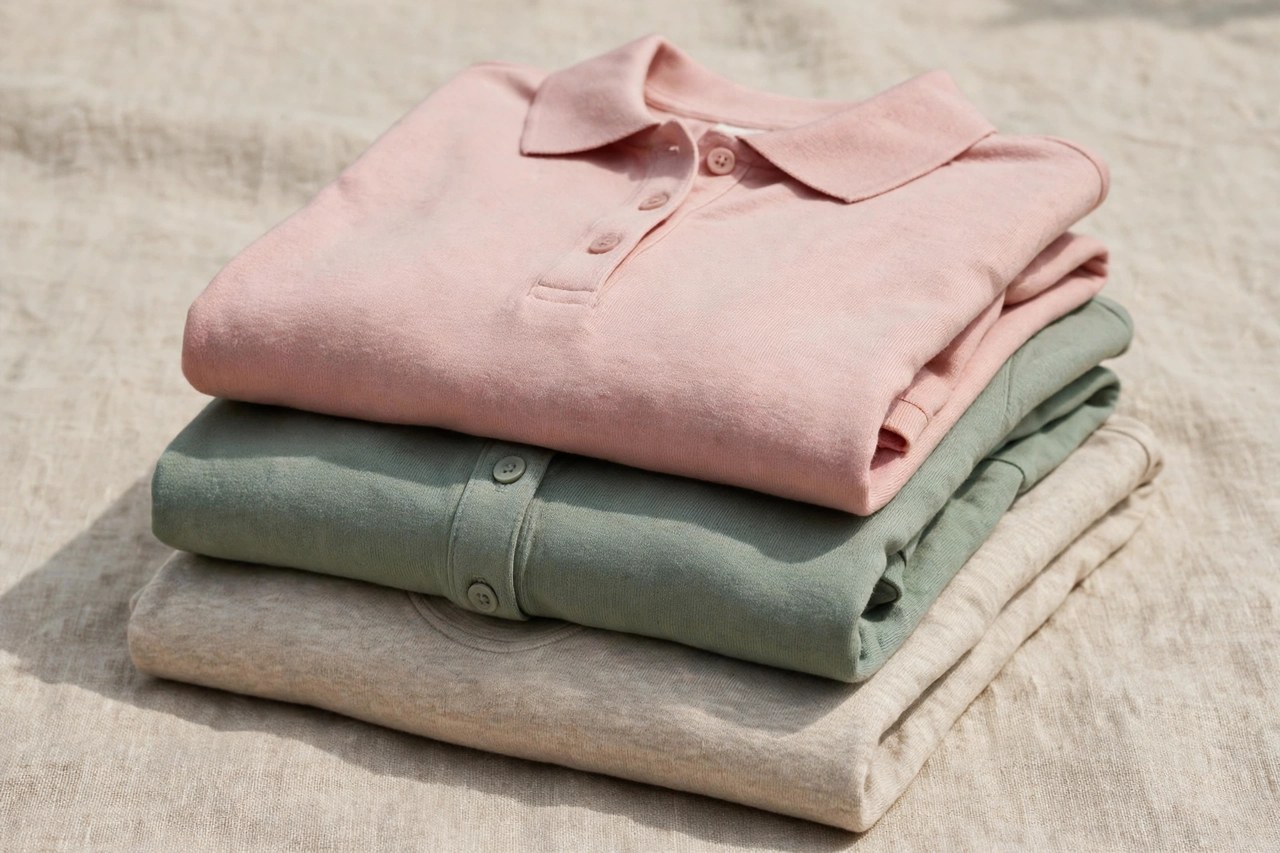
Have you ever asked yourself, what is jersey? In addition to the state, “jersey” is a type of knit fabric used predominantly for clothing production — a very popular fabric for T-shirts, sweatshirts and shirts of every kind. It was originally made of wool, taking its name from the Isle of Jersey, whose knitters produced it for fishermen's garments; today it is made of wool, cotton, or synthetic fibers. This guide is about the shirts the fabric makes: their construction, their styles, and the special branch of jersey shirts that carry a team's colors.
The word does double duty, and the distinction matters. A fabric can be jersey knit, and a top can also be a jersey — an item of knitted clothing worn as a pullover, since it does not open at the front. It is usually close-fitting and machine knitted, in contrast to a guernsey, which is more often hand knit with a thicker yarn. The word jersey is often used interchangeably with sweater, and the shirts worn by sports teams as part of the uniform are also called jerseys.
Single Knit, Double Knit, Interlock
Jersey fabric comes in identifiable constructions. Single knit jersey is a very stretchy single knitting, usually lightweight, with one flat side and one piled side; made with a lightweight yarn, it is the fabric most often used to make T-shirts. Double knit jersey — interlock jersey — has less stretch and makes a heavier fabric of two single jerseys knitted together, leaving the two flat sides on the outside and the piles in the middle.
Interlock is sometimes used as the knit for polo shirts, and is generally the preferred knit for those made from pima cotton — which is why a good polo feels smooth on both faces and holds its collar. Beyond the two basics, jersey has additional identifiable categories such as jacquard jersey and cloque jersey, in which pattern and texture are knitted into the cloth itself. When you handle a jersey shirt, the knit tells you its job: single knit drapes and breathes, double knit structures and lasts.
Shirt Styles in Jersey Knit
Because the fabric is soft, stretchy and opaque enough to wear alone, jersey carries almost every shirt style. The polo shirt is the dressed end — collar, placket, and a knit with enough body to hold them. Henleys borrow the placket without the collar. Button-front shirts in jersey trade the crispness of woven shirting for comfort that moves, and long-sleeved crew and scoop-neck jersey shirts are the layering backbone of most wardrobes.
Fit follows the fabric's nature. Jersey clings before it drapes, so a shirt cut generously in single knit reads relaxed, while the same size in interlock reads neat. Choose by face as much as by feel: the flat outside face of interlock takes embroidery, prints and a collar well, which is why uniform and work shirts so often specify it.
Sports Jerseys: The Team Branch
A jersey as used in sports is a shirt worn by a member of a team, typically depicting the athlete's name and team number as well as the logotype of the team or corporate sponsor. The styles are codified by sport. Cycling jerseys of specific color or pattern represent certain statuses in cycling — such as the yellow jersey of the leader of the general classification in the Tour de France, or the rainbow jersey for the world champion — and are usually made of synthetic microfiber to wick sweat away from the skin and let it evaporate.
The main garment of an ice hockey uniform, traditionally called a sweater, is increasingly known as the hockey jersey. Basketball jerseys are usually sleeveless. Baseball jerseys are usually button-up — and have become fashion accessories in their own right, worn far from any diamond. Fan and fashion versions of all of them are cut for women in the same jersey knits, which is why the team jersey sits comfortably inside a shirt guide.
Care for Knit Shirts
Jersey's enemies are heat and twisting. Wash knit shirts cool or warm, inside out to protect prints and faces, and avoid wringing — roll in a towel or use a gentle spin. Dry flat or on a hanger rather than by one corner on a line, since a wet knit stretches under its own weight. Cotton jersey softens with washing; synthetic microfiber jersey needs no fabric softener, which coats the wicking finish it depends on.
Related Women's Guides
Photos

More to Explore on Apparel Search
Looking for Women's Clothing Stores?
This guide helps you choose women's jersey shirts. To browse where to buy, visit our women's clothing store directory, where you can find retailers that carry them.