Womenswear Buyer Job Description
Buying the whole women's department — dresses, tops, trousers and knitwear for the store's largest customer base
A womenswear buyer is responsible for a store's women's clothing as a whole: the dresses, tops, knitwear, trousers, skirts, tailoring and casual ranges that together form the largest department in most apparel retailers. Where specialist buyers each own one slice of that offer — a missy desk for the core range, a maternity desk for pregnancy clothing — the womenswear buyer holds the complete picture, setting the department's direction and balancing its categories against each other. The original Apparel Search description called this one of the more difficult jobs in apparel buying, because women do most of the household purchasing and will spend on themselves only when quality and value genuinely justify it. This page explains what holding the whole women's desk involves.
More Buying Job Descriptions by Letter:
What a Womenswear Buyer Does
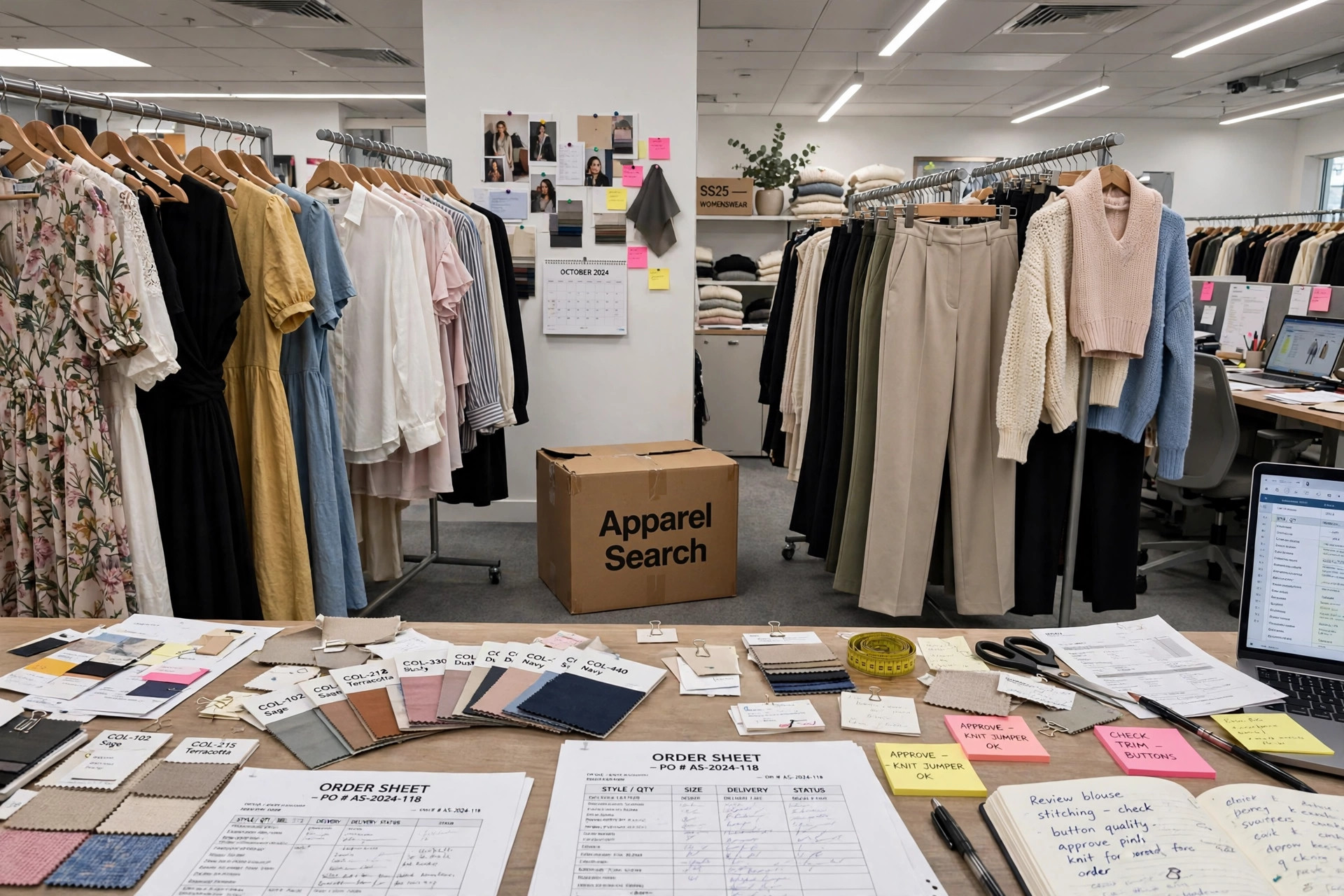
The womenswear buyer plans the department season by season as one connected wardrobe. Category budgets are set from sales history and strategy — how much belongs in dresses against knitwear, how much in casual wovens and jersey against dressier pieces — and then each category is ranged so the parts support each other: tops that work with the season's trousers and skirts, knitwear colours that sit over the dress range, outerwear that completes the offer. Vendor appointments, own-label development and trade shows fill those plans with product, fitted on the department's fit models and costed to the price architecture of each category.
In season the buyer trades the whole department, not just individual lines. Sales are read weekly by category, style and size; winners are repeated while suppliers can still deliver, slow categories give up open-to-buy to faster ones, and pricing and promotional strategy is set with the merchandising team to protect the department's margin across pre-season plans and in-season repeats alike. Because the desk is senior, the buyer also leads people: the original description pictured a team of at least two assistant buyers plus a buyer's administrator, whose training is part of the job, not an extra.
Holding the Whole Department Together
Breadth is this role's defining challenge. A specialist can live inside one customer's needs; the womenswear buyer must serve several at once — the core customer, younger and more fashion-led shoppers, occasion dressing, workwear — and keep the department coherent while she does it. That means judging how much of the budget fashion newness deserves against the proven categories that pay for it, and spotting when a trend genuinely belongs in this store's range rather than in a competitor's. Experience across the mix is the qualification employers name most: recent buying time in both casual items — wovens, knits and jerseys — and dressier women's wear, with around three years on categories such as trousers, shorts, dresses or blouses repeatedly cited as the grounding that makes the wider desk manageable.
Sourcing breadth matches range breadth. Women's departments commonly buy from domestic suppliers, European brands and Far East manufacturers in the same season, and the original description noted that many employers prefer candidates who already have direct sourcing experience with Far East companies, where lead times, minimums and quality control work differently from near-market supply. The buyer has to hold those calendars together so that long-lead product, ordered early on forecast, and short-lead fashion, ordered late on evidence, land as one department rather than as two separate ranges competing for the same rails.
Skills and Abilities the Role Requires
Commercial judgement at department level comes first: reading numerical data and translating it quickly into practical, profitable decisions — which category to back, which supplier to challenge, which promotion to run — under the daily pressure the original description emphasised, thinking on your feet without guessing. Alongside it sits negotiation of the highest order. The buyer deals with suppliers across many categories and countries, and orders must be accurate, priced right and delivered on time; that outcome is built on the communication and relationship-building skills the role demands on both sides of the business, internally with merchandising, planning and store teams, and externally with every supplier principal.
The balance the job asks for is autonomy within teamwork. A senior womenswear buyer is trusted to run the department's decisions, yet almost every result depends on other people: assistant buyers executing orders and samples, merchandisers building the financial plans, suppliers delivering to specification. Patience, flexibility and clear communication are tested precisely there. Current market knowledge ties the skills together — finding new product, walking competitors' floors, and knowing how the customer dresses now.
Qualifications, Training and Career Path
There is no single credential for the womenswear desk; employers buy experience. The typical profile combines several years of apparel buying — ideally including time as a junior or senior buyer, whether inside women's wear or in another department, since some companies will consider a strong buyer from elsewhere who is ready for the challenge — with strong management ability and a track record in the categories the department carries. Fashion buying or business qualifications support the earlier assistant-buyer steps on the ladder, but promotion to this desk is decided by results: ranges that sold, margins held, supplier relationships that delivered.
From womenswear buyer, the established routes run to senior buyer with a larger division, and on to divisional merchandise management, where several women's departments — often including the specialist missy, maternity, plus and petite desks — are overseen together. The breadth of the role also prepares buyers for head-of-buying and general merchandise management posts, and for brand-side range and product roles. Success on this desk is the most visible buying credential there is.
Common Questions
How is a womenswear buyer different from a missy buyer?
The missy buyer owns the core women's size range and customer within the department. The womenswear buyer holds the women's department as a whole — all of its categories and customer groups, including the ranges the specialist desks serve — and balances their budgets and direction against each other.
What experience do employers want for a womenswear buyer?
Several years of buying, ideally spanning casual categories such as wovens, knits and jerseys and dressier women's wear; around three years on core categories like trousers, dresses or blouses is commonly cited. Experience sourcing from the Far East, leading assistant buyers, and working with merchandising teams on pricing and promotions all strengthen a candidacy.
Why is womenswear buying considered especially demanding?
Because of its scale and its customer. Women's departments are usually a retailer's largest, and women — who do most household purchasing — spend on themselves selectively, rewarding quality and value and rejecting the rest. The buyer must hold many categories, customers and sourcing routes in one profitable plan.