Women's Cotton Cami Guide
The cami as a modern layering piece — a light cotton underpinning, a summer top, and the layer that makes other clothes work.
Shop Women's Cotton Camis Now
Shop Women's Cotton Camis on Amazon Shop Women's Cotton Camis on eBayThe Amazon and eBay links on this page are affiliate links. If you make a purchase through them, Apparel Search may earn a commission.
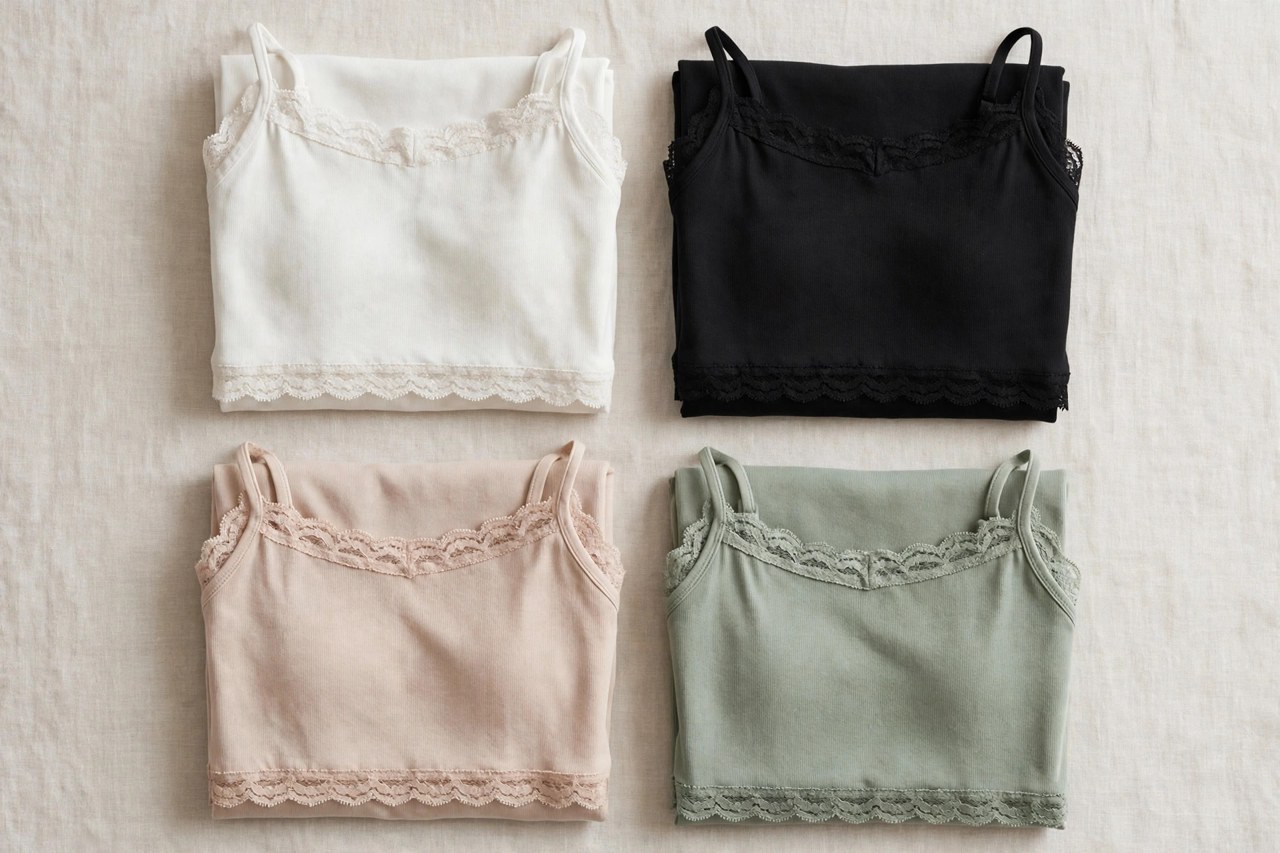
On this page, cami means the modern garment: the short, narrow-strapped cotton top worn today as a layering piece and, in warm weather, as a top in its own right. It is a present-day wardrobe tool, bought for what it does under and alongside other clothes. That is deliberately distinct from the camisole covered on its own page, which treats the classic, traditional garment — its construction, heritage, and formal place in the wardrobe. The modern cami is simpler and more functional: usually cotton jersey, often with a touch of elastane, cut straight or lightly shaped, and finished with thin straps that are frequently adjustable. If you are solving a sheer blouse, a low neckline, or a hot day, you are shopping for the cami in this modern sense, and this guide is written for that job.
The Layering Job: Under, Between, and Visible
The cami's first role is underpinning. Under a sheer or semi-sheer top, a cotton cami in a shade close to your skin or to the outer garment provides coverage while letting the outer layer stay light; cotton is preferred here because it breathes during a full day and does not cling with static the way many synthetics do. Under low or wide necklines, a cami raises the effective neckline by exactly the amount you choose, which makes borderline tops wearable in more settings. Between layers, it protects delicate outer garments from skin oils and deodorant, extending the life of silk and fine knits, and it adds a thin warmth layer without sleeve bulk. Adjustable straps are what make all of this precise, letting you set exactly where the cami sits.
Straps, Cuts, and Built-In Options
Adjustable slider straps are the modern cami's defining hardware, and they are worth insisting on: fixed straps fit only the torso length they were drafted for, while sliders let you raise or lower the neckline by centimetres, which is the whole point of a layering piece. Strap width stays narrow by design, so check that edges are soft and stitching is flat, since narrow straps concentrate pressure. Cuts divide into straight, which hangs from the bust with gentle ease and suits layering under fitted tops, and shaped or princess-seamed, which follows the waist and works better worn solo. Many modern camis include a shelf bra, a light inner elastic layer offering modest support and extra opacity; it is a comfort option, not a requirement, and it adds warmth in summer. In cotton jersey, a small elastane content keeps the body smooth through the day; in woven cotton lawn, expect a crisper, cooler, less stretchy layer.
Wearing the Cami as a Summer Top
Styled on its own, the cotton cami is a legitimate warm-weather top, and the difference between underpinning and outfit is finish. A solo cami should be opaque at full stretch, sit at a deliberate neckline height, and have straps and edges that look finished rather than functional. Square and straight necklines read most like a top; deep scoops read most like a layer. Pair a cami with high-rise trousers, a skirt, or shorts, and add a third piece for structure when the setting needs it: an open shirt, a light blazer, or a fine cardigan over a cami is a complete warm-weather formula that adjusts through the day. Colour works hard here. Black, white, and navy camis integrate with almost everything, while a saturated or pastel cami can carry an otherwise neutral outfit. Because cotton is matte and soft rather than shiny, a cotton cami dresses more casually than a satin one in the same cut, which suits daytime summer dressing exactly.
Cotton Choices: Jersey, Rib, and Lawn
Jersey is the default cami fabric: smooth, stretchy, opaque in midweights, and the best choice for invisible layering. Fine rib jersey adds grip and texture, staying put under slippery outer layers and looking more deliberate when visible at a neckline. Cotton lawn and voile camis are woven, cooler and crisper in extreme heat, and traditionally trimmed, but they offer no stretch, so fit must be right rather than forgiving. Weight matters in proportion to the job. The thinnest camis layer flattest but show every seam beneath them; midweight jersey is the all-round answer for both under and solo wear. Shrinkage in cotton camis appears mostly as length loss, which shortens strap-to-hem coverage after the first wash, so if a cami fits exactly at the coverage line when new, size or length up. Pre-shrunk and garment-washed styles reduce the guesswork and are worth choosing for a piece bought to sit at a precise neckline.
Care for a Hard-Working Layer
Camis are washed more often than almost anything else in the wardrobe, since they sit directly on the skin, so durability comes from routine rather than delicacy. Wash cool and inside out with like colours, and use a mesh bag if straps tangle with other garments in your machine; stretched, twisted straps are the most common cami failure and are usually a laundry injury, not a manufacturing one. Line dry or dry flat to protect elastane and length, and check sliders occasionally, since a slipping slider quietly lowers a neckline all day. Keep three to five camis in rotation in your core shades rather than one favourite worn daily, and the set will hold its fit and colour far longer. A good cotton cami is nearly invisible when it works, and that is the highest compliment a layering piece can earn.
More to Explore on Apparel Search
Photos

Looking for Women's Clothing Stores?
This guide helps you choose women's cotton camis by colour, cut and layering use. To browse where to buy, visit our women's clothing store directory, where you can find retailers that carry them.