Women's Screen Printed Shirts Guide
Screen printing forces ink through a fine mesh stencil onto fabric — one screen per color — and that process decides a printed shirt's feel, durability and price.
Shop Women's Screen Printed Shirts Now
Shop Women's Screen Printed Shirts on Amazon Shop Women's Screen Printed Shirts on eBayThe Amazon and eBay links on this page are affiliate links. If you make a purchase through them, Apparel Search may earn a commission.
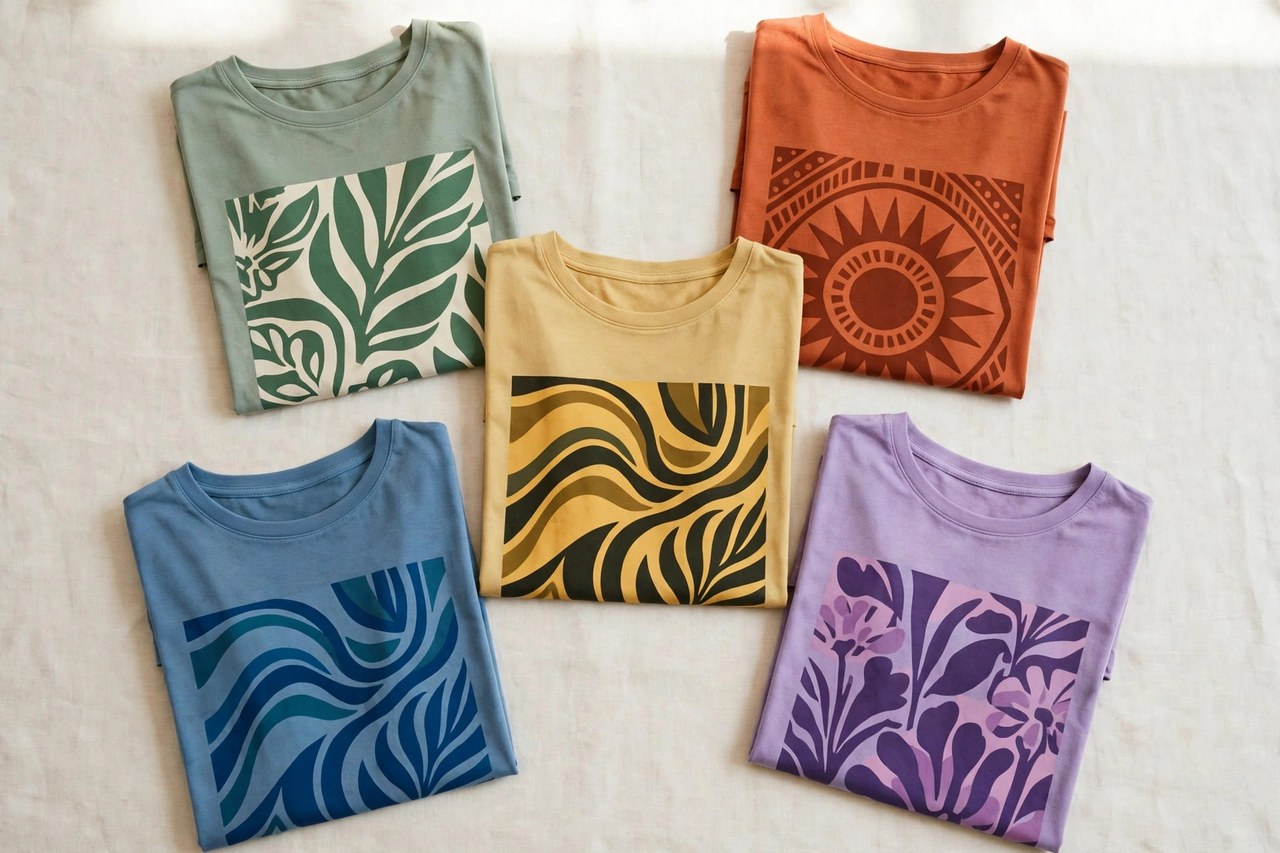
In summary, screen printing is the technique of creating a picture or pattern by forcing ink onto a surface through a screen of fine material; when screen printing shirts, the process forces ink onto a textile fabric. This printing technique is very popular for t-shirts and other women's garments. This guide explains the process as a buyer needs it: why one design costs more than another, why a print feels soft or stiff, and how to judge whether a print will outlast the shirt underneath it.
More precisely, screen printing is a technique where a mesh is used to transfer ink onto a substrate, except in areas made impermeable to the ink by a blocking stencil. A blade or squeegee is moved across the screen to fill the open mesh apertures with ink, and a reverse stroke brings the screen into contact with the shirt so the ink colors the fabric. Every women's screen printed shirt you own, from a concert tee to a team uniform, passed under that squeegee.
One Screen Per Color: Why Cost Works That Way
Why does a multi-color design cost more to produce? Because each color being printed uses its own screen. One color is printed at a time, so several screens must be used to produce a multi-colored image or design — more colors use more screens, take more time, and therefore produce a more costly design. Setup, not ink, is the expense, which is why custom screen printing gets dramatically cheaper per shirt as the order quantity rises.
That economics shapes design advice. A one- or two-color design in bold shapes prints crisply, feels lighter on the chest and ages gracefully; fine photographic detail and many-color gradients push the process toward its limits and its budget. If you are commissioning shirts, ask how many screens a design needs before you fall in love with it, and ask whether the printer recommends spot colors or a process print for your artwork — the answer changes both price and the softness of the finished print.
Which Shirts Print Well
T-shirts are extremely popular for screen printing, but other types of shirts can also be screen printed: sweatshirts, polo tops, tank tops and more can all be printed with this technique. Smooth, flat, tightly woven or fine-knit fabrics take the sharpest prints; heavy fleece prints well but softens fine detail; ribbed and slub fabrics deliberately break a print for a vintage effect. Cotton takes traditional inks beautifully, while polyester and blends may need specific inks to prevent dye migration, where the shirt's own dye bleeds up into a light print.
Ink type is the feel. Plastisol sits on top of the fabric, opaque and durable, with a slightly raised hand. Water-based inks soak in and feel soft, with a more muted color on dark shirts. Discharge printing removes the shirt's dye and replaces it, giving the softest result on suitable cotton. None is universally best: match opacity, feel and fabric. A quality printer will name the ink system used; a listing that says only 'high-quality print' is telling you nothing testable.
Judging Print Quality in Hand
A good print has even coverage with no pinholes, clean edges that follow the artwork, and registration — the alignment between colors — tight enough that outlines meet their fills. Stretch the print gently: a properly cured print flexes with the fabric, while an under-cured print cracks in a distinctive dry, flaky way that washing will only worsen. Thick, rubbery prints on lightweight women's-cut shirts are a mismatch to avoid; the print should be proportioned to the garment's weight, or it will feel like a sign hung on a shirt.
Placement deserves the same check as quality. On women's shirts, a print centered by the garment's actual measurements, sitting level across the chest and scaled to the size — not one identical print size stamped on every size from small to plus — is the mark of a maker who graded the design with the garment. Check seams and darts too: a print that crosses a side seam will distort in wear, and a careful printer designs around the garment's construction rather than through it.
Custom Orders and Care
You can find numerous retailers selling screen printed shirts, and if you want something unique or exclusive, you can get custom screen printed shirts from a local screen print shop. For a custom order, supply clean vector artwork if you have it, confirm the screen count and ink type, approve a physical proof for any large run, and ask about minimums before designing for a quantity the shop cannot serve. Keep the artwork file for cheaper reorders.
Custom orders are where screen printing meets group buying: a team’s whole roster in one design. Our team uniform decoration guide covers that commissioning decision in full — screen printing against embroidery, heat-applied names and numbers and sublimation, with placement and durability by sport.
Care protects the print, not just the shirt. Wash inside out, cool, with similar colors, and skip harsh bleach on printed areas. Tumble dry low or line dry; high heat ages ink and can crack thick prints. Iron inside out, never directly on a print. Treated this way, a well-cured screen print commonly outlasts the fashion of the shirt it is on — which is exactly why the technique, centuries old in principle and industrial in practice, still prints most of the graphic shirts in the world.
Related Women's Guides
Photos

Looking for Women's Clothing Stores?
This guide helps you choose women's screen printed shirts. To browse where to buy, visit our women's clothing store directory, where you can find retailers that carry them.