Women's Solid T-Shirts Guide
A solid t-shirt is the plain tee with no print, logo or graphic — which means fabric, weight, neckline and fit carry the entire garment.
Shop Women's Solid T-Shirts Now
Shop Women's Solid T-Shirts on Amazon Shop Women's Solid T-Shirts on eBayThe Amazon and eBay links on this page are affiliate links. If you make a purchase through them, Apparel Search may earn a commission.
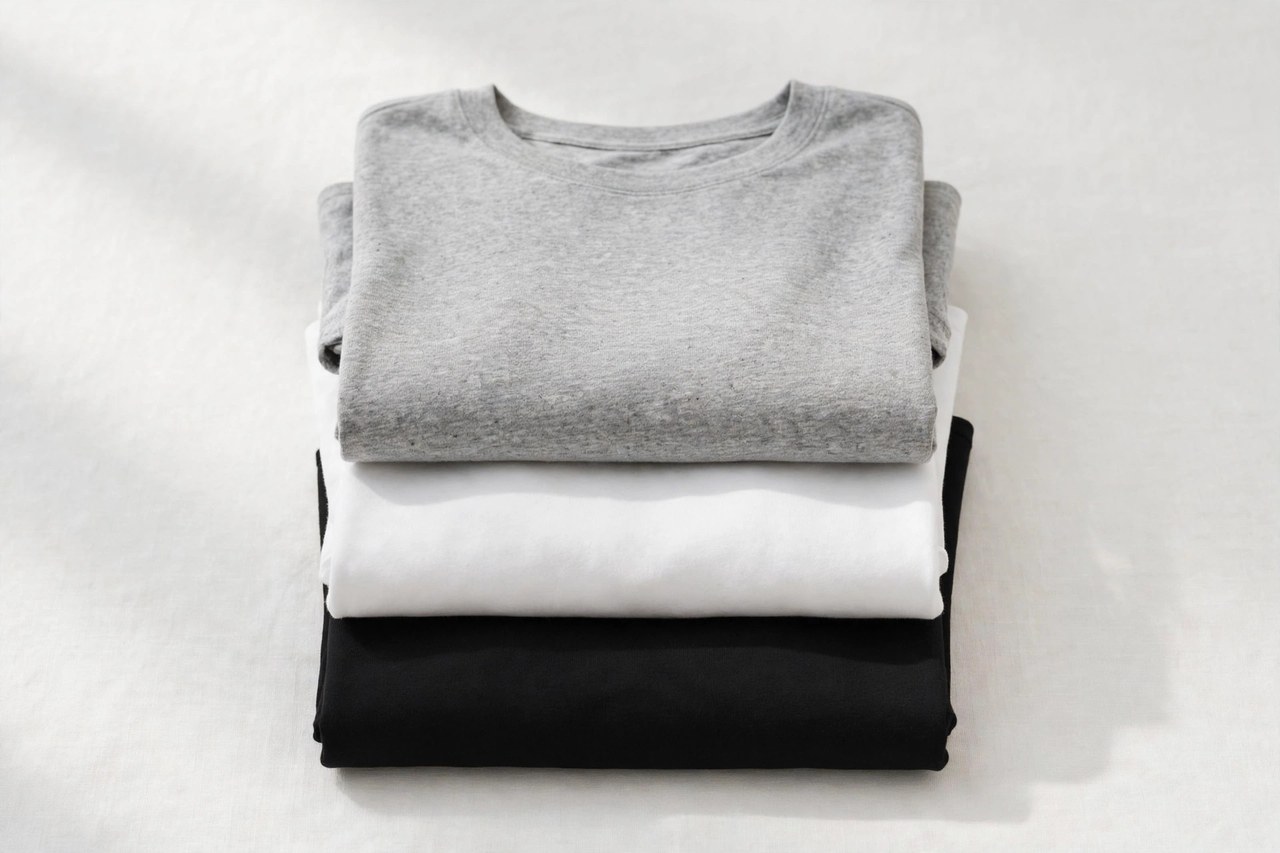
A solid t-shirt is a tee in a single, unbroken color with no print, graphic, logo or embellishment. It sounds like the simplest garment in the world, and in one way it is — but with nothing printed on it to look at, everything else about the shirt becomes visible: the weight and hand of the jersey, the shape of the neckline, the cleanliness of the fit, and whether the white is actually opaque. Plain tees are judged entirely on their making.
That is why solid tees deserve their own guide, separate from the screen-printed and graphic shirts elsewhere in this directory. This page covers jersey weights and fabrics, the neckline family, how a plain tee should fit for layering and for wearing alone, and the relationship between solid tees and blank t-shirts — the same shirts bought undecorated by printers and by minimalists alike.
Fabric and Jersey Weight
Tee fabric is described by weight, usually in ounces per square yard or grams per square metre. Lightweight jersey (around 3.5–4.5 oz) drapes softly, layers invisibly under jackets and suits summer, but can cling and show every layer beneath it. Midweight jersey (roughly 4.5–5.5 oz) is the everyday sweet spot — opaque, structured enough to skim the body, soft enough to wear all day. Heavyweight tees feel substantial and boxy, hold a crisp fold at the sleeve, and are the choice for a deliberate, structured look.
Fiber content shapes the hand. All-cotton tees are soft and matte, print-free and breathable, but relax with wear. Cotton-polyester blends keep their color and shape through far more washes and dry faster. Tri-blends with viscose drape fluidly and look heathered even in solid colors. Slub jersey adds a faint irregular texture that keeps a solid color from looking flat. For a white tee, hold it to the light: opacity is a fabric fact, and no styling tricks fix a see-through shirt.
Necklines and Sleeve Details
On a plain tee, the neckline is the design. A crew neck is the classic closed round collar, sporty and neat under jackets. A V-neck opens the line of the neck and dresses up more easily. A scoop neck drops lower and wider, feminine and cool in summer, while a boat neck runs wide toward the shoulders. Ribbing quality matters at every neckline: a collar with recovery snaps back after washing; a weak one bacon-necks within a season.
Sleeves and hems carry the smaller signals. Standard set-in sleeves end mid-bicep; cap sleeves shorten the line; cuffed or rolled sleeves add structure to a plain shirt; and a chest pocket is the one detail a solid tee traditionally allows itself. Side seams versus tubular knitting changes fit — side-seamed tees are shaped for a woman's body, tubular blanks are straighter and cheaper. Curved shirttail hems lengthen the back slightly and tuck more gracefully than straight hems on a shirt meant to be worn both ways.
Fit: The Layering Tee and the Standalone Tee
Buy solid tees by role. A layering tee should be close-fitting, smooth and long enough to stay tucked, in a lighter jersey that adds no bulk under knitwear or blazers; white, black and skin-tone neutrals do this work. A standalone tee can be relaxed or boxy, in a midweight or heavy fabric with the opacity to be the whole top, worn half-tucked into trousers or loose over leggings. The same size in the same brand can serve one role and fail the other, which is why experienced shoppers own both cuts on purpose.
Fit checks are quick: shoulder seams on the shoulder point, no pulling across the chest, sleeves that end without binding, and a body that skims rather than tents. Women's solid tees are graded in a shaped pattern; unisex blanks run straighter and longer, which some shoppers prefer for an oversized look and others find swampy. When buying multiples of a perfect plain tee — a standard strategy for a garment this foundational — buy them in the same dye lot if you can, so the blacks and whites truly match each other.
Blanks, Basics and Care
Solid tees link to the women's blank t-shirts section, and the connection is real: the wholesale blank a printer buys undecorated and the premium basic a boutique sells are cousins. Blanks are specified by weight, fiber and construction rather than by fashion, which makes their listings unusually honest shopping information — if you learn to read blank specs, you can judge any retail solid tee by the same numbers.
Care keeps plain shirts plain. Wash whites separately and treat the underarm area before yellowing sets in; wash darks inside out in cold water to hold the dye; and dry on low heat, because plain jersey shows shrinkage and collar distortion that a busy print would hide. Fold rather than hang to avoid shoulder bumps in the knit. A solid tee has nowhere to hide, in the wearing or in the laundry — which is exactly its appeal for people who like their basics done properly.
Related Women's Guides
More to Explore on Apparel Search
Women’s Clothes Guide by Letter: Women's Apparel Directory N · Women's Clothes Directory O · Women's Clothing Directory P · Women's Apparel Directory Q · Women's Fashion Directory R · Women's Clothes Directory T
Looking for Women's Clothing Stores?
This guide helps you choose women's solid t-shirts. To browse where to buy, visit our women's clothing store directory, where you can find retailers that carry them.