Women's Volleyball Shoes Guide
Women's volleyball shoes are indoor court shoes built for lateral movement, jumping and quick direction change: low-cut, lightweight, with gum-rubber outsoles, cushioned midsoles and mesh-and-synthetic uppers.
Shop Women's Volleyball Shoes Now
Shop Women's Volleyball Shoes on Amazon Shop Women's Volleyball Shoes on eBayThe Amazon and eBay links on this page are affiliate links. If you make a purchase through them, Apparel Search may earn a commission.
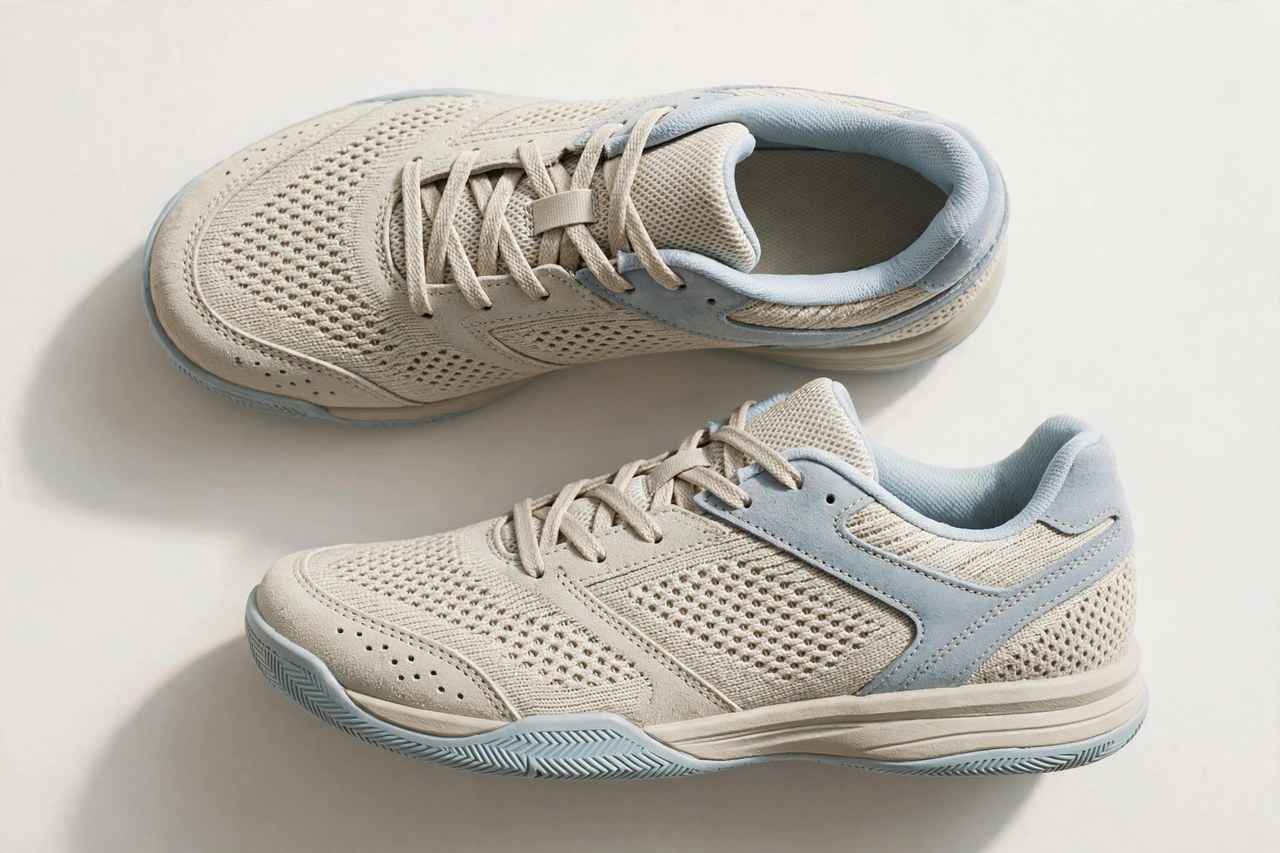
Women's volleyball shoes are indoor court shoes built for lateral movement, jumping and quick direction change: low-cut, lightweight, with gum-rubber outsoles, cushioned midsoles and mesh-and-synthetic uppers. Volleyball makes specific demands no running shoe meets — sideways planting, repeated vertical jumps, and hard stops on polished courts — so this guide covers outsole grip, lateral support, cushioning placement and court-shoe fit in those terms.
This guide covers volleyball shoes in the order a careful buyer needs it: what the product is made from, how it is constructed, how it should fit, how to choose it for real use, and how to care for it so it lasts. The focus is on measurable details, named materials and checks you can perform in a shop or on a parcel's arrival, rather than general fashion language.
Outsole, Cushioning and Upper
A volleyball shoe is three systems: a gum-rubber outsole with a court tread that grips sealed floors without marking them, a midsole cushioned most under the forefoot and heel where jumping lands, and a lightweight upper of engineered mesh with synthetic overlays that lock the midfoot for lateral cuts. Running shoes share none of these priorities, which is why the categories are not interchangeable.
The details separate court shoes from lookalikes: a rounded, wrapped outsole edge for rolling through lateral plants, a torsional shank or firm midfoot for cutting stability, and a low collar that frees the ankle for players who brace or tape. A volleyball shoe's outsole is gum rubber because it grips sealed wood and synthetic courts without marking them; that same soft compound wears quickly outdoors, so court shoes should never double as street shoes. Weight is a real specification in a sport of repeated jumps — better shoes post theirs.
Court Fit and Sizing
Fit volleyball shoes at the end of the day or after training, when feet are at match size, wearing match socks. The midfoot should be locked with no sideways slide, the heel should not lift, and the toes need roughly a thumb's width — feet swell and slide forward on landings, and toes that touch the front will bruise by the third set.
Width and volume vary by brand more than length does: a shoe can be the right length and still wrong if its midfoot volume lets the foot roll inside it. Players between sizes usually take the larger with a lacing lock (runner's loop) to hold the heel, rather than a smaller shoe that shortens the toe box.
Choosing for Your Game
Choose volleyball shoes by measurable criteria in a fixed order: outsole grip on your home court surface, midfoot lock and lateral stability, cushioning matched to how much you jump (front-row players land hardest), and only then colour and brand. In practice, rank these checks in the order your own use demands — frequency of wear first, then weather, washing facilities and budget — because that order differs by wardrobe, and it is the real reason two careful buyers can correctly choose differently from the same rail.
Judge price by the midsole and outsole: branded cushioning systems and full gum-rubber outsoles cost money and earn it in grip and joint protection. A cheap court shoe that slips or packs out in a month is the expensive option across a season of twice-weekly play.
Care and Rotation
Court shoes live indoors: keep them off concrete and tarmac, where gum rubber wears fast and grit embeds in the tread and kills grip. Wipe outsoles with a damp cloth when they pick up dust — a dusty outsole is the commonest cause of slipping that players blame on the floor.
Air shoes after play, unlace them fully, and rotate two pairs if you train often — midsole foam needs a day to recover its cushioning between sessions. Replace a pair when landings feel flat and jarring even if the upper looks new: the shoe's working life ends inside the midsole first.
Common Questions
Can I play volleyball in running shoes?
Running shoes are built for straight-line motion: their raised, cushioned heel and narrow base make ankle rolls more likely on lateral plants, and their outsole tread slips on court surfaces. A court shoe's low profile, wide lateral base and gum-rubber sole are safety features, not marketing.
How tight should volleyball shoes fit?
Snug through the midfoot so the foot cannot slide sideways inside the shoe, with roughly a thumb's width at the toes for the swelling of a long match. Heel slip is the warning sign to reject a pair — it becomes blisters and lost push-off by the third set.
How long do volleyball shoes last?
The midsole cushioning, not the outsole, sets the life: after roughly a season of regular play the foam stops absorbing jump landings even if the shoe looks fine. Players who jump heavily often rotate two pairs to extend the cushioning life of both.
Related Women's Guides
Court Shoes, Not Beach Shoes
A women’s volleyball shoe is primarily for playing the sport of volleyball — they are not for beach volleyball. The shoes should be comfortable and light, provide excellent grip, and are made with forward, backward, side-to-side, jumping and quick, sharp motions in mind, as well as the amount of time spent on the balls of the feet.
Specialist court-shoe makers include Nike, Mizuno, adidas, ASICS and Reebok. Compare their current ranges by outsole, cushioning and fit.
Photos

Looking for Women's Clothing Stores?
This guide helps you choose women's volleyball shoes. To browse where to buy, visit our women's clothing store directory, where you can find retailers that carry them.