Women's Hiking Shoes Guide
The low-cut side of trail footwear: lighter, cooler and quicker than boots, with no ankle coverage. Where hiking shoes win, where boots still do, and how trail runners differ.
Shop Women's Hiking Shoes Now
Shop Women's Hiking Shoes on Amazon Shop Women's Hiking Shoes on eBayThe Amazon and eBay links on this page are affiliate links. If you make a purchase through them, Apparel Search may earn a commission.
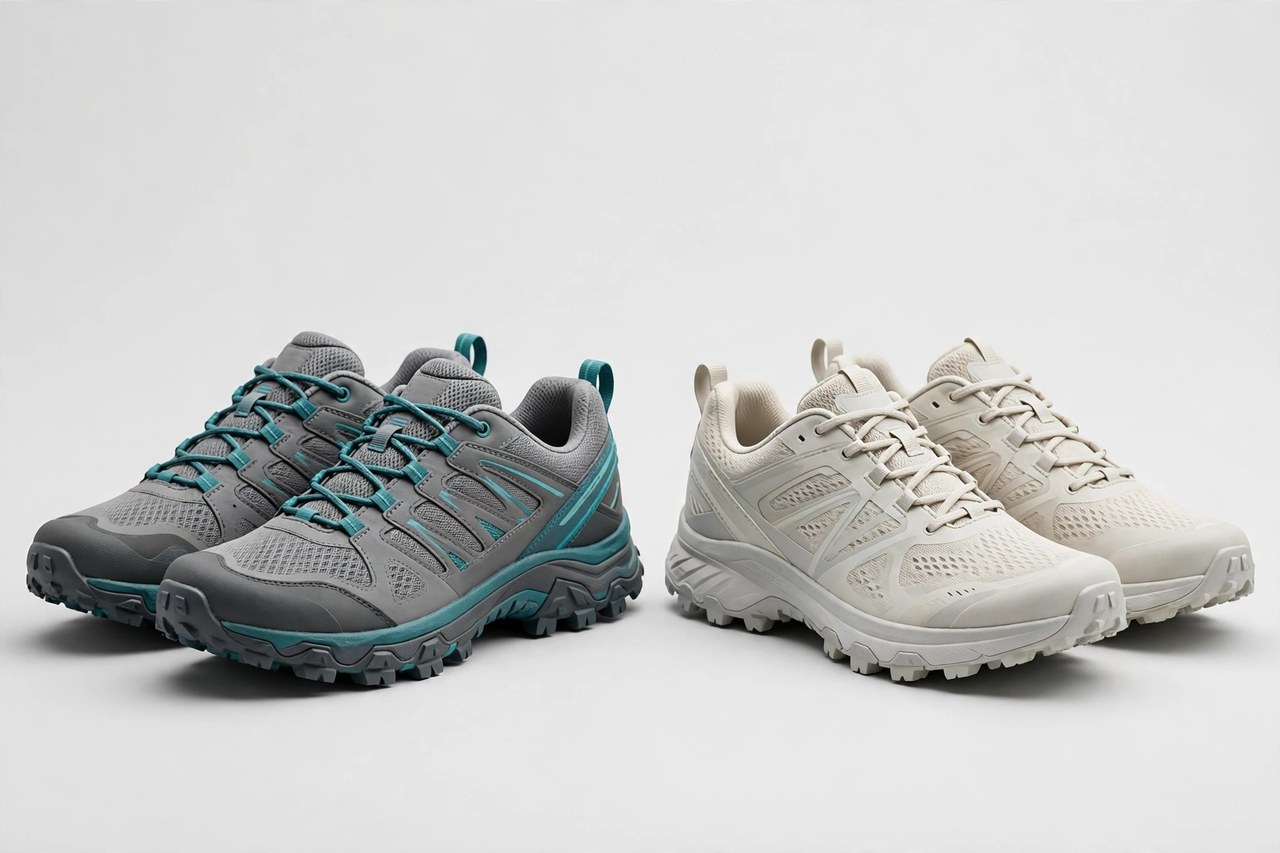
A hiking shoe is the same idea as a hiking boot, cut off below the ankle. The boundary is exact: a shoe is a covering for the foot with a sturdy sole that does not reach above the ankle, while a boot covers the foot, the ankle and sometimes the leg below the knee. Everything in this guide lives on the shoe side of that line; the boot side is covered in our hiking boots guide.
In practice the two categories blur in shop displays, and the word 'boots' is often used loosely for trail footwear generally. Keep the ankle test and you cannot go wrong: collar below the ankle bone means shoe, collar over it means boot, with all the consequences this guide spells out.
What You Gain: Weight, Air and Speed
Dropping the shaft drops the weight, and weight on the feet is the most expensive weight a walker carries. Hiking shoes are lighter, cooler and more flexible than boots, need little or no breaking in, and suit the way most people actually hike: day walks on marked trails, warm weather, light packs. Breathable mesh uppers keep feet cool in summer in a way no leather boot can.
The shoe is also the faster-drying choice. A non-waterproof hiking shoe that gets soaked at a stream crossing walks itself dry in an hour of sunshine; a soaked boot carries its water for the day. For dry climates and three-season day hiking, that trade is usually worth making.
What You Give Up: Ankle Support, Honestly Stated
The cost, stated without hedging: hiking shoes provide less or no ankle support in comparison to hiking boots, because they do not cover the ankle. A shoe cannot stop an ankle rolling on a loose descent the way a laced boot collar can, and it leaves the ankle bone exposed to knocks from rocks and roots.
How much that matters depends on the walker and the route. On smooth, well-made trails with a light pack, many hikers never miss the collar, and strong ankles plus trekking poles close much of the gap. On rough, off-camber ground, under a heavy multi-day pack, or with a history of sprains, the boot remains the responsible choice — this is a genuine trade-off, not a contest with a single winner.
Hiking Shoes vs Trail Runners
Trail runners are running shoes adapted to trails: the lightest option of all, with a runner's cushioned midsole, a flexible sole and a fast, close fit. Hiking shoes proper sit a step sturdier: a firmer sole that shields the foot from stones, more protective uppers, and a build meant for walking pace and long distances rather than running turnover.
Choose runners for fast, light days and mixed run-walk outings; choose hiking shoes when the day is long, the ground is rocky or the pack is real. Both share the low collar, so the ankle discussion above applies to each — runners simply add speed and subtract underfoot protection.
Features That Matter on the Trail
These are the features that matter on the trail. Look for uppers sculpted for women's feet, holding the narrower heel in place to prevent slippage on descents; an asymmetrical chassis that maximises stability on rugged terrain; textile linings that wick moisture away from the foot; heel cups for support and cushioning; gusseted tongues that block grit and trail debris; and mud guards and rubber toe caps protecting against roots and rocks.
Add two checks of your own. The outsole should carry real lugs — a sturdy shoe with a shallow tread, however tough its upper, will skate on wet mud — and the waterproof decision should be deliberate: membrane versions for wet climates, open breathable versions for hot and dry ones. Fit with hiking socks on, late in the day, and insist on the downhill test in the shop: toes that touch the front on a slope will be bruised by mile six.
More Trail & H Guides
Photos


More to Explore on Apparel Search
Looking for Women's Clothing Stores?
This guide helps you choose women's hiking shoes. To browse where to buy, visit our women's clothing store directory, where you can find retailers that carry them.