Women's High Top Basketball Shoes Guide
A true basketball high-top is support equipment: a collar built around the ankle, a traction pattern built for the court, and cushioning built for jumping. How to tell a court shoe from a fashion high-top.
Shop Women's High Top Basketball Shoes Now
Shop Women's High Top Basketball Shoes on Amazon Shop Women's High Top Basketball Shoes on eBayThe Amazon and eBay links on this page are affiliate links. If you make a purchase through them, Apparel Search may earn a commission.
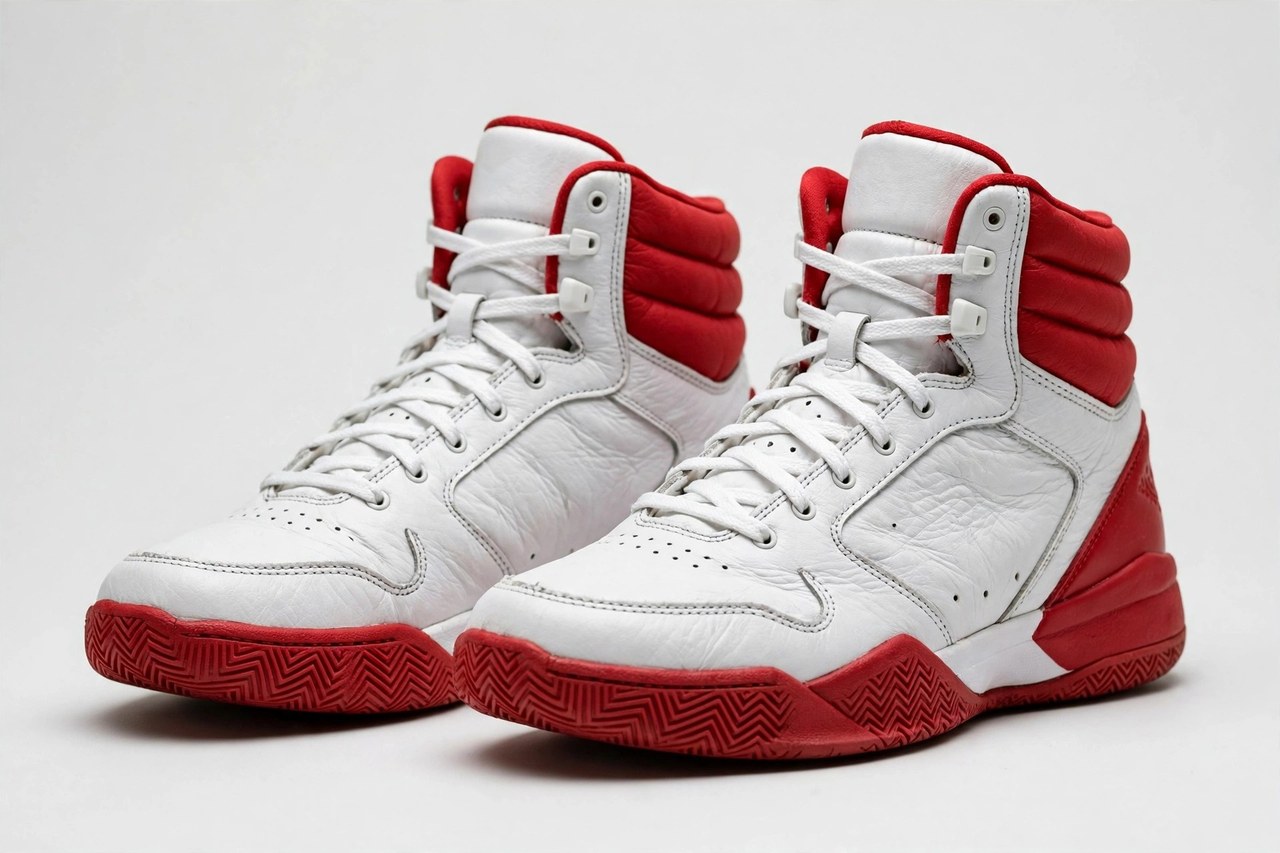
A women's high-top is a shoe that extends slightly over the wearer's ankle, and it is commonly an athletic shoe — particularly for basketball. That height is not a style flourish. Basketball involves a great deal of running and jumping, played on a rectangular court where players cut, land and change direction at full speed, so the shoe is asked to do a job no ordinary trainer is built for.
This guide covers the genuine court shoe: the support, traction and cushioning systems that earn the name. It also draws a clear line — the difference between a basketball high-top and a fashion high-top that merely shares the silhouette.
The Ankle Collar: Support by Design
The high collar wraps the ankle in padded, structured material — foam collars, internal heel counters and sometimes an integrated inner sleeve or strap — so that when a player lands on another's foot or rolls outward on a cut, the shoe resists the extremes of the motion and reminds the foot where straight is. Sports science debates how much a collar alone prevents sprains, but players value the proprioceptive support and the locked-in feel, and shoe designers build the whole upper around it.
Fit at the collar is the test: the shoe should lock the heel down with no lift when you rise on your toes, and the collar should hug without digging into the Achilles. Lacing systems that run through the top eyelets nearest the ankle are there to be used — that last eyelet, skipped in casual wear, is part of the support system on court.
Court Traction and Cushioning
A basketball outsole is patterned for hardwood: the classic herringbone tread, in solid rubber, bites in every direction a player plants and pushes off, and it squeaks on a clean court — the sound of grip working. Outdoor courts demand deeper, tougher rubber; thin indoor patterns wear smooth on asphalt within weeks. Translucent soles look modern but generally trade a little durability for the look.
Underfoot, cushioning absorbs the repeated impact of jumping and landing: foam midsoles tuned soft at the heel and responsive at the forefoot, air or foam capsules in performance models, and a torsional shank or stiff midfoot so the shoe bends at the toes, not in the middle. Guards who live on quickness often prefer lighter, lower-feeling cushioning; forwards and centres who land hardest choose maximum impact protection.
High-Top, Mid-Top and the Fashion High-Top
High-tops are sometimes confused with the slightly shorter mid-top, which typically extends no higher than the wearer's ankle, while low-tops end below it. The three cuts are a spectrum of support against freedom: many modern players choose mids or lows for speed, and choose highs for maximum collar support — a preference, and an ankle history, rather than a rule.
One warning deserves repeating in full: not every women's high-top sneaker is appropriate for basketball. Fashion high-tops — the canvas classics in the photograph here among them — may not have enough support, cushioning or traction for court play, however athletic they look. Be careful to distinguish between fashion high-tops and actual basketball-appropriate high-top sneakers. The reverse is also true: a real court shoe worn casually is fine fashion, if a slightly serious one.
Women's Sizing and Fit
Basketball shoes were designed on men's lasts for decades, and the leftovers of that era remain in sizing charts. A genuine women's model is built on a narrower heel, a lower collar line relative to the ankle bone, and a differently shaped forefoot; a men's shoe in a converted size often fits wide at the heel and tall at the collar. When a unisex model is the only option, expect to size down roughly one and a half sizes from your women's size and to test the heel lock carefully.
Shop for court shoes late in the day, in game socks, with a thumb's width at the toe for the swelling and forward slide of play. Feet move more in basketball than in running, so a fit that feels merely snug in the shop can bruise toes by the fourth quarter. Replace court shoes when the herringbone smooths at the ball of the foot or the midsole stops springing back — support you cannot see has usually already left.
More Footwear Guides
Photos


More to Explore on Apparel Search
- Women's Shoes
- Women's Footwear
- Fashion
- Clothing Retail Stores
- Fashion News
- Fashion Designers
- Popular Brands
- Apparel
- Women's Clothing Stores
- Women's Clothing Wholesalers
- Women's Fashion
- Women's Shoe Stores
- Women's Footwear Guide
- Women's Shoes
- Footwear Definitions
- Women's Athletic Shoes
- Women's Boots
- Women's Casual Shoes
- Women's Dress Shoes
- Women's Sandals
- Women's Trend Shoes
- sneaker release dates
- Fashion Designer Directory
Looking for Women's Clothing Stores?
This guide helps you choose women's high top basketball shoes. To browse where to buy, visit our women's clothing store directory, where you can find retailers that carry them.