Women's Casual Fashion Guide
Casual is a philosophy, not a lack of effort — how to look considered on the days nobody requires you to.
Shop Women's Casual Fashion Now
Shop Women's Casual Fashion on Amazon Shop Women's Casual Fashion on eBayThe Amazon and eBay links on this page are affiliate links. If you make a purchase through them, Apparel Search may earn a commission.
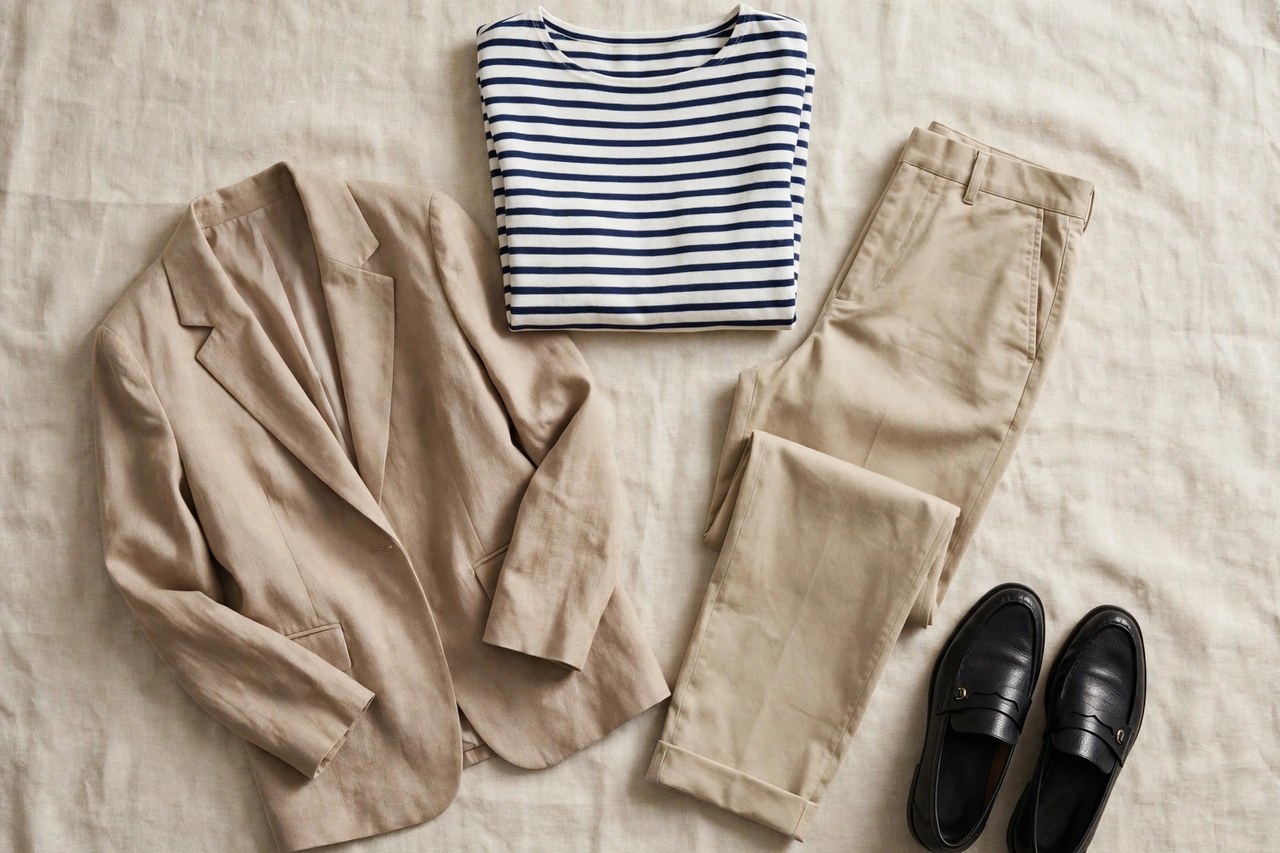
Casual fashion is not a list of garments; it is a philosophy for the large part of life that has no dress code. Where casual apparel names the category of clothing, casual fashion asks how you wear it — the judgment that separates an outfit that looks deliberately relaxed from one that looks merely unplanned. Its core belief is that comfort and polish are not opponents. A soft outfit can still have intention in its proportions, its fabric quality, and its finishing details, and a structured outfit can still feel easy. Women who dress casually and well rarely own more clothes than everyone else; they edit harder, repeat favorites without apology, and understand which small signals — a tucked hem, a good shoe, an uncreased knit — make relaxed clothing read as style rather than as surrender. This guide is about developing that eye.
The Principles Behind Polished Casual
Three principles do most of the work. First, fit before fashion: a plain tee that skims correctly and trousers hemmed to the right length will always outrank a trend piece that fights your proportions. Second, one point of polish per outfit is enough — a blazer over jeans, leather loafers with a sundress, or a neat low bun with a sweatshirt set — because casual style collapses when every element tries to be the dressed-up one. Third, texture substitutes for ornament. Ribbed knits, raw denim, linen slubs, suede, and woven leather create visual interest without prints or hardware competing for attention. Color discipline helps too: outfits built from tones that share an undertone look expensive at any price. None of this requires a stylist. It requires pausing for ten seconds before leaving and asking which single element, if changed, would make the whole look intentional.
Trends, Translated for Real Life
Casual fashion absorbs trends more slowly and more selectively than runway fashion, and that is a strength. The useful question is never whether a trend is in, but what it is really offering. Wide-leg trousers offer ease and movement, which translates even if you choose a moderate width rather than an extreme one. Oversized shirts offer borrowed-from-him nonchalance, which a slightly long, neatly cuffed shirt delivers without swamping a smaller frame. Matching knit sets offer coherence, which any same-color top and bottom can imitate. Ballet flats, loafers, retro sneakers, and long denim skirts all cycle through casual fashion on roughly generational loops, so storing a good version of a fading favorite is often wiser than donating it in a purge. Adopt the one or two seasonal ideas that suit pieces you already own, let the rest pass without anxiety, and your casual wardrobe will look current for years rather than dated by spring.
Finding Your Personal Casual Signature
A signature is the repeatable element people associate with your relaxed dressing: always a striped top, always gold hoops, always impeccably clean white sneakers, or a commitment to one beloved color worn near the face. Signatures are liberating because they shrink daily decisions and make inexpensive clothes look like a point of view. To find yours, review photographs of yourself on ordinary days and mark the outfits where you look most like yourself; the shared details across those images are your signature announcing itself. Then buy deliberately toward it — better versions of the striped top, the hoop in a second metal — instead of scattering money across every attractive thing. Personal style also includes knowing your refusals. The woman who never wears shorts, hates logos, or lives in dresses has information, not limitations, and dressing well casually means honoring those lines rather than arguing with them each season.
Fabric Quality: The Quiet Luxury Signal
In formal clothing, construction shows; in casual clothing, fabric shows. A heavyweight cotton tee with a smooth finish, jeans in rigid denim that mold to the wearer, a sweater knitted densely enough to resist pilling — these read as quality at conversational distance, while thin, shiny, or distorted fabrics read as tired even when the outfit idea is sound. Learn the hand-feel tests: rub knit fabric between your fingers to check for a dry, papery thinness; hold jersey to the light to see whether it is nearly transparent; check whether a woven shirt wrinkles into sharp creases the moment you squeeze it. Natural fibers and their blends generally age more gracefully in casual pieces, developing softness instead of shine. Spending the quality budget on the three or four fabrics closest to your skin and most often repeated is the single highest-return move in casual fashion.
Day to Evening, and Care That Preserves the Look
Casual fashion earns its keep by flexing across a day. The same jeans and knit that handled the morning become dinner-appropriate with heeled ankle boots, a darker lip, a structured bag, and the blazer that spent the afternoon on the chair. Sundresses shift with a denim jacket removed and a sandal swapped for a wedge. Plan these pivots when you get dressed rather than at six o’clock: wear the versatile base, carry the one transforming piece. Preserving the look is mostly preservation of fabric and shape. Wash knits flat or folded rather than hung wet, steam rather than iron casual shirts for a softer finish, keep sneakers clean with a regular wipe rather than a rescue scrub, and store leather shoes with their shape supported. Polished casual is a perishable effect — it depends on clothes looking cared for — so ten minutes of weekly maintenance protects the entire philosophy.
Related Women's Guides
More to Explore on Apparel Search
Looking for Women's Clothing Stores?
This guide helps you choose women's casual fashion by style, fabric and fit. To browse where to buy, visit our women's clothing store directory, where you can find retailers that carry them.