Women's Casual Shirts Guide
Flannel for the trail, chambray for every day, camp collars for summer — the relaxed shirt family, sorted by personality.
Shop Women's Casual Shirts Now
Shop Women's Casual Shirts on Amazon Shop Women's Casual Shirts on eBayThe Amazon and eBay links on this page are affiliate links. If you make a purchase through them, Apparel Search may earn a commission.
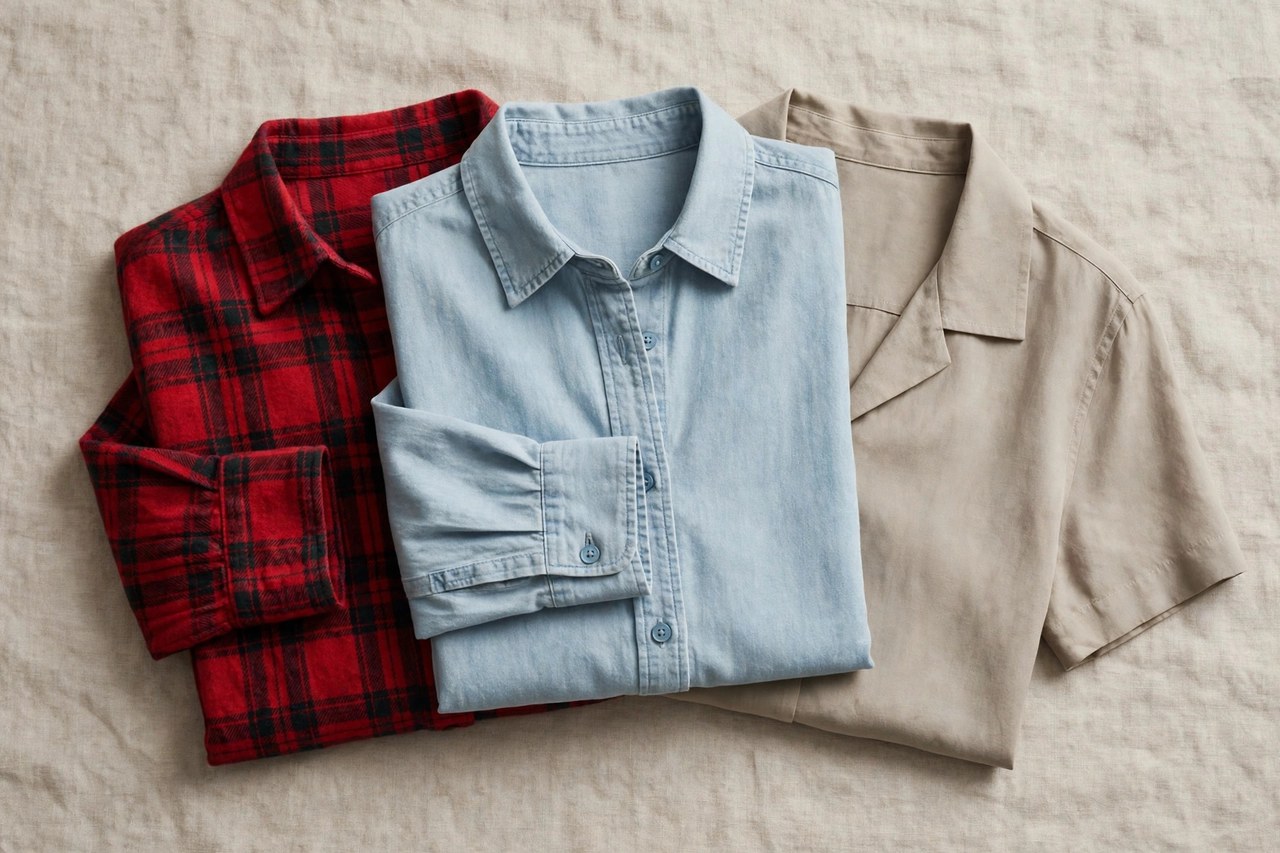
A casual shirt is any shirt designed to be worn untucked, unstarched, and unbothered — the relaxed branch of the shirt family that includes flannel, chambray, denim, camp collar, and soft overshirt styles, plus knit shirts that borrow a woven shirt’s shape. What unites them is ease: softer collars that need no stays, fabrics that welcome a wrinkle or two, and cuts that work open over a tee as happily as buttoned on their own. Unlike a dress shirt, which is judged by crispness, a casual shirt is judged by character and comfort. It is the layer that makes jeans and a tee into an outfit, the thing thrown over a swimsuit in July and under a jacket in October. Understanding the main styles — and which fabric weight suits which season — makes this hardest-working top easy to shop.
Flannel, Chambray, Denim and Camp: The Main Styles
Flannel is a brushed cotton, usually plaid, whose napped surface traps warmth; it ranges from shirtweight for autumn layering to heavy overshirt thickness worn as a light jacket. Chambray is the warm-weather impersonator of denim — a plain weave with a colored warp and white weft that gives a denim look at half the weight and twice the breathability. A true denim shirt is heavier, sturdier, and ages with fading at elbows and placket that fans prize. Camp or resort shirts have a flat, notched collar designed to lie open, short sleeves, and a straight hem; in rayon or cotton they are the definitive summer casual shirt, printed or plain. Add the soft overshirt or shacket for transitional weather, the henley-adjacent knit shirt for texture, and the simple crew or polo-style knit shirt, and the family covers every temperature on the calendar.
Fabrics and Weights, Season by Season
Shirt fabrics are best judged by weight and finish. Lightweight chambray, voile, and rayon camp shirts breathe in heat but wrinkle readily and can feel insubstantial in air conditioning, so they suit high summer and holidays. Midweight cotton poplin, oxford, and standard flannel cover spring and autumn, layering cleanly under sweaters and jackets. Heavy flannel, denim, and brushed twill overshirts earn their bulk from October onward. Blends shift the balance: cotton-polyester wrinkles less and dries faster, cotton with a touch of elastane moves better but can relax out of shape by evening, and linen-cotton mixes split the difference between airflow and structure. Check the inside finish before buying — flat-felled or neatly bound seams survive the frequent washing casual shirts receive, while raw overlocked edges on a heavy shirt are an early warning of a short life.
Fit, Tucking, and the Open-Shirt Question
Casual shirts should skim the shoulders exactly — a dropped shoulder is a deliberate style, a merely big shirt is not — and leave room through the body to button over a thin tee without pulling. Length decides versatility: a hem ending around mid-hip tucks, half-tucks, and wears loose equally well, while very long shirts commit you to the untucked or leggings pairing. The French or half tuck, front-center tucked and sides loose, is the casual shirt’s best trick for defining a waist without formality. Worn open, a casual shirt functions as a jacket, so judge it with the tee or camisole you actually plan under it; the two necklines should not compete. Sleeves should roll and stay rolled — a button tab helps — and cuffs that cannot pass your forearm will annoy you out of wearing an otherwise good shirt.
Styling Casual Shirts Beyond Jeans
Jeans are the default, but casual shirts pair widely. A chambray shirt over a white sundress, knotted at the waist, solves bare shoulders and cool evenings at once. Flannel worn open over a black tee and leggings is a weekend uniform; the same flannel, buttoned and tucked into a midi skirt with boots, surprises people pleasantly. Camp shirts were made for shorts, wide-leg linen trousers, and white jeans in summer. A denim shirt with black jeans avoids the head-to-toe denim question while keeping the texture, though a full denim pairing works when the washes differ clearly in depth. For workplaces with relaxed codes, a plain oxford or dark chambray under a cardigan, sleeves showing at the cuff, sits comfortably on the smart side of casual. Keep jewelry simple — these shirts carry pattern and texture already.
Washing, Softening, and Storing Shirts
Casual shirts improve with correct washing and deteriorate fast without it. Wash flannel and denim inside out in cool water to slow fading, and expect new flannel to shed lint for the first few washes — wash it with like colors and empty the dryer filter. Chambray and camp shirts in rayon should be washed gently and reshaped while damp, since rayon weakens when wet and can shrink in a hot dryer. Button shirts before washing to protect buttonholes, unbutton them before wearing to avoid stressing the placket. If a new shirt feels board-stiff, a wash with half a cup of white vinegar in the rinse helps strip factory sizing without fabric softener’s coating. Store shirts hung or loosely folded with the top button done to hold collar shape, and rotate heavy flannels off the same hanger spots to avoid shoulder stretching under their own weight.
Related Women's Guides
Photos

More to Explore on Apparel Search
Looking for Women's Clothing Stores?
This guide helps you choose women's casual shirts by style, fabric and fit. To browse where to buy, visit our women's clothing store directory, where you can find retailers that carry them.