Women's Pull-On Boots Guide
Pull-on boots have no laces and no zips to bother with: pull tabs, loops and elastic gores do the work, so the boot goes on in one motion and comes off the same way.
Shop Women's Pull-On Boots Now
Shop Women's Pull-On Boots on Amazon Shop Women's Pull-On Boots on eBayThe Amazon and eBay links on this page are affiliate links. If you make a purchase through them, Apparel Search may earn a commission.
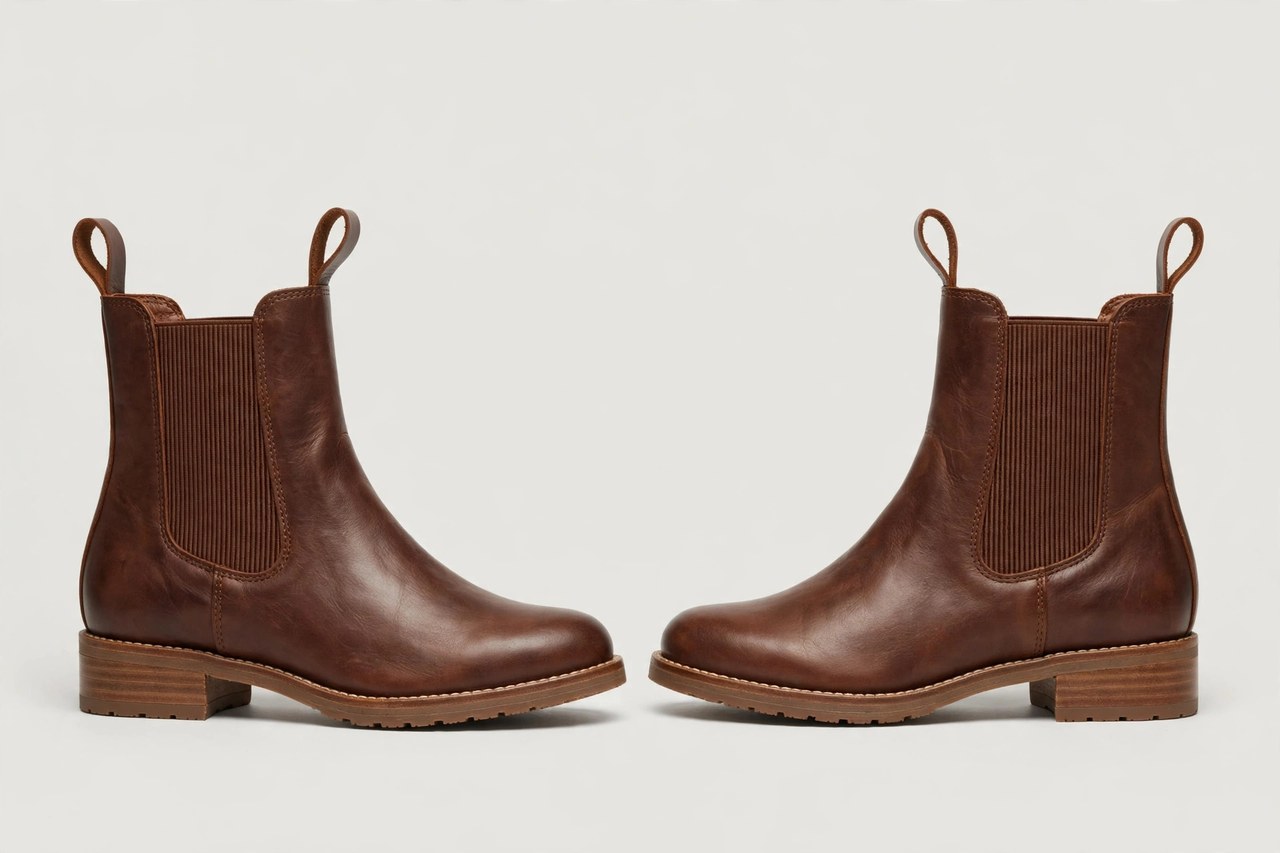
A pull-on boot is exactly what its name promises: a boot with no laces and no zip, pulled onto the foot by hand and held there by the shape of its shaft. In place of fastenings it uses pull tabs and loops at the top of the shaft that fingers hook into, and, in many styles, elastic gores or stretch panels that flex to let the foot pass and then close around the ankle. It is the fastest boot in the wardrobe, with a clean, unbroken line no laced boot can match.
This guide covers the pull-on families — Chelsea, western, rain, riding and work boots — then the fit questions that replace the lace question, and the care that keeps stretch panels and pull loops working for years.
The Pull-On Families
The Chelsea boot is the family's city classic: an ankle boot with elastic side gores running from the shaft top down toward the sole, a pull loop at the back, and a close, sleek fit that slides under trousers and pairs with dresses alike. The elastic is both its mechanism and its look — the contrasting gore panel is the Chelsea's signature detail. The western pull-on (the cowboy boot in its standard form) uses a taller shaft, decorative stitching, pull straps or holes at the shaft top, and a shaped, slightly loose fit held by the instep rather than the ankle; its shaft does the holding that elastic does in a Chelsea.
Around those two anchors sit the specialists. Rain and Wellington boots are pull-ons by necessity — waterproof rubber shafts with pull handles or a generous opening. Riding-style pull-ons take the tall, plain shaft of the English tradition. Pull-on work boots combine an elastic gore with a rugged sole. And pull-on booties shorten the idea to ankle height with wide stretch panels, the easiest on-off shoe in the winter wardrobe.
How a Pull-On Stays On: Gores, Panels and Tabs
With no fastening to tighten, a pull-on boot holds the foot by three constructions working together. The elastic gore — a woven elastic panel set into the shaft — expands as the heel passes through the ankle turn (the tightest moment of putting any boot on) and contracts to hug the ankle afterward. Stretch panels of knit or neoprene-style material do the same job over a larger area in sock-boot and bootie styles. And the boot's last shape — a snug instep and a heel cup cut to grip — does the quiet permanent work, which is why a well-made pull-on feels secure despite having nothing to tie.
The pull tabs and loops are functional, not decorative: hook a finger through the loop and pull straight up, rather than hauling sideways, which tears loops from their stitching. On western boots the pull straps serve the same purpose. Judge the furniture when buying: loops should be bar-tacked through a reinforced panel, and gores should snap back flat when stretched. A boot you cannot get on at all in the shop is simply the wrong size or shaft shape.
Fit Around Calf, Ankle and Instep
Pull-on fit is decided at three points. The instep is the gatekeeper: if the boot will not pass your instep and heel in the shop, no breaking-in will fix it, because leather gives slowly and elastic only gives so far — this is the one snugness that must be passable on day one. The ankle should be hugged by the gore or shaft without cutting; a little heel slip in a new pull-on is normal and settles as the insole compresses, but a whole thumb's lift means the boot is too big and will never hold better than it does now. The calf, on taller styles, should admit a finger or two at the top over the socks or jeans you will wear; shafts that strain at the calf will pull the boot down as you walk.
Sizing strategy differs from laced boots, which forgive by adjustment. Buy the pull-on for your thicker-sock, end-of-day foot, and try both feet — a pull-on must pass the larger foot's instep. Wide-calf and stretch-shaft versions solve the calf problem honestly rather than by sizing up the foot. Walk stairs in the shop if you can: stairs test gore, instep and heel grip together.
Styling and Care
Styling follows the clean line. Chelsea boots finish cropped trousers, straight jeans, midi dresses and skirts with equal ease, precisely because nothing interrupts the ankle. Western pull-ons carry their own statement and pair best with simpler clothes — denim, plain dresses, knitwear. Tall pull-ons go over skinny jeans or under dresses; rain boots look best worn unapologetically as weather equipment. The pull-on's smoothness is the aesthetic: an unbroken line from hem to sole.
Care protects the moving parts. Condition leather shafts as you would any boot, but keep conditioners off elastic gores, which they degrade; clean gores with a damp cloth only. Rest pull-ons a day between wears so the elastic recovers, and store tall shafts with boot trees so they stand rather than fold at the ankle. Have a cobbler re-stitch a loosening pull loop early: it is a small, cheap repair that prevents the boot's one disabling failure.
Related Women's Guides
Photos

More to Explore on Apparel Search
- Women's Boots Guide
- Women's Shoes
- Women's Footwear
- Women's Shoe Stores
- Women's Footwear Guide
- Women's Shoes
- Footwear Definitions
- Shoes
- Cowgirl boots
- Women's Athletic Shoes
- Women's Casual Shoes
- Women's Dress Shoes
- Women's Sandals
- Women's Trend Shoes
- Fashion
- Clothing Retail Stores
- Fashion News
- Fashion Designers
- Popular Brands
- Apparel
- Women's Clothing Stores
- Women's Clothing Wholesalers
- Women's Fashion
Looking for Women's Clothing Stores?
This guide helps you choose women's pull-on boots. To browse where to buy, visit our women's clothing store directory, where you can find retailers that carry them.