Women's Pointed Toe Western Boots Guide
The pointed toe is the classic cowboy boot silhouette — made to slide into a stirrup, finished with decorative stitching, and now a fashion staple far from any ranch.
Shop Women's Pointed Toe Western Boots Now
Shop Women's Pointed Toe Western Boots on Amazon Shop Women's Pointed Toe Western Boots on eBayThe Amazon and eBay links on this page are affiliate links. If you make a purchase through them, Apparel Search may earn a commission.
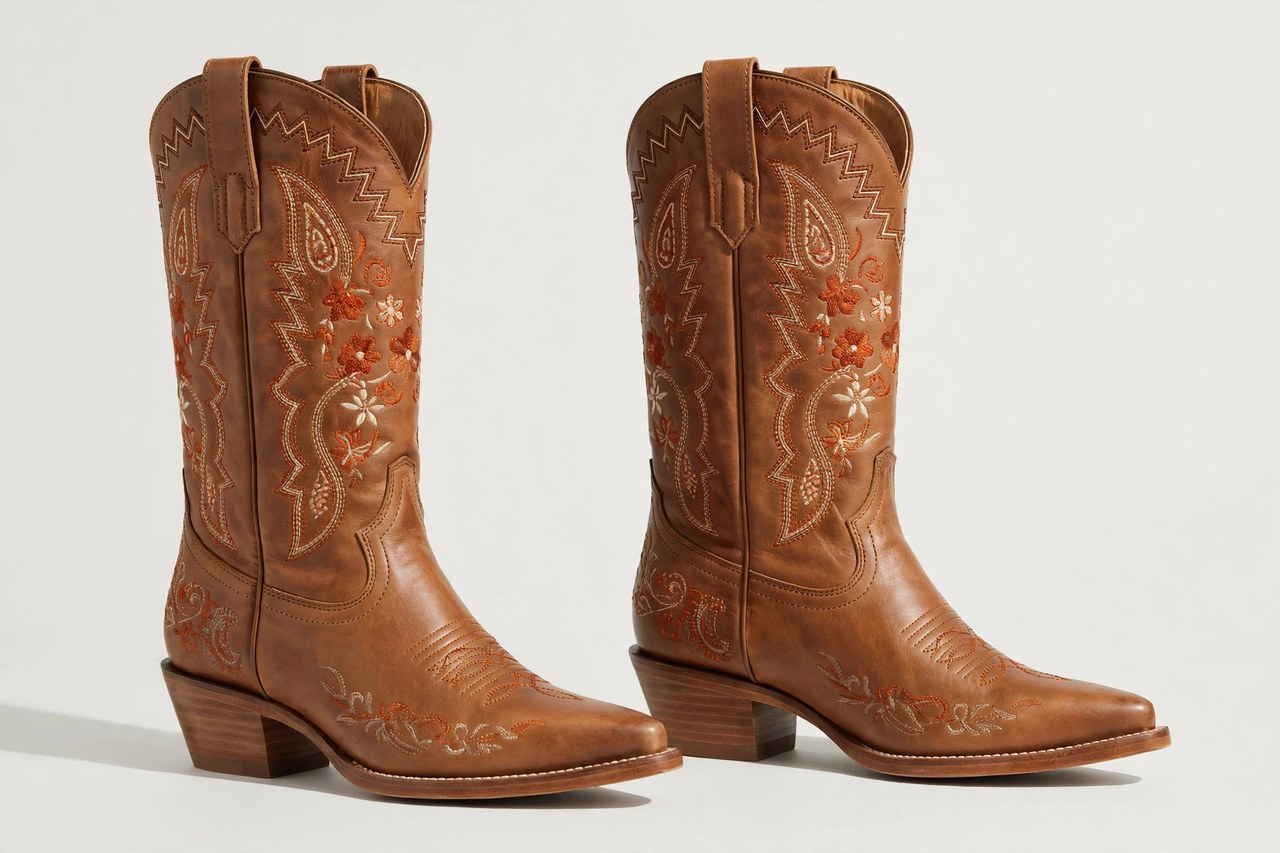
Pointed toe western boots are cowboy boots with an elongated, tapered toe — the traditional silhouette of the Western boot, designed in the nineteenth century for riders and kept ever since for its looks. If the round toe is the Western boot's working, walking face, the pointed toe is its dress face: sharper, sleeker and the version most associated with the classic cowboy boot image. For women, pointed western boots span authentic ranch-made boots and fashion versions that borrow the silhouette for city wear.
This guide explains the pointed-versus-round distinction properly, decodes the parts of the boot — the decorative stitching, shaft, heel and leathers — and covers the fit rules that differ from ordinary boots, because a pointed toe changes how a boot must be sized. Retail context and styling follow, so you can buy one pair and wear it everywhere from a country concert to a winter dress outfit.
Pointed vs. Round Toe
The toe distinction is the Western boot's first classification. A pointed toe tapers to a defined point beyond the toes: it was designed to slip easily into a stirrup and to guide the boot out again quickly, a genuine safety function for a rider whose horse might fall. Points themselves have degrees, from the moderate classic point through the longer fashion point to the extreme needle toes of mid-century show boots.
Between them sit the modern compromises: the snip toe (a point with the very tip squared off), the square toe (broad and flat-ended, now the dominant work style) and the roper toe (a low, rounded riding toe). For a buyer choosing the pointed style, the honest summary is: the pointed toe is the classic and dressiest silhouette and the easiest into a stirrup, it lengthens the leg line beautifully with dresses and jeans, and it demands the most care in fitting, because its taper must extend beyond the toes rather than compress them — the same fitting law as any pointed shoe, applied to a boot.
Stitching, Shafts, Heels and Leathers
Western boots announce themselves by their decorative stitching: rows of ornamental stitch patterns run up the shaft (the tall upper part of the boot), traditionally in contrasting thread — flames, eagles, cactus and geometric rows among the classic motifs. The stitching began with a structural purpose, stiffening the shaft so it stands without collapsing, and became the boot's canvas.
The rest of the anatomy follows tradition. The heel is angled and underslung (the classic cowboy heel, around one and a half to two inches), shaped to hold a stirrup and to keep a heel from slipping through it; lower, blockier roper heels serve walking styles. Pull straps at the shaft top (or side pull holes) get the boot on. Shaft heights run from around ten to fourteen inches on classic women's styles.
Fit and Sizing for a Pointed Boot
Western boots fit differently from lace-up footwear, and first-time buyers should expect the differences. A new boot should be snug across the instep — that, not laces, is what holds it on — with the ball of the foot at the boot's widest point and clear room beyond the toes before the point's taper begins. A slight heel slippage in a new boot is normal and reduces as the sole breaks in; a boot that is loose at the instep will never improve, while one that is merely stiff will.
Fit sitting and standing, and fit both feet, in the socks you will wear. The shaft should clear the calf without pinching when you sit (calves expand) and stand tall without collapsing into creases at the ankle beyond the natural break-in wrinkles. Toe room deserves one more check than usual here: press the leather over your longest toe and confirm flesh, then space, then taper. A pointed boot fitted this way is comfortable from the first week; fitted short, it will pinch forever, because a boot's toe box does not stretch in length.
Retail Context, Styling and Care
Western boots are sold by specialists as well as fashion retailers, and the specialist channel is worth knowing: long-established Western retailers such as Sheplers, along with the bootmakers' own stores, stock the full range of toe shapes, shaft heights and widths (including the wide-calf and wide-width fittings fashion lines often skip), and their staff fit boots professionally. That retail context matters most for a first authentic pair, where width grades and toe styles multiply the choices beyond a single fashion size run.
Styling is generous: pointed western boots are the classic partner of jeans (tucked in to show the shaft, or boot-cut over it), they toughen floral and prairie dresses into the defining high-low outfit of modern Western fashion, and they sharpen denim skirts and winter dresses with tights. Care for the leather as you would any good boot — condition cowhide, brush suede versions, keep exotic skins with specialist products — use boot trees to hold the shaft and toe shape, and resole leather soles before they wear through.
Related Women's Guides
Photos


More to Explore on Apparel Search
- Women's Boots Guide
- Women's Shoes
- Women's Footwear
- cowgirl boots
- Women's round toe shoe
- women's Westernwear
- Fashion Designer Directory
- Women's Athletic Shoes
- Women's Casual Shoes
- Women's Dress Shoes
- Women's Sandals
- Women's Trend Shoes
- Fashion
- Clothing Retail Stores
- Fashion News
- Fashion Designers
- Popular Brands
- Apparel
- Women's Clothing Stores
- Women's Clothing Wholesalers
- Women's Fashion
- Women's Shoe Stores
- Women's Footwear Guide
- Women's Shoes
- Footwear Definitions
- Shoes
References & Further Reading
Looking for Women's Clothing Stores?
This guide helps you choose women's pointed toe western boots. To browse where to buy, visit our women's clothing store directory, where you can find retailers that carry them.