Women's Pointed Toe Shoes Guide
The pointed toe is fashion's longest-running silhouette — an elongated toe box that stretches the line of the leg, from medieval poulaines to the modern pump.
Shop Women's Pointed Toe Shoes Now
Shop Women's Pointed Toe Shoes on Amazon Shop Women's Pointed Toe Shoes on eBayThe Amazon and eBay links on this page are affiliate links. If you make a purchase through them, Apparel Search may earn a commission.
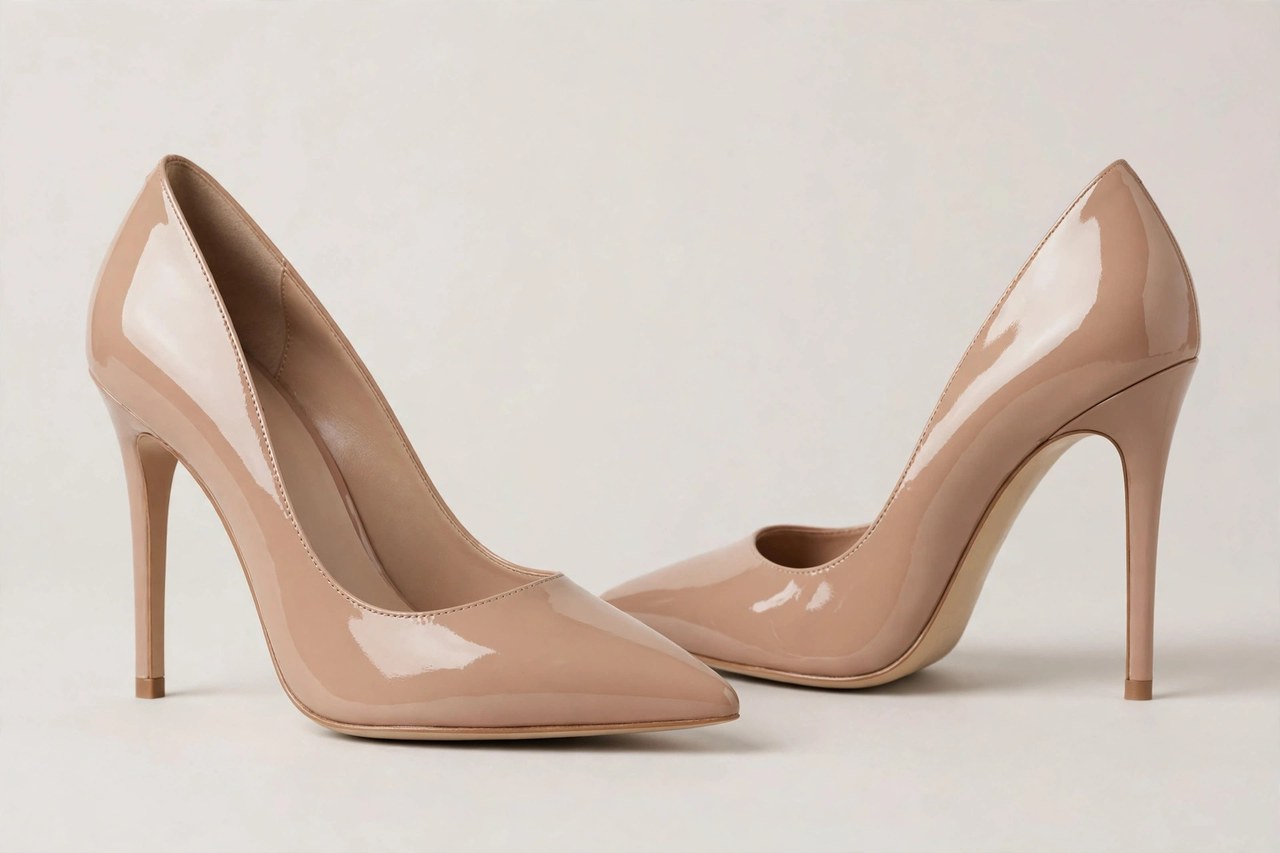
Pointed toe shoes are shoes whose toe box extends to a point — gently tapered in the classic styles, dramatically elongated in the fashion extremes. The point is pure line: it extends the visual length of the foot and, by continuation, the leg, which is why the pointed toe is the default silhouette of the formal pump and the sharpest finish a tailored outfit can have. Flats, kitten heels, stilettos, boots and loafers all come in pointed versions, and the choice of point changes a shoe's whole character.
No toe shape has a longer or stranger history, and none raises more fair questions about comfort. This guide covers both: the styles and degrees of point, the silhouette's journey from medieval courts to modern offices, and the practical fitting knowledge — toe splay, sizing and wear time — that decides whether a pointed shoe is a pleasure or a penance.
Styles and Degrees of Point
Points come in degrees. The classic point is a moderate taper ending in a soft point, the standard of the business pump and the pointed flat: elongating without drama, and the most wearable for long days. The sharp or needle point extends further into a fine tip, the evening and fashion silhouette, striking with slim trousers and dresses. The elongated point of high-fashion cycles adds visible length beyond the toes entirely. At the softer end, almond toes taper to a rounded finish and are often grouped with points for their similar lengthening effect, with more toe room as the trade.
By shoe type, the pointed toe does different work. On pumps it is the formal standard, sharpening suits and dresses. On flats — the pointed ballet flat and the pointed loafer — it is the trick that makes a flat look dressed rather than casual, the reason pointed flats are the office's favorite compromise. On boots it reads sleek and urban against the round toe's casualness.
From Poulaines to the Modern Pump
The pointed toe's extremes are medieval. In fourteenth and fifteenth-century Europe, poulaines (also called crakows, after Krakow) stretched shoe toes to absurd, curled lengths — sometimes so long they were chained to the knee — as pure status display, restricted by sumptuary laws that allotted toe length by rank.
The modern era made the point professional. The pointed pump became the standard formal women's shoe of the late twentieth century, softened in the round-toe years of the 2000s, then returned in the 2010s as the sharp, clean default of tailored fashion. The cycle teaches the usual lesson with unusual clarity: the pointed toe in its classic degree never fully disappears, because it performs a function (lengthening the leg line) that no trend replaces. Buy the classic point for the decade; rent the extremes, metaphorically, for the season.
Comfort, Toe Splay and Sizing
The comfort question is real and has a precise answer: a pointed shoe is comfortable when the point extends beyond the toes rather than squeezing them. The toes themselves need a box wide enough to lie flat with natural splay — the slight spreading toes do under weight. In a well-made pointed shoe, the tapering begins past the longest toe, the width at the ball is honest, and the point is mostly empty architecture.
Practical fitting rules follow. Expect to size up by half a size in many pointed styles compared with your round-toe size, and treat that as normal, not failure. Fit pointed shoes in the afternoon, when feet are at full size, and check that no toe is pressed against the taper's slope. Leather points mould somewhat with wear; patent and synthetic points barely do, so their fit must be right in the shop.
When the Silhouette Suits, Styling and Care
The pointed silhouette suits formal and tailored dressing best: it is the correct, expected finish for suits, sheath dresses, pencil skirts and slim trousers, where its line continues the outfit's own lines. With wide-leg trousers, a pointed toe peeking from the hem lengthens the whole leg dramatically. Pointed flats rescue casual outfits from sloppiness — jeans and a tee gain intent the moment the flat gains a point. The silhouette is least at home with very soft, rustic or sporty clothes, where a round toe's ease matches the mood better.
Care has one point-specific duty: the tip is the shoe's most vulnerable part, striking steps, curbs and escalators first. Touch up scuffed tips promptly (a matching cream or, for black patent, a patent reviver), store pointed shoes with tissue in the toes or on trees so the long box does not collapse or curl, and keep pairs separated so heels do not gouge the points. When buying, walk a hard floor, check the taper starts beyond your toes, and choose the degree of point for your real life.
Related Women's Guides
More to Explore on Apparel Search
- Women's Dress Shoes Guide
- Women's Shoes
- Women's Footwear
- Fashion
- Clothing Retail Stores
- Fashion News
- Fashion Designers
- Popular Brands
- Apparel
- Women's Clothing Stores
- Women's Clothing Wholesalers
- Women's Fashion
- Women's Shoe Stores
- Women's Footwear Guide
- Women's Shoes
- Footwear Definitions
- Shoe Search
- Fashion Videos
- Fashion Calendar
- Celebrity Fashion
- Women's round toe shoe
- Women's square toe shoe
- Fashion Designer Directory
- Women's Athletic Shoes
- Women's Boots
- Women's Casual Shoes
- Women's Sandals
- Women's Trend Shoes
Women’s Clothes Guide by Letter: Women's Apparel Directory N · Women's Clothes Directory O · Women's Apparel Directory Q · Women's Fashion Directory R · Women's Clothing Directory S · Women's Clothes Directory T
Looking for Women's Clothing Stores?
This guide helps you choose women's pointed toe shoes. To browse where to buy, visit our women's clothing store directory, where you can find retailers that carry them.