Women's Peep Toe Shoes Guide
Peep toe shoes open just a glimpse: a small cut-out at the front of the toe box that shows part of the toes — a 1940s invention that has returned with every revival since.
Shop Women's Peep Toe Shoes Now
Shop Women's Peep Toe Shoes on Amazon Shop Women's Peep Toe Shoes on eBayThe Amazon and eBay links on this page are affiliate links. If you make a purchase through them, Apparel Search may earn a commission.
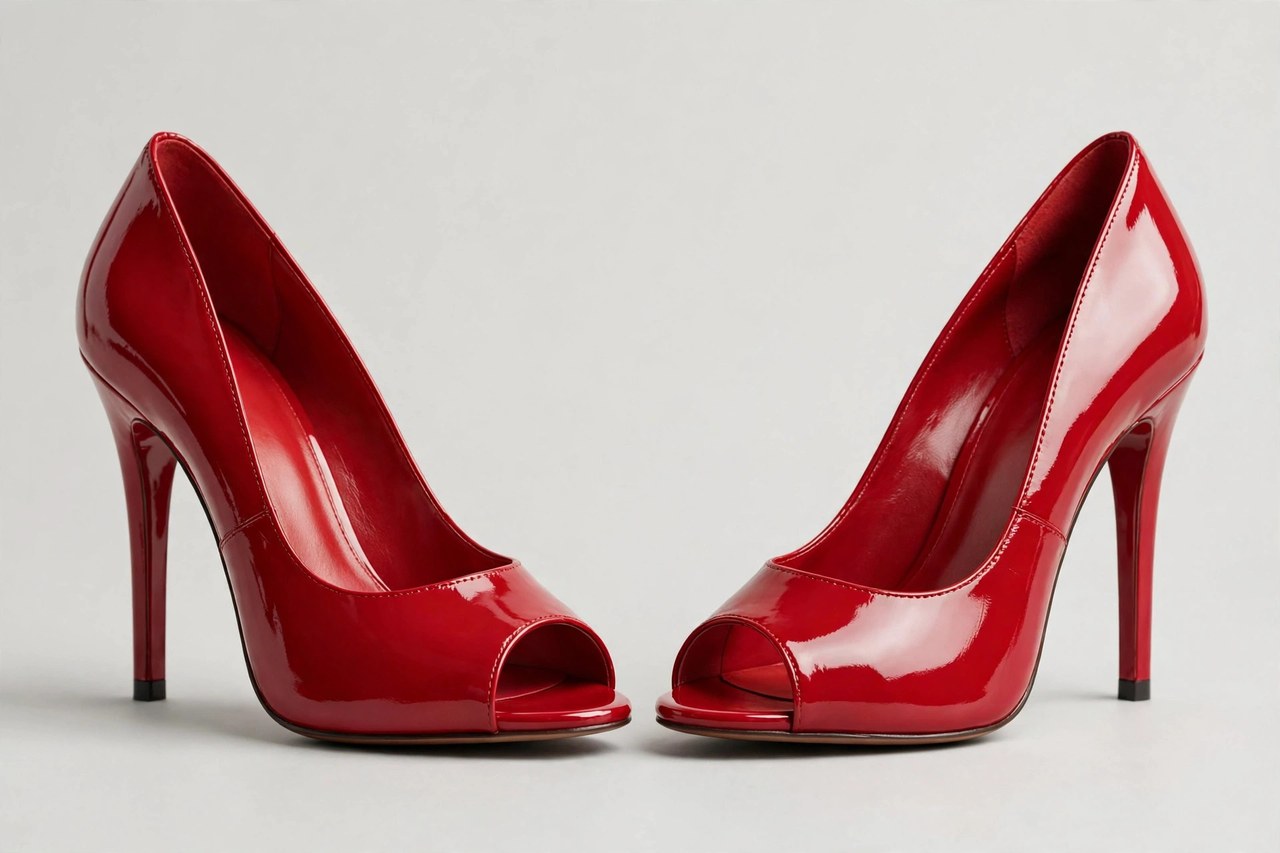
A peep toe shoe is a shoe with a small opening cut into the front of the toe box, through which part of the toes — usually the big toe and part of the second toe — can be seen. It is not the same as an open-toe shoe, which exposes the toes entirely, or a sandal, which is open by construction. The peep toe is a closed shoe with a deliberate window in it, and that in-between character is its charm: the polish of a pump with a hint of ease.
The style suits more shoes than any other opening: pumps, platforms, wedges, sandals, booties and flats all come in peep toe versions. This guide covers the construction and how the opening should fit, the style's history from its 1940s heyday through its 2000s revival, the main shoe families it appears in, and the practical notes — sizing, comfort, seasonal wear and the small etiquette of visible toes — that make peep toes work.
History: 1940s Origins and the 2000s Revival
Peep toes rose in the late 1930s and defined 1940s footwear. Wartime fabric and leather rationing favored smaller shoes, platform soles used cork and wood, and the peep toe pump and sandal became the era's signature dressy shoe, worn with suits and tea dresses alike. Through the 1950s the opening survived in more refined pumps, then receded as closed pointed toes and later minimalist styles took over.
The 2000s revival restored peep toes across the market: platform peep pumps became a red-carpet staple, peep toe booties appeared as a transitional shoe, and designers used the opening on everything from patent stilettos to espadrille wedges. Since then the style has settled into the permanent rotation — never the only trend, never absent — because it does a specific job no other shoe does: it lightens a closed shoe for warm weather and evening wear while keeping a dressier structure than a sandal.
The Families: Pumps, Platforms, Wedges and Sandals
Peep toe pumps are the classic: a heeled court shoe with the small front opening, in patent, leather or satin, worn for work events, weddings and evenings. Peep toe platforms add a platform under the toe that raises height while reducing the effective heel pitch, and lean dressiest and boldest. Peep toe wedges and espadrilles are the comfortable summer branch, the wedge giving stable height on lawns and cobbles where stilettos sink. Peep toe sandals combine a mostly open sandal body with a defined toe opening rather than full exposure, and peep toe flats and booties extend the detail into everyday and transitional dressing.
The opening itself varies. A small, round or teardrop peep shows just the front of the toes and reads most elegant; a wider keyhole or cut-out shows more and reads bolder; some designs add a bow, knot or strap detail at the opening. Choose the width of the opening with the occasion in mind — the smaller the peep, the more formal and office-appropriate the shoe.
Fit, Comfort and Seasonal Wear
Fit at the opening is the whole test. Your toes should rest at the opening without pushing through it, gripping the edge, or sliding forward so the shoe becomes an accidental open toe. If toes jam against the front edge, the shoe is too short or too narrow; if the foot slides, add a ball-of-foot cushion, which also relieves pressure under a heel. The edge of the opening should be smooth and finished — run a finger around it in the shop, because a rough edge at exactly toe height will rub within an hour.
Seasonally, peep toes occupy the middle ground: they are the shoe for spring, early autumn, and any indoor event where a closed shoe feels heavy and a sandal feels bare. They are generally worn without hosiery in current practice, or with hosiery designed for open toes; standard pantyhose worn through a peep opening is widely considered a styling misstep and is uncomfortable besides, since seams gather at the opening. In cold or wet weather a closed toe is simply the practical choice — the peep toe's season is part of its identity.
Toes, Etiquette and Care
Because part of the toes are visible, peep toes carry a small grooming convention: tidy nails, with polish in good repair or cleanly bare, are part of wearing the shoe well. Chipped polish shows precisely because the opening frames it. In conservative offices and formal settings, choose the smallest opening and a pump silhouette; in most modern workplaces a neat peep toe pump is entirely standard.
Care follows the base shoe: condition leather, brush suede, and pay special attention to the opening's edge, which flexes with every step and is the first place patent cracks and fabric frays. Store peep toes with light shoe trees or tissue to hold the toe box shape, and check the edge stitching when resoling heels. Bought in a fit that respects the opening and kept with its edge sound, a peep toe pump is one of the most useful dressy shoes a wardrobe can hold — formal enough for a wedding, easy enough for dinner, and unmistakably itself.
Related Women's Guides
Photos

More to Explore on Apparel Search
Looking for Women's Clothing Stores?
This guide helps you choose women's peep toe shoes. To browse where to buy, visit our women's clothing store directory, where you can find retailers that carry them.