Women's Platform Shoes Guide
Platform shoes lift the whole foot on a thick sole of cork, wood, plastic or rubber — height with a secret: the platform softens the angle that makes high heels hurt.
Shop Women's Platform Shoes Now
Shop Women's Platform Shoes on Amazon Shop Women's Platform Shoes on eBayThe Amazon and eBay links on this page are affiliate links. If you make a purchase through them, Apparel Search may earn a commission.
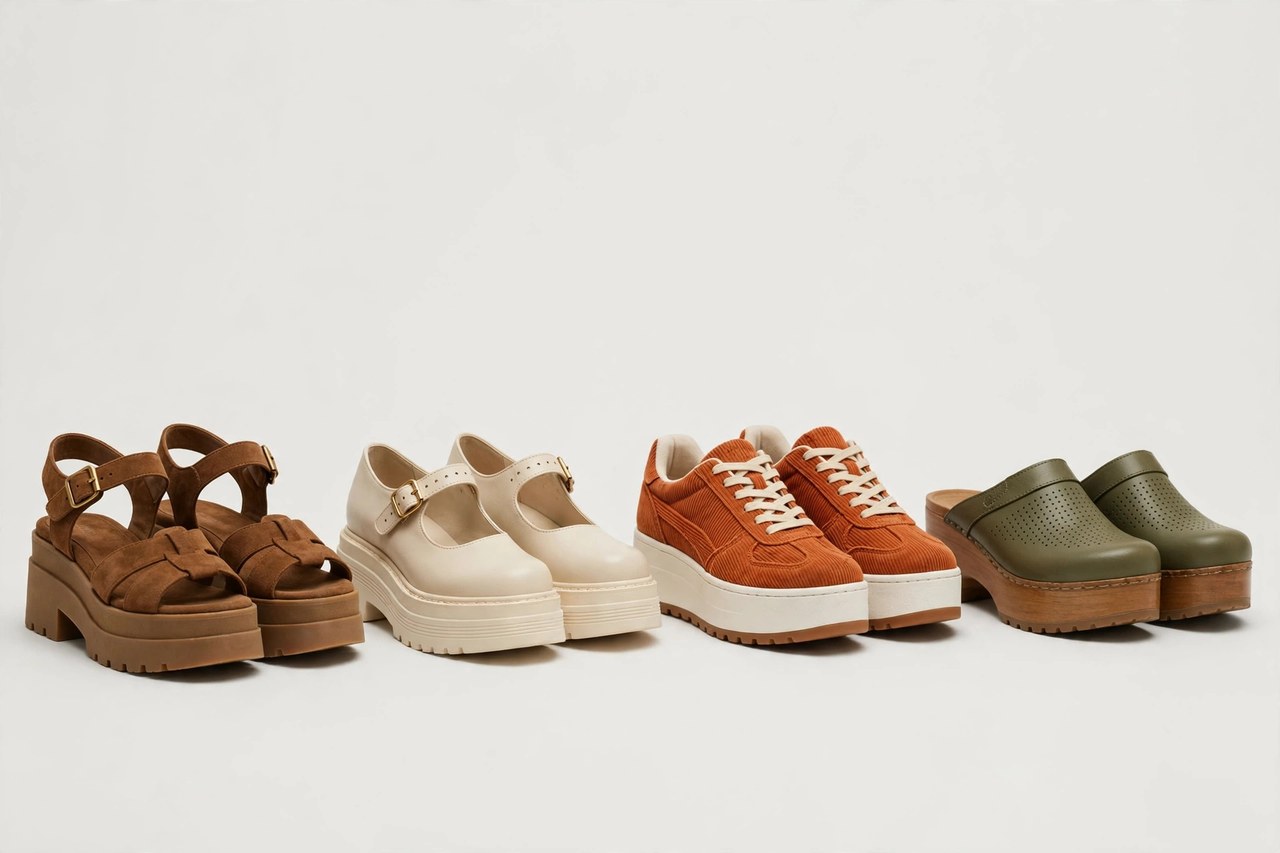
Platform shoes are shoes, boots or sandals with thick soles — a platform of cork, wood, plastic or rubber built under the front of the foot, and often under the whole foot, raising the wearer noticeably above the ground. People wear them for two reasons that often arrive together: for fashion, because the chunky sole is a strong style statement, and for height, because a platform adds inches without the tiptoe posture of an equivalent stiletto.
The category umbrella covers a wide family: platform pumps and Mary Janes, platform loafers and Oxfords, platform sneakers, and the boots and sandals detailed in our companion guides. What unites them is the sole architecture explained below — and that architecture is why a five-inch platform pump can be a longer evening's shoe than a four-inch stiletto.
The Comfort Secret: Heel-to-Toe Differential
The key measurement in any heeled shoe is not its total height but its pitch — the height difference between the heel and the toe, which decides the angle your foot is forced into. A four-inch stiletto with no platform puts the full four inches into that angle. Add a one-inch platform under the toes and the same shoe's pitch drops to three inches: the foot sits at the angle of a three-inch heel while the wearer gains four inches of height. In plain terms, the platform reduces the height differential between heel and toe, so a high heel can feel far more comfortable than its height suggests.
The effect has limits worth stating honestly. The platform adds weight unless it is foam or hollow-constructed, the thick sole flexes less, so the stride becomes flatter and less rolling, and total height still raises the ankle further from the ground, with the usual care needed on uneven surfaces.
Materials and the Platform Family
Platform materials shape weight, feel and price. Cork is light and slightly giving, classic in sandals and wedges. Wood is the oldest material, hard and durable, the clog tradition, with a rigid stride. Plastics and polyurethane allow molded, sculptural platforms in any color, from clear lucite-look soles to chunky fashion stacks. Rubber and EVA foam serve sneakers, loafers and street styles, giving grip and spring. A platform may be exposed and decorative, or covered in the upper's material for a sleeker line; covered platforms read dressier, exposed platforms read bolder.
By style, the family divides by job. Platform pumps and heels use the differential effect for evening height. Platform loafers and Oxfords add a level or low-pitched platform for height and presence in everyday and office wear. Platform sneakers and trainers stack foam for a purely casual lift. Platform boots and sandals are large enough categories to have their own guides on this site, linked below.
A Fashion Cycle That Always Returns
Platforms have cycled in and out of fashion for centuries. Venetian chopines of the 1500s lifted wearers on tall pedestals; the modern platform arrived in the 1930s and 1940s with designers like Salvatore Ferragamo, whose wartime cork wedge-platform was born of material shortages, then surged again in the 1970s glam and disco era, again with 1990s pop and club fashion, and again in the chunky-sole era of the 2020s. Few shoe shapes have returned so often, because the platform solves a permanent problem — the desire for height — with the most tolerable engineering available.
The cycle matters to buyers for a practical reason: platform shoes bought at a trend's peak in an extreme style date quickly, while moderate platforms in classic shapes (a black platform pump, a cork sandal, a platform loafer) pass through the off-years as simply sturdy, comfortable shoes and come back into fashion on schedule. If you love the look, buy the extreme pair for now and the classic pair for the decade. If you are buying purely for height-with-comfort, the classic shapes deliver the benefit without ever looking like a costume from a particular year.
Fit, Care and Buying Tips
Fit platform shoes by pitch and hold, not by height. Walk on a hard surface and check that the heel does not slip (platforms flex less, so a loose heel fit will not settle in), that the toes have room despite the elevated position, and that the sole's flex point roughly meets your foot's. Ankle straps and Mary Jane straps earn their place on higher styles by keeping the foot seated. For level platforms, judge them like sneakers: cushioning, tread and all-day weight.
Care is material care: condition leather uppers, keep cork platforms out of prolonged soaking, wipe plastic and rubber soles clean, and inspect the bond between platform and upper each season, since the thick sole levers that joint at every step. Store heeled platforms upright so they do not warp against each other. When buying, lift the shoe — modern platforms should surprise you with their lightness — and compare the platform's thickness at the toe with the heel height to estimate the true pitch.
Related Women's Guides
Photos

Looking for Women's Clothing Stores?
This guide helps you choose women's platform shoes. To browse where to buy, visit our women's clothing store directory, where you can find retailers that carry them.