Women's Platform Sandals Guide
Platform sandals lift summer dressing — a thick sole under an open shoe, from 1970s cork wedges to the Y2K revival slides and strappy platforms of today.
Shop Women's Platform Sandals Now
Shop Women's Platform Sandals on Amazon Shop Women's Platform Sandals on eBayThe Amazon and eBay links on this page are affiliate links. If you make a purchase through them, Apparel Search may earn a commission.
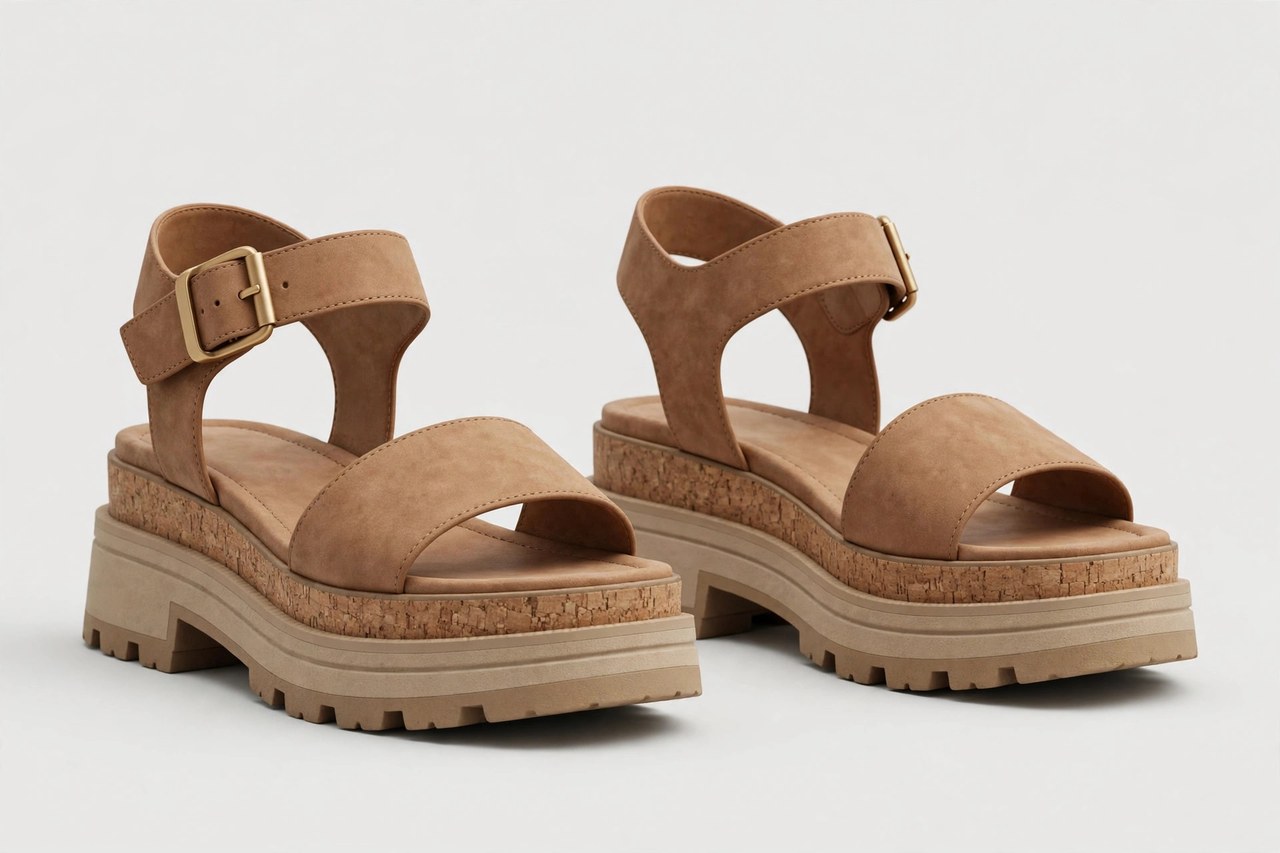
A platform sandal is an open summer shoe on a thick sole: the platform runs under the whole foot, lifting the wearer while keeping the toes and much of the foot open to the air. It is the warm-weather member of the platform family, and it solves a specific summer problem — how to get height, polish and a finished silhouette from a shoe that is mostly straps. A flat sandal can look unfinished with a dress; the platform version carries the same outfit with presence.
Styles range from sporty molded slides to strappy evening platforms that happen to be open-toed. This guide covers the sandal's two great fashion eras — its 1970s heyday and its Y2K-driven revival — the sole materials that decide comfort and weight, and the fit and stability points that matter more in an open shoe than in any boot, because straps alone are what stand between your foot and the side of the sole.
Two Eras: 1970s Originals and the Y2K Revival
Platform sandals had their first golden age in the 1970s, when platform soles swept fashion and summer versions arrived in cork, wood and rope-wrapped espadrille styles. The 1970s platform sandal was often a wedge-platform hybrid with wide leather straps, worn with flared trousers, maxi dresses and denim everything. The look faded in the early 1980s as platforms fell from favor, surviving mainly in comfort-shoe lines that quietly kept the thick, cushioned sole long after fashion moved on — a reminder that the platform's comfort logic never stopped working.
The revival came from the late 1990s and early 2000s: chunky molded soles, jelly and foam materials, wide single-band slides and strappy platforms worn with everything from cargo pants to slip dresses. When Y2K style returned in the 2020s, platform sandals returned with it, now made in lighter EVA and improved foams. Today's market holds both inheritances at once: natural cork and leather styles descended from the 1970s, and molded sporty styles descended from Y2K. Knowing which family a sandal belongs to predicts its weight, its feel and the outfits it will suit.
Soles: Cork, EVA, Wood and Rubber
Cork is the classic platform sandal material: light, naturally cushioned, and in contoured footbeds it molds gradually to your foot's shape. Cork needs protection from soaking and can crack if it dries out after repeated wetting, so cork platforms are fair-weather footwear. EVA foam is the modern workhorse: very light, waterproof, springy and cheap enough for molded one-piece sandals; its weakness is compression over time, as the foam slowly packs down. Wood platforms, the clog tradition, are hard, durable and noisy, with a rigid stride some wearers love and others cannot manage.
Rubber and polyurethane soles serve the fashion and comfort ends respectively: rubber gives grip and durability on chunky street styles, while molded polyurethane gives the cushioned, rocker-bottom feel of comfort sandals. Across all materials, check the tread: an open shoe on a smooth sole is a slip risk on wet tiles and pool decks.
Fit and Ankle Stability in an Open Shoe
Fit is safety equipment in a platform sandal. The foot must sit fully on the footbed with no heel or toe overhang, the straps must hold the foot back so it cannot slide forward, and the widest part of the foot should meet the widest part of the sole. Adjustable straps — buckles or hook-and-loop closures over the toes and especially at the ankle — are worth a premium, because a sandal that can be tuned stays secure as feet swell slightly in summer heat.
Be straightforward about the physics, as with all platforms: height plus an open shoe means less lateral support, and a foot that rolls off a thick sole can twist an ankle. The risk is lowest in low, wide, contoured platforms with ankle straps, and highest in tall, narrow, backless styles. Choose backless slides and mules in modest heights for walking, save the towering strappy platforms for short distances and even floors, shorten your stride on gravel and cobbles, and never run in them.
Styling, Care and Buying Tips
Platform sandals earn their keep across the summer wardrobe. Cork and leather styles complete sundresses, linen trousers and denim shorts with a finished, intentional look. Molded sporty platforms pair with athleisure, cargo skirts and casual dresses. Strappy evening platforms in metallic or satin finishes do the work of a heeled sandal at summer weddings with far more stability on grass — a wide platform sole does not sink into lawns the way a stiletto does, which alone justifies the style for outdoor events.
Care follows the sole material. Wipe EVA and rubber clean freely; they are the beach and pool choices. Keep cork and wood dry where possible, clean leather straps with a damp cloth, and let sandals air out between wears — open shoes worn daily in heat need rotation like any footwear.
Related Women's Guides
Photos

Looking for Women's Clothing Stores?
This guide helps you choose women's platform sandals. To browse where to buy, visit our women's clothing store directory, where you can find retailers that carry them.