Women's Designer Boots Guide
A designer boot is an engineering project in fine leather — here is how to tell lasting construction from a famous label on an ordinary shoe.
Shop Women's Designer Boots Now
Shop Women's Designer Boots on Amazon Shop Women's Designer Boots on eBayThe Amazon and eBay links on this page are affiliate links. If you make a purchase through them, Apparel Search may earn a commission.
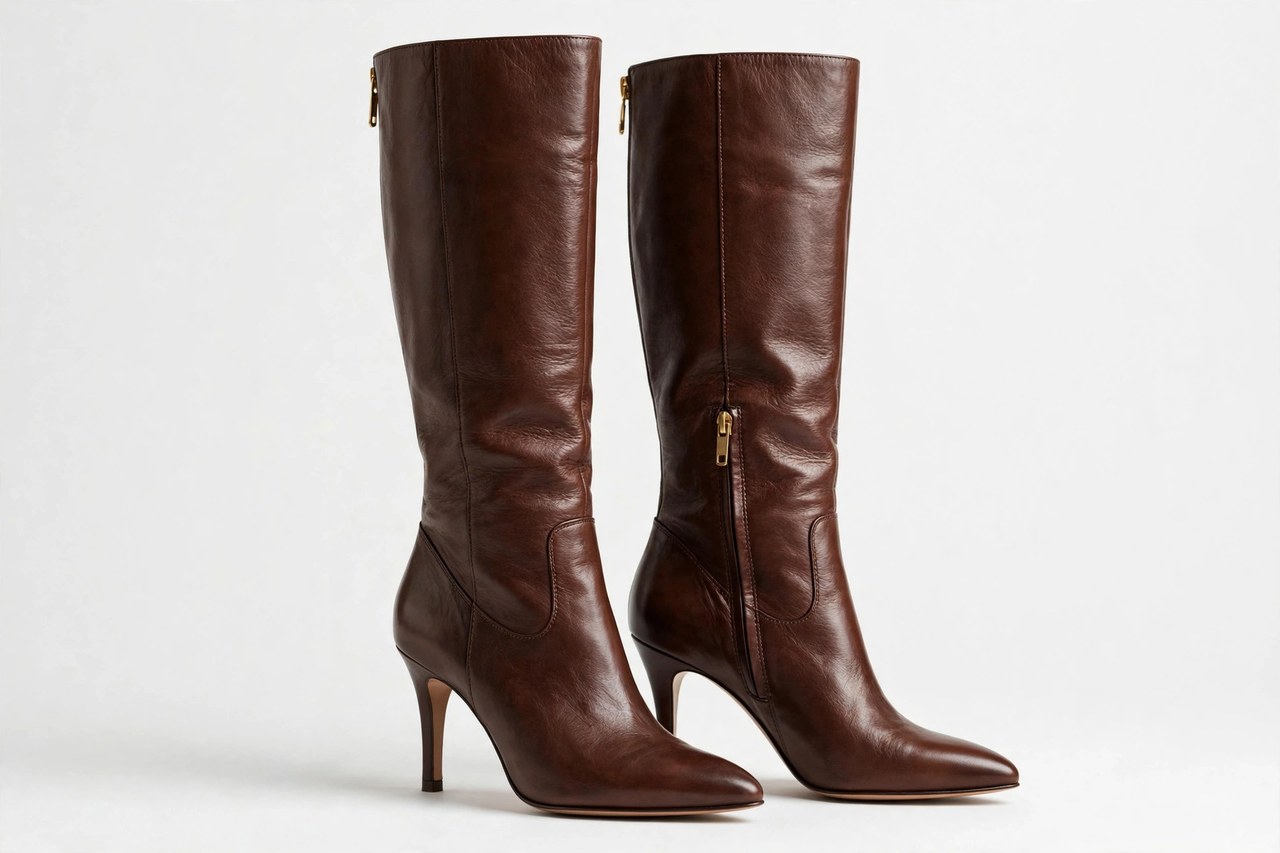
On most boots you are paying for a silhouette. On a designer boot you are — or should be — paying for everything underneath it: better hides, slower construction, and a shape that was fitted on a real last rather than scaled up from a sketch. That is what the word designer ought to mean here. A well-made luxury boot molds to your leg and ankle over the first few wears, resoles when the tread wears down, and still looks deliberate after five winters of salt, rain, and office carpet. Styles run from sleek knee-high riding boots and city ankle boots to Western-inspired pairs, lug-sole Chelseas, and sculptural heeled boots for evening. This guide explains the construction details worth paying for, how the shaft and heel should fit, what prices actually reflect, and how to spot both genuine quality and convincing fakes before you commit.
Leather, Shafts, and How the Boot Is Built
Start with the hide. The best designer boots use full-grain Italian or French calfskin, vegetable-tanned where possible, with a tight, even surface that creases finely rather than cracking. Suede should feel dense and velvety with a short nap; patent and embossed leathers should flex without the finish separating. Turn the boot over next. A Goodyear-welted or Blake-stitched sole is sewn to the upper, which means a cobbler can replace it and the boot lives on; a cemented sole is simply glued on, and once it peels or wears through, the boot is finished. Neither method is automatically dishonest, but at designer prices you should know which you are getting. Shaft construction matters just as much: look for a shaped, partly lined shaft that stands without collapsing, a smooth zipper that runs without catching, and interior seams that lie flat so they never rub the calf.
Heel Finishing and Fit Around the Calf
Heel quality is where lesser boots give themselves away. On a fine pair the heel breast is cleanly finished, the stacked leather layers — or the leather wrap over a shaped heel — sit flush with no gaps or glue lines, and the heel tip is firmly seated and replaceable. Stand in the boots and rock slightly: a well-built heel feels planted, with no wobble or creaking at the joint. Fit starts at the foot, which should feel held rather than squeezed, with toes able to lie flat. Then check the shaft. Measure your calf at its widest point and compare it honestly with the listed shaft circumference, remembering that a tall boot should graze the leg, not strangle it. Ankle boots should clear the ankle bone without digging. Finally, walk on a hard floor: a small amount of heel slip is normal in a stiff new boot and settles as the insole molds to you.
Price Logic and Spotting Quality — and Fakes
Designer boot prices reflect hide quality, hand-finishing time, country of manufacture, and, unavoidably, the house name. Entry luxury pairs from contemporary labels cost several hundred dollars; heritage Italian and French houses run well past a thousand. Price alone proves nothing, so inspect the evidence: even stitching with no skipped stitches, edges that are dyed and burnished rather than raw, a leather insole and lining instead of synthetic foam, and hardware that feels solid rather than tinny. Fakes copy logos far better than they copy construction. Warning signs include a strong chemical smell, plasticky leather that creases in coarse wrinkles, uneven shaft heights between the left and right boot, lightweight hollow heels, and lining logos that are printed crookedly or misspelled on the size stamp. Buy from the house, an authorized retailer, or a reputable resale source that authenticates, and keep the receipt and box — provenance protects both your purchase and its later resale value.
Styling and Care for Fine Leather
Designer boots repay a little wardrobe planning. Knee-high boots anchor sweater dresses, midi skirts, and tucked-in straight jeans; ankle boots sharpen tailored trousers and soften floral dresses; a polished Chelsea moves easily between both. Let one strong pair do repeated work rather than rotating several mediocre ones — cost per wear is where quality boots quietly win. For care, rest boots at least a day between wearings with boot trees or rolled inserts holding the shaft upright, and wipe off road salt the same evening with a damp cloth. Condition smooth leather sparingly every few months, brush suede dry with a crepe brush, and treat new pairs with a protector suited to the finish. Have a cobbler add thin rubber sole protectors early if you walk city streets often, and resole welted pairs before the tread wears into the midsole. Stored clean, upright, and away from direct heat, fine boots age into a patina that looks better than new.
Related Women's Guides
Photos

More to Explore on Apparel Search
Looking for Women's Clothing Stores?
This guide helps you choose women's designer boots by label, style and fit. To browse where to buy, visit our women's clothing store directory, where you can find retailers that carry them.