Women's Non-Safety Work Boots Guide
Not every job needs a steel toe. Non-safety work boots are built just as tough as safety boots — durable uppers, serious soles — without the protective toe cap, and they are lighter for it.
Shop Women's Non-Safety Work Boots Now
Shop Women's Non-Safety Work Boots on Amazon Shop Women's Non-Safety Work Boots on eBayThe Amazon and eBay links on this page are affiliate links. If you make a purchase through them, Apparel Search may earn a commission.
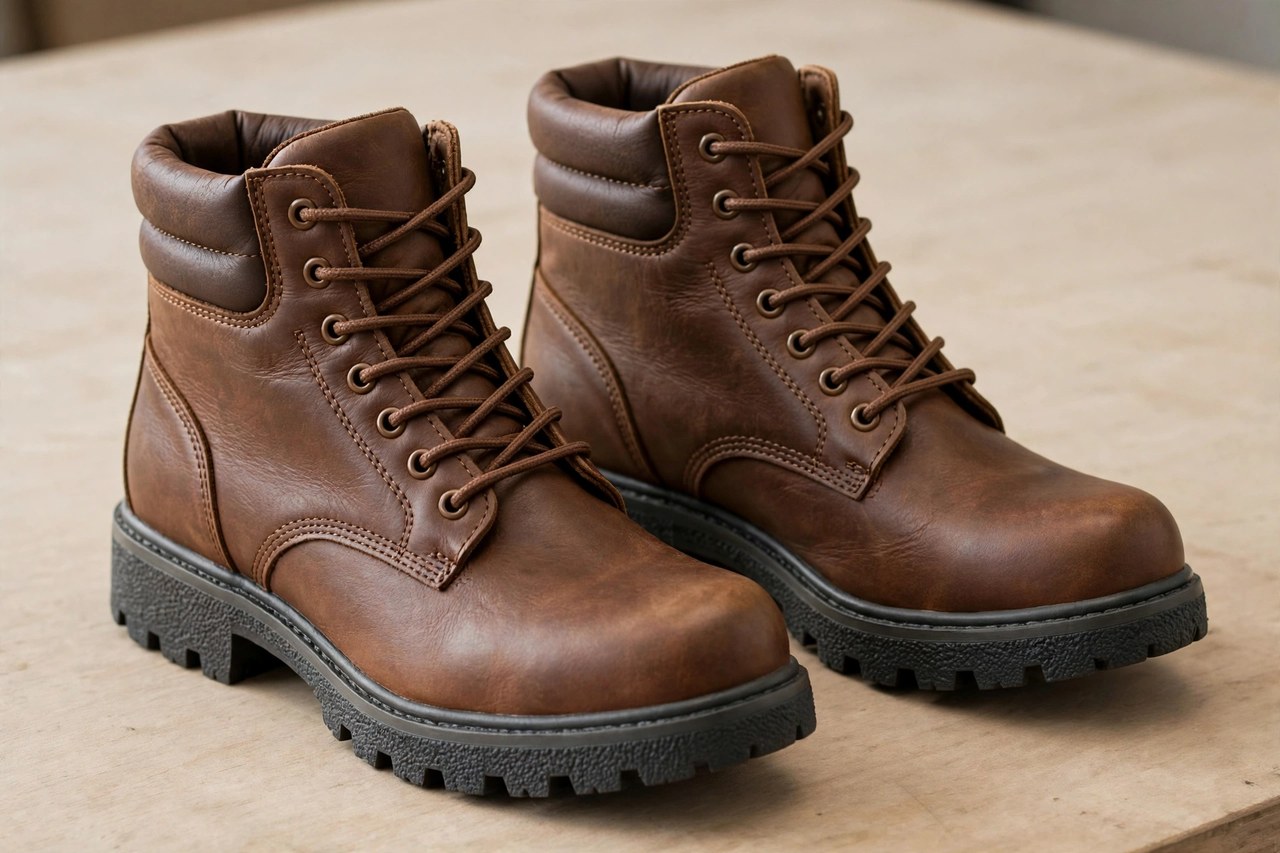
Start with the boot itself. A boot is a type of footwear that mainly covers the foot and the ankle, while some styles also cover part of the lower calf or higher up the leg. Boots are worn for functionality — protecting the foot and leg from water, cold, mud or hazards, or providing ankle support and traction for strenuous activity. Work boots are the functional branch of the family, built for durability first.
Within work boots there is one dividing line, and this page is about the lighter side of it. Non-safety work boots — soft-toe boots — are built to the same durable standard as safety boots but without the protective toe reinforcement. Put plainly: women's non-safety toe work boots are built to be durable, but without the composite safety toe.
Safety Toe vs. Non-Safety Toe
A safety boot (steel-toe boot, steel-capped boot or safety shoe) has a protective reinforcement in the toe that protects the foot from falling objects and compression, usually combined with a midsole plate that protects against punctures from below. The reinforcement was traditionally steel; today it is also made of composite material, plastic such as thermoplastic polyurethane (TPU), aluminum, or other materials.
A non-safety boot leaves all of that out. Does that make it the wrong boot? Only where the hazards exist. No two job sites are created exactly equal, and not everybody needs the same work boots: if they don't have a steel toe they are considered a non-safety boot, and where there is nothing heavy to fall and nothing sharp to step on, the lighter boot is not a compromise — it is the correct tool. Many employers and some regulated sites mandate safety toes regardless, so check your workplace rules first; where the choice is yours, the next section is the honest reckoning.
Which Jobs Suit a Soft Toe
Soft-toe work boots earn their keep wherever the day is long, the floor is hard, and the impact hazards are low: warehousing and light logistics away from forklift lanes, landscaping and grounds work, farming and stable work, food service and commercial kitchens (in slip-resistant versions), delivery and driving jobs where you climb in and out all day, retail stockrooms, cleaning and facilities work, and trades working on finished floors where a heavy boot is simply ballast.
The advantages are real: less weight on every step of a ten-thousand-step day, more flex at the toe for kneeling and driving, no metal to conduct cold in winter, lower cost, and no airport or security-gate drama. The trade is equally real: a dropped crate, a pallet edge or a horse's hoof meets an unprotected toe. Match the boot to the actual hazard list of your actual job — not to the worst imaginable day, and not to the easiest one either.
Construction, Fit and Care
Construction is where a work boot proves itself. Look for full-grain leather uppers that can be reconditioned for years, a stitched welt or a well-bonded cement sole, a lugged rubber outsole for grip, and a cushioned insole you can replace when it packs down. Waterproof membranes matter for outdoor work; electrical-hazard soles are a separate rating from the toe and exist on soft-toe boots too. Women's-specific lasts — narrower heel, different arch placement — are worth seeking out rather than simply sizing down a men's boot.
Fit at the end of the day, in your work socks, with room to wiggle toes and no heel slip; feet swell across a shift. Then care for the leather: brush off the day, condition when it dries stiff, rotate two pairs if you can so each dries fully between wears. A durable boot is the whole point — construction boots provide a sturdy boot, and a sturdy boot looked after will outlast several pairs of shoes.
Related Women's Guides
Photos


More to Explore on Apparel Search
Looking for Women's Clothing Stores?
This guide helps you choose women's non-safety work boots. To browse where to buy, visit our women's clothing store directory, where you can find retailers that carry them.