Women's Medium Round Toe Western Boots Guide
The cowgirl boot in its most wearable form: tall shaft, angled heel, and a rounded toe that fits like a shoe — the traditional choice over pointed fashion toes.
Shop Women's Western Boots Now
Shop Women's Western Boots on Amazon Shop Women's Western Boots on eBayThe Amazon and eBay links on this page are affiliate links. If you make a purchase through them, Apparel Search may earn a commission.
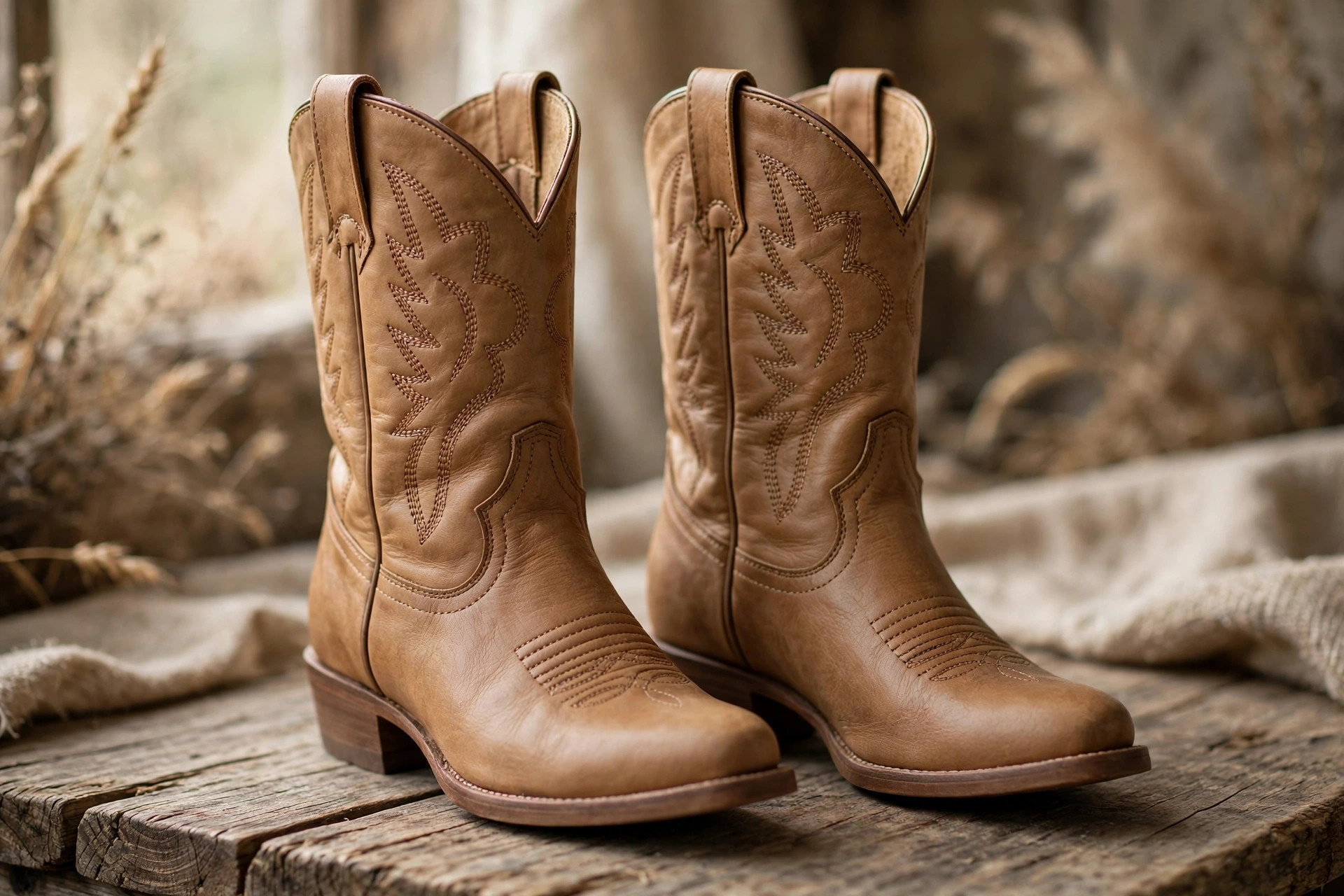
Western boots — cowgirl boots — are a specific style of riding boot, historically worn by cowgirls, built on a tall shaft, a Cuban-style angled heel and traditionally no lacing. This guide is about the most practical member of the family: the medium round toe, the old traditional toe shape for the woman who knows what she likes and is not chasing modern fashion fads.
Western wear itself is a category of women's clothing that derives its style from the clothes worn in the 19th-century Wild West, and the boot is its defining piece. Everything about the design began as ranch engineering: the tall shaft protects the leg, the angled heel keeps a foot in a stirrup, and the smooth leather slides in and out of that stirrup safely.
Classic vs Roper, and the Two Heels
There are two basic styles of cowgirl boot. The classic (western) style is distinguished by a tall boot shaft going to at least mid-calf, with an angled “cowboy” heel usually over one inch high. The roper is the working redesign: a shorter shaft and a lower, wider heel built for walking and ground work as much as riding. A slightly lower, still angled “walking” heel is also common between the two.
Heel choice follows use. The cowboy heel suits riding and dress wear and gives the classic silhouette its lift; the walking and roper heels suit long days on your feet. Neither is decoration — the angle that looks like style is the angle that keeps a boot from sliding through a stirrup, and it changes how the boot walks on pavement too.
Toe Shapes and the Wiggle-Toes Rule
The toe of western boots was originally rounded or squared in shape; the narrow pointed toe design appeared only in the early 1940s. That history matters for fit: a rounder or squared-off toe fits more like a regular shoe, while a narrow toe can present a problem for a foot with a longer arch or a more V-shaped forefoot.
The fit rule from bootmakers is simple, and it applies regardless of toe shape: in a properly fitting boot, the wearer should be able to wiggle their toes, feeling no pressure from the sides, top or front of the boot. Most shoppers gravitate toward a material first and learn too late how important the right toe style is. Choose the toe for your foot; the medium round toe exists precisely because it suits the widest range of feet.
Leathers, Exotic Skins and Care
Cowboy boots are normally made from cowhide leather, but they are also made from “exotic” skins such as alligator, snake, ostrich, lizard, eel, elephant, stingray, elk and buffalo. Cowhide is the durable, affordable default and takes the decorative shaft stitching best; ostrich is soft and dimpled; snake and lizard are dress materials that demand gentler use. Price follows rarity, and care follows skin.
Whatever the leather: a boot should fit snug across the instep (that is what holds it on, there being no laces), with a little heel slip when new that settles as the sole breaks in. Condition cowhide regularly, keep exotic skins out of soaking rain, use boot trees, and resole before the welt wears through. A well-kept pair of round-toe westerns outlasts several fashion cycles of pointed toes.
Related Women's Guides
Photos

Looking for Women's Clothing Stores?
If you are ready to shop rather than browse guides, visit our women’s clothing shopping directory for stores carrying women's western and cowgirl boots and much more, or use the Amazon and eBay buttons at the top of this page.