Women's Engineer Boots Guide
Born on steam locomotives, raised by motorcycle culture: the engineer boot is America's original protective boot. How it is built, why it looks the way it does, and how to style it.
Shop Women's Engineer Boots Now
Shop Women's Engineer Boots on Amazon Shop Women's Engineer Boots on eBayThe Amazon and eBay links on this page are affiliate links. If you make a purchase through them, Apparel Search may earn a commission.
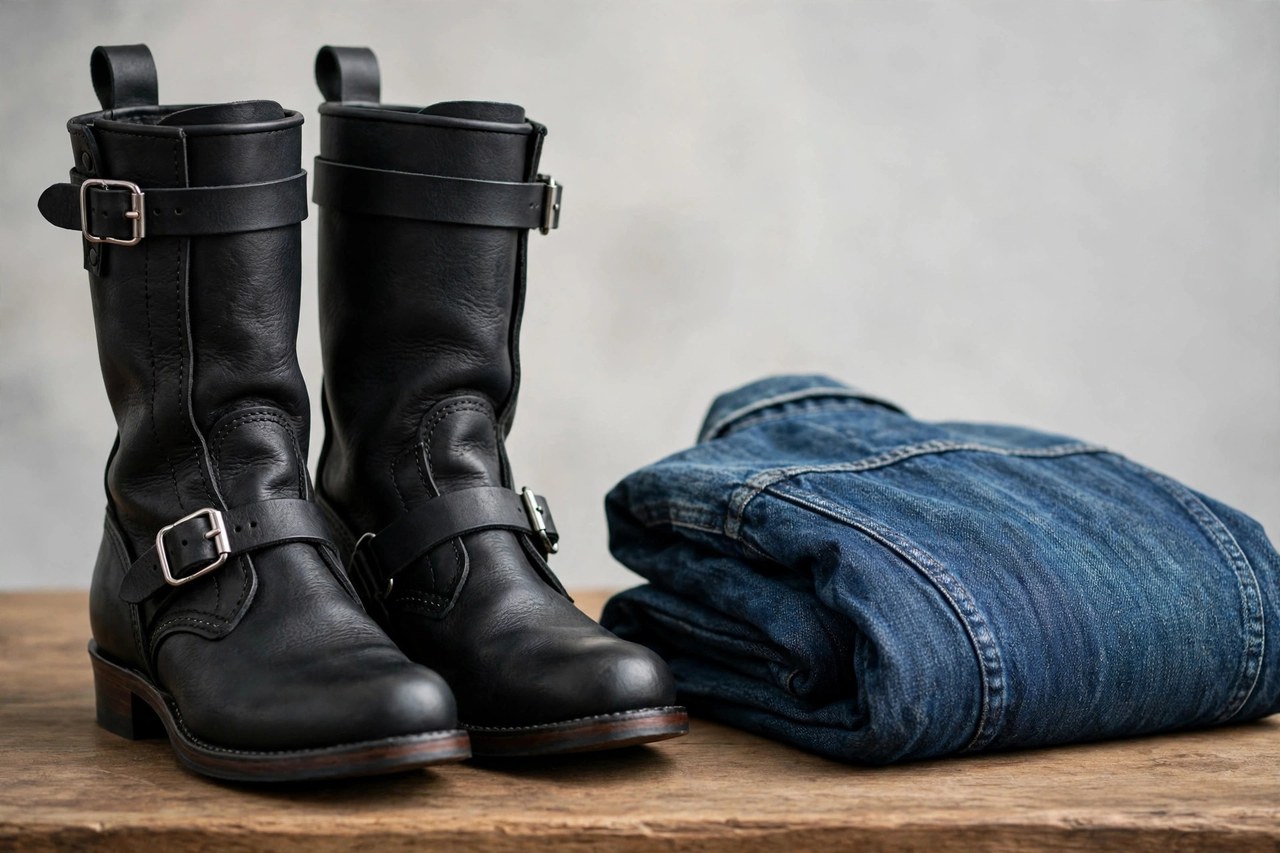
Engineer boots — also called engineer's boots or engineering boots — are an American type of traditional leather work boot: pull-on, lace-less, built from thick leather with a buckled strap at the instep and another at the top of the shaft. They were designed to protect a rider's foot and leg in a crash and to shield calves from hot engines and exhausts, which is why so many include a steel toe cap and a metal shank.
You do not need a motorcycle to wear them. The engineer boot has cycled through workwear, biker culture, teenage rebellion and high fashion for ninety years, and the preserved history section below traces the whole route — from steam railway firemen to the modern street. This guide concentrates on construction, fit and styling so you can buy the right pair.
Construction: Reading a Real Engineer Boot
The genuine article starts with thick, full-grain bull hide, often oiled for durability and flexibility, in black or brown. The shaft is double-layered in better boots, gusseted at the top and cut relatively loose — anywhere from about 7 to 17 inches high — and cinched by a steel-buckled strap. A second buckled strap crosses the instep. That pair of straps is the boot's signature, and it is functional: they are the adjustment system on a boot with no laces.
Underneath, look for a leather or stacked heel of modest height, a rounded toe (one of the differences from the square-toed harness boot), and a sole you can resole — Goodyear-welted construction costs more up front and outlasts cemented soles by years. Steel toes and shanks appear on work-rated versions; fashion versions often keep the silhouette and drop the safety hardware, which makes them lighter for all-day wear.
Fit and Sizing Notes
A pull-on boot with a loose shaft should still lock at the instep and heel. Expect a small amount of heel slip when new — the instep strap and the leather moulding to your foot settle it — but the foot should not swim side to side. Try engineer boots with the socks you will actually wear, and remember that stiff bull hide breaks in over weeks, not hours: tight across the instep usually relaxes, while a short toe box never does.
Shaft height changes the look completely. Ankle-to-mid-calf heights (7–10 inches) work under and over jeans and read most modern; the classic 11–12 inch shaft is the traditional biker proportion; extra-tall shafts are a statement that needs a short hemline or skinny leg to show them off. Wide-calf versions exist and are worth seeking rather than sizing up the foot.
Styling Engineer Boots Now
The boot's own history hands you the styling formula: denim and leather. Straight or skinny jeans tucked in or cuffed above the shaft, a leather or waxed jacket, and a plain tee keep the heritage honest. The fashion update is contrast — engineer boots ground a floaty dress, sharpen a slip skirt and give a tailored coat an edge, because the boot's weight balances lighter fabrics.
Care keeps the look: brush off road dust, condition the leather before it dries and cracks, and let boots rest a day between wears with trees or rolled magazines in the shafts to hold their shape. Keep buckles polished but not precious — an engineer boot that looks slightly lived-in is doing its job. Compare the riding-boot alternative in our equestrian boots guide, linked below.
Related Women's Guides
How Engineer Boots Got Their Name
Engineer boots were originally meant as protective gear for firemen working on steam railway engines — the “engineers” — because their minimal stitching and pull-on design made them ideal for working around hot coals, embers and sharp edges. That lace-less, rugged construction later made them popular among motorcycle riders, whom they protect from injury to the foot and leg in a crash and from the burning of the rider's calves against hot machinery; many include a built-in steel toe cap and a metal shank in the heel for stiffness. Originally developed in the 1930s for those locomotive firemen, the boots gained substantial popularity in the post–World War II era during the growing motorcycling culture. In the 1930s the Chippewa Shoe Manufacturing Company developed a pair of boots with stovepipe shafts based on the style of English horse-riding boots, and the West Coast Shoe Company (Wesco) began manufacturing their “engineer boots” in 1939. The design may owe something to an earlier classic: around 1860 the Frye Company produced a popular line of harness boots, quickly adopted by the United States Cavalry, with an ankle strap attached to metal rings.
The boot then became a symbol: of teenage rebellion in the 1950s and a common component of greaser wear, later adopted by skinheads and punks in the 1970s, and by the 2010s popularly worn for fashion by women, young urban professionals and hipsters. It even made it into song — Billy Joel's Scenes from an Italian Restaurant remembers “engineer boots, leather jackets and tight blue jeans.” A note on the close cousin: harness boots are very similar, usually heavy leather from about 10 to 18 inches high and most often black, but whereas engineer boots have a rounded toe, harness boots typically have a square toe. Riders should also see our women's motorcycle boots page.
Engineer Boots From Our Original Guide


More to Explore on Apparel Search
Looking for Women's Clothing Stores?
This guide helps you choose women's engineer boots by shaft height, leather and hardware. To browse where to buy, visit our women's clothing store directory, where you can find retailers that carry them.