Women's Equestrian Boots Guide
Tall, polished and built for the saddle: equestrian boots protect the rider in the stirrup and look impeccable out of it. The boot types, the fit rules, and the English styling to borrow.
Shop Women's Equestrian Boots Now
Shop Women's Equestrian Boots on Amazon Shop Women's Equestrian Boots on eBayThe Amazon and eBay links on this page are affiliate links. If you make a purchase through them, Apparel Search may earn a commission.
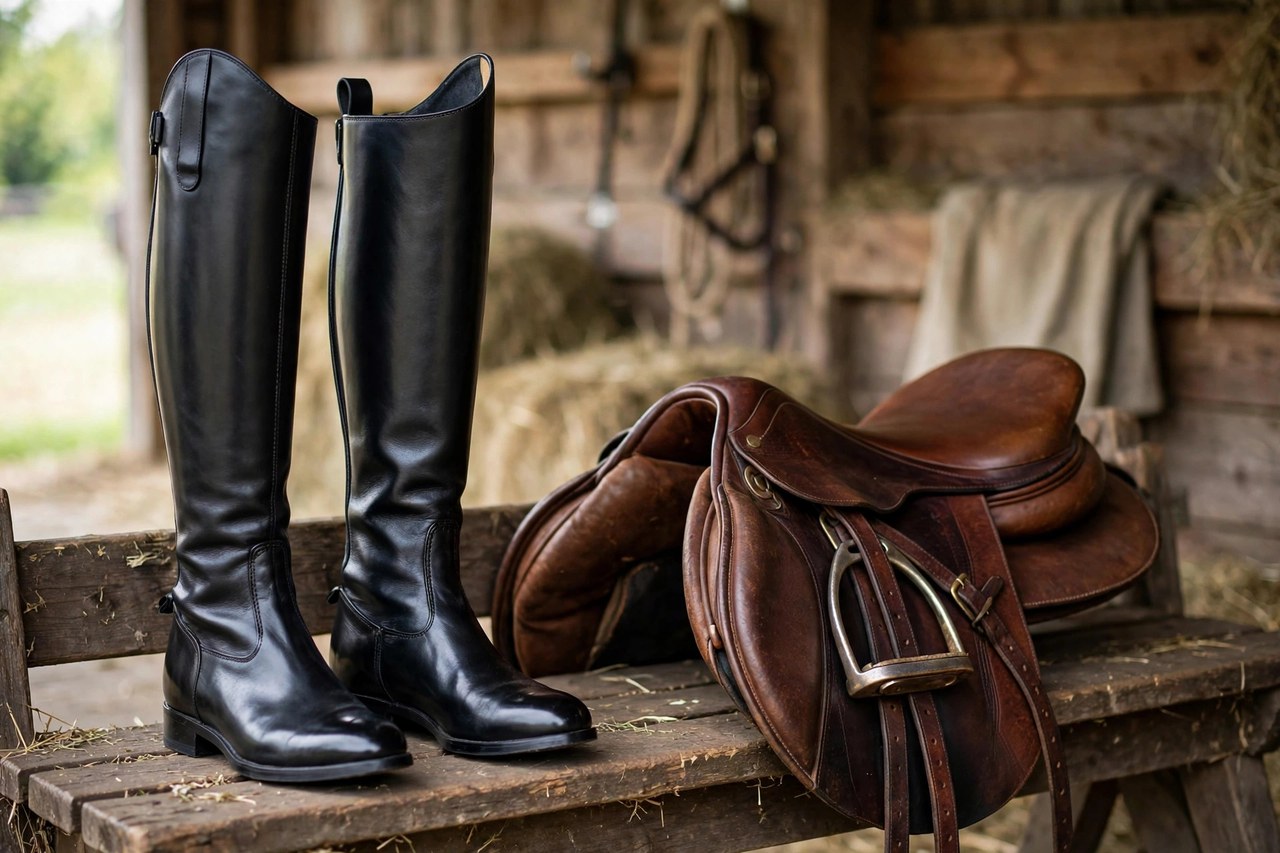
An equestrian riding boot is a boot made to be used for horse riding, and every detail of its design answers a job in the saddle. The shaft comes high enough up the leg to stop the saddle leathers pinching the rider's calf; the toe is sturdy enough to protect the foot on the ground around horses; and the distinct heel exists to keep the foot from sliding through the stirrup — with a smooth or lightly textured sole that will not catch on the stirrup tread in a fall.
Proper footwear matters both in the saddle and around the stable, for long hours of riding, training and barn work. This guide explains the classic tall-boot family, how a riding boot should fit, and how the polished English look translates to everyday outfits — while our engineer boots guide covers the motorcycle branch of the boot family tree.
The short boot of the riding world is the paddock boot - a lace-up ankle boot worn on its own around the yard or with half chaps in the saddle.
The Tall Boot Family
Field boots lace at the ankle, flexing with the rider's heel, and are the all-rounders of the show ring. Dress boots are plain-fronted and more formal, the traditional choice for dressage. Hunt boots (top boots) add a turned-over cuff at the top. Below them, paddock boots (jodhpur boots) are ankle-height, worn for schooling and stable work, often with half-chaps that recreate the tall boot line.
The modern riding boot is relatively low-heeled — under an inch — though historically a higher heel was common, because the safety job of the heel has never changed. For Western riding and showing, riders wear cowgirl boots instead, with the high cowboy or riding heel, the intermediate walking heel, or the low roper heel closest to the English profile. Around the barn, waterproof muck boots handle the chores the leather boots should be spared.
Fit, Break-In and Sizing
Tall boots are the most technical fit in women's footwear: foot size, calf width and shaft height all have to be right at once. New tall boots should feel almost too tall — they will drop roughly a centimetre or two at the ankle as the leather creases and settles (“breaks”), ending just behind the knee. A boot that is comfortable at the top on day one will usually end up short.
Measure your calf at its widest, over the breeches or jeans you will ride in, and match it to the maker's chart rather than your usual shoe size alone; most quality brands — riders will know names like Ariat, Mountain Horse and Dublin — offer slim, regular and wide calf fittings. Zippered backs have made the fit far more forgiving than the pull-on boots that needed boot pulls and a strong friend.
Leather, Polish and Care
Traditionally English riding boots are smooth leather, usually cowhide and occasionally pigskin, and most show boots remain leather for the classic look, though synthetic leather and other modern materials are increasingly common and far easier to keep. Whatever the material, the tall-boot shine is part of the uniform: boots are cleaned of mud and sweat after every ride, conditioned sparingly so the shaft keeps its structure, and polished to a gloss for the ring.
Store tall boots upright with boot trees so the shafts do not slump and crack at the ankle, and never dry wet leather boots against direct heat. Off the horse, the styling borrows itself: tall boots over skinny jeans or leggings with a blazer or quilted jacket is the whole English-country look in one step, and the boots' clean line flatters almost every leg. Clean them as if you were showing tomorrow and they will last for years.
Related Women's Guides
Why Riding Boots Are Built the Way They Are
“Equestrian” simply means relating to horse riding, and the classic boot's details all serve the rider. The proper footwear matters both in the saddle and around the stable: tall boots for the style of riding you do, muck boots for chores, and genuine protection for long hours of horse work and training at the barn. The boot comes high enough up the leg to prevent the leathers of the saddle from pinching the rider's leg, has a sturdy toe to protect the foot when on the ground, and has a distinct heel to prevent the foot from sliding through the stirrup. The sole is smooth or lightly textured to avoid being caught on the tread of the stirrup in the event of a fall. The modern riding boot is relatively low-heeled — a heel of less than one inch — though historically a higher heel was common, as it has always been critically important for riding boots to prevent the foot slipping through the stirrup.
Four categories still organize the market: Field Boots, Dress Boots, Hunt Boots (Top Boots) and Paddock Boots (Jodhpur Boots). For western riding and showing, western riders wear cowgirl boots, with either the high “cowboy” or “riding” heel, the intermediate, somewhat lower “walking” heel, or the low “roper” style heel that is similar to that of English boots. Traditionally English riding boots are made of smooth leather, usually cowhide or occasionally pigskin, and most show boots remain leather for the classic look — though synthetic leather, vinyl and other materials are becoming more common. Online and in tack shops you will find women's equestrian boots from brands such as Ariat, Mountain Horse and Dublin, in English and Western styles and in leather, synthetic or rubber.
Two more boots from the working world: the ring-and-strap harness boot and the low-heeled western roper boot.
Photos

More to Explore on Apparel Search
- Women's Boots Guide
- Women's Shoes
- Fashion
- Women's Shoe Stores
- Women's Footwear Guide
- Women's Shoes
- Footwear Definitions
- Shoes
- Equestrian Clothing Stores
- Equestrian Clothing Factories
- Equestrian Trade Shows
- Westernwear
- Women's Westernwear
- Women's Athletic Shoes
- Women's Casual Shoes
- Women's Dress Shoes
- Women's Sandals
- Women's Trend Shoes
Looking for Women's Clothing Stores?
This guide helps you choose women's equestrian boots by style, calf fit and leather. To browse where to buy, visit our women's clothing store directory, where you can find retailers that carry them.