Women's Zip-Up Boots Guide
Women's zip-up boots use zippers instead of laces, so a boot goes on and comes off in seconds — this guide covers zip placement, fit over the instep, and keeping the zipper itself alive.
Shop Women's Zip-Up Boots Now
Shop Women's Zip-Up Boots on Amazon Shop Women's Zip-Up Boots on eBayThe Amazon and eBay links on this page are affiliate links. If you make a purchase through them, Apparel Search may earn a commission.
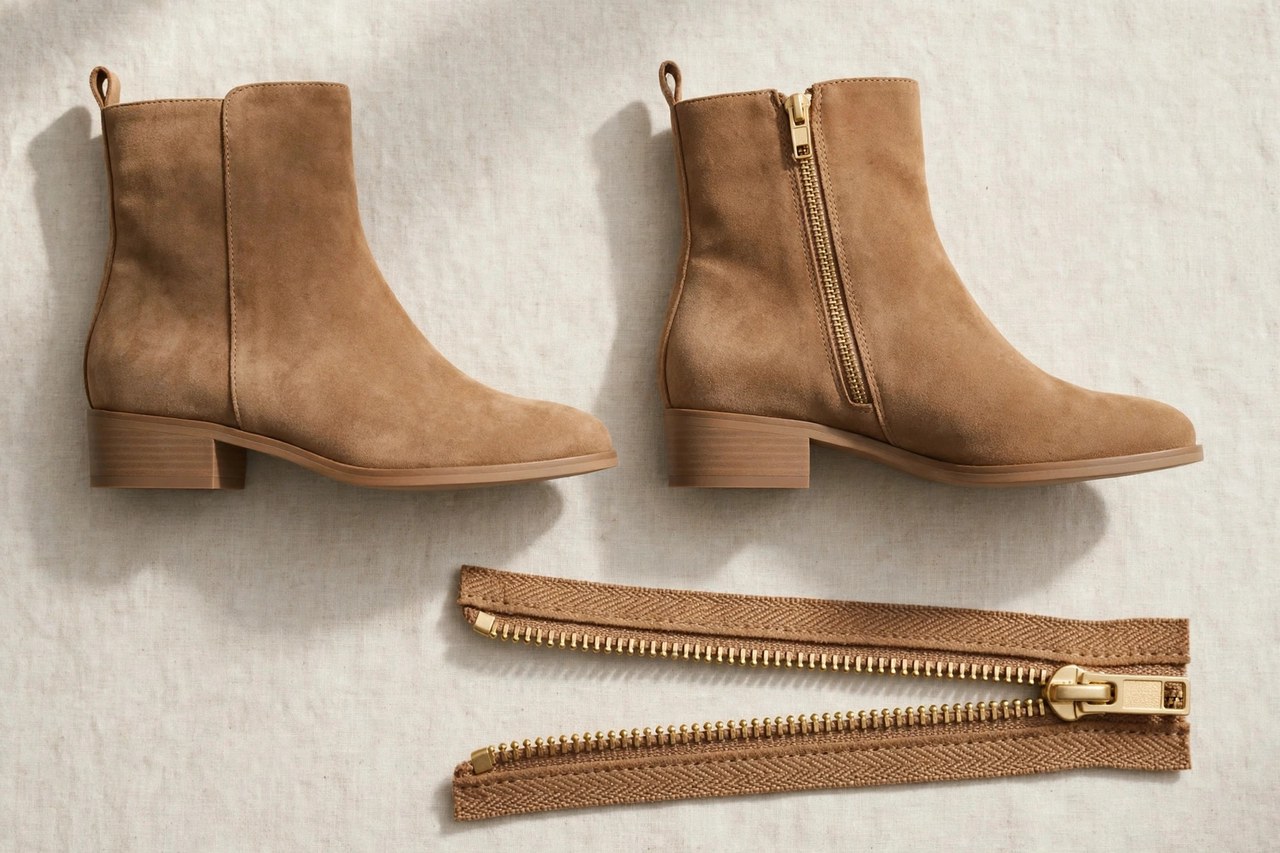
Zip-up boots use zippers instead of shoe laces. Zippers make taking your boots off or putting them on a quick process — unless the zipper gets stuck. That trade is the whole subject of this page: what you gain in speed and simplicity, what you give up in adjustability, and how zip placement and zipper quality decide whether a zip boot is a convenience or a weak point.
The guide covers the zip as construction: where designers put it, what it does to fit, and how to buy and maintain the one moving part a lace-up boot does not have.
Zip Placement: Side, Back and Front
The inside side zip is the standard: a zipper running down the inner shaft lets the boot open wide for the foot, then closes flush and nearly invisible. It suits ankle boots through knee boots and is the placement to choose for a clean silhouette. Back zips run up the rear seam — a decorative as well as functional choice on fashion boots, sometimes with a tasseled or branded pull. Front zips replace the lace line entirely on stomper and biker styles, where the zip reads as hardware and design at once.
Some boots carry both worlds: laces for fit, set once, and a side zip for daily use, so the boot opens without untying. That hybrid is the connoisseur's answer to the zip-versus-lace argument — the adjustability of laces with the hallway speed of a zip — and it appears on work, riding and heavy-duty fashion boots alike. Pure zip boots, with no laces at all, are the sleekest and the least forgiving of fit, which is why the fit checks below matter most for them.
What a Zip Changes About Fit
Laces adjust a boot continuously along the whole instep and ankle; a zipper is open or closed, with the fit the pattern gives you and no negotiation. So a zip boot must fit correctly at three points at once: the foot's length and width as in any boot, the instep — where a too-low zip shaft will strain the zipper on every step — and the calf on taller styles, where better boots offer a gusset or an elastic panel beside the zip to absorb variation the zip cannot.
Try zip boots at the day's end, in the socks you will wear, and walk, sit and climb a step: a zipper that gapes at the ankle bend or strains over the instep in the shop will only worsen. Check that the closed zip lies flat with no waving along its line — waving means the shaft is under tension the teeth will pay for. If you are between sizes in a pure zip style, the larger size with an insole is almost always the safer life.
Zipper Quality and the Stuck Zip
The zipper is the boot's only mechanism, so its quality is the boot's quality. Metal teeth outlast molded plastic on heavy boots; large, reputable zipper brands stamp their sliders, and a smooth pull in the shop — no catching anywhere along the run — predicts a smooth pull for years. A fabric guard behind the teeth keeps lining and socks out of the mechanism, and a locking slider that does not creep down under calf pressure is worth seeking on tall boots.
When a zipper does get stuck, the fixes are patience, not force: clear the trapped thread or fabric by easing the slider back, run a graphite pencil or zipper wax along the teeth, and work the pull gently in small movements. A slider forced through a jam bends its mouth and turns a five-minute rescue into a cobbler's replacement — and a replaced boot zipper is skilled, priced work, which is the one real running cost of the style. Designers of fashion footwear face the same arithmetic at scale: adding zips to boots means sourcing zipper factories and components as reliable as the leather, a resource question the footwear directories linked below can help with.
Care That Keeps the Mechanism Working
Keep teeth clean: grit is a zipper's abrasive enemy, so brush the closed zip line when you clean the boots, and operate zips unhurriedly with the boot held, not yanked by the pull against a planted foot. Store tall zip boots with the zips closed and the shafts supported, so the zipper line is not folded into a permanent crease.
Condition leather around, never across, the teeth; wax-based products belong on the zipper itself only as dedicated zipper lubricant. Open and close stored boots' zips once in a while in the off-season — a mechanism exercised is a mechanism that has not seized when the first cold morning asks for it.
Common Questions
Are zip-up boots as adjustable as lace-up boots?
No - that is the trade. Laces adjust continuously along the instep and ankle, while a zipper is open or closed and gives you the fit the pattern was cut with. Zip boots must therefore fit correctly at foot, instep and calf at once. Hybrid boots with laces set once for fit plus a side zip for daily on-and-off offer both advantages at once.
Where is the zipper placed on a zip-up boot?
Most commonly down the inside of the shaft, where it opens the boot wide and closes nearly invisible. Back zips run up the rear seam on fashion styles, and front zips replace the lace line on biker and stomper styles as visible hardware. Tall boots may add a gusset or elastic panel beside the zip to absorb calf variation.
What should I do when a boot zipper gets stuck?
Never force it - a forced slider bends and turns a rescue into a replacement job. Ease the slider back to free any trapped thread or fabric, run graphite or zipper wax along the teeth, and work the pull in small gentle movements. Prevention is cheaper: keep the teeth brushed clean of grit and close zips unhurriedly.
More in Women's Clothes Guide Z
The Zipper Advantage
Zip up boots use zippers instead of shoe laces, and zippers make taking your boots off or putting them on a quick process — with the honest caveat, unless the zipper gets stuck. And if you are a designer of fashion footwear, you may need zipper factories so that you can add zippers to your boots.
Photos

Looking for Women's Clothing Stores?
This guide helps you choose women's zip-up boots that fit and last. To browse where to buy, visit our women's clothing store directory, where you can find retailers that carry them.