Women's Zip-Off Pants Guide
Women's zip-off pants convert from long pants to shorts on a zipper that runs around the leg — the two-in-one trouser hikers and backpackers pack when every garment has to earn its space.
Shop Women's Zip-Off Pants Now
Shop Women's Zip-Off Pants on Amazon Shop Women's Zip-Off Pants on eBayThe Amazon and eBay links on this page are affiliate links. If you make a purchase through them, Apparel Search may earn a commission.
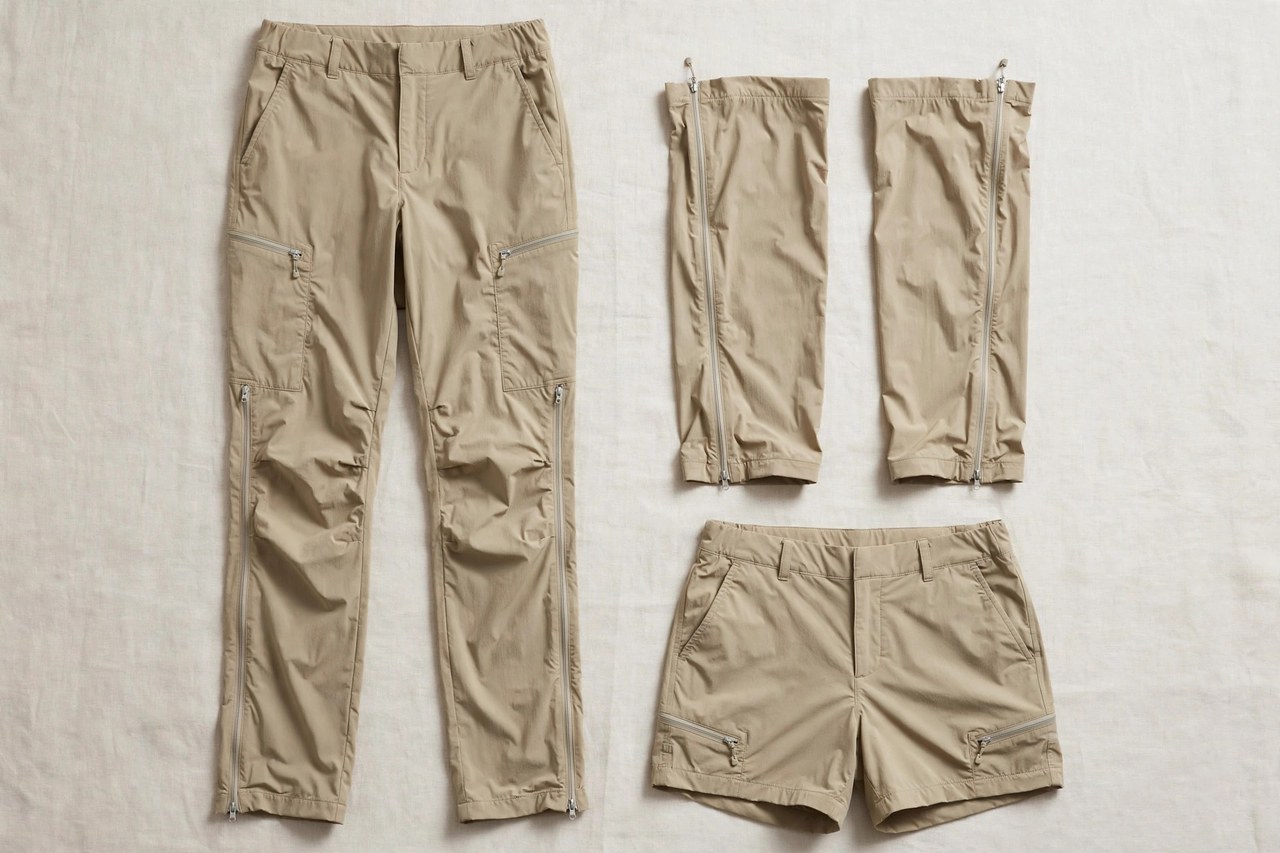
Zip-off pants are designed to be easily converted from long pants to short pants, and vice versa. Zip-off pants are pants where the long pant can easily convert to shorts by utilizing zippers that go around the circumference of the leg: women's zip-off pants are convertible pants where the lower legs of the garment can be removed, unzipped at the thigh and stowed, leaving a pair of shorts that were never a separate item in your bag.
This guide covers the mechanism and the choice: how the leg zips are built, which fabrics and fits suit the trail and the trip, and how to keep a circumferential zipper — the hardest-working zipper in any wardrobe — working for years.
How the Conversion Works
Each leg carries a horizontal zipper circling the leg, usually just above the knee, so the shorts it leaves behind are a practical mid-thigh length. Better designs hide the zipper under a fabric flap, so the pant reads as an ordinary trouser in town, and color-code or offset the two leg zips — a small tab, a left-right marker, a slightly different pull — so the detached legs reattach to the correct sides without a puzzle on the trail.
The conversion takes under a minute per leg once practiced, and on most designs it can be done standing, without removing footwear if the lower leg has a side opening or a generous hem — a detail worth checking if you convert mid-hike often. The detached legs roll small and clip or pocket away; some pants give them their own stow pocket so the pair travels as one unit and no leg is ever left at a rest stop.
Why Hikers and Travelers Swear by Them
Many hikers and backpackers prefer zip-off or roll-up pants because they offer a two-in-one solution to the needs of differing weather conditions. A mountain day can start below ten degrees and end in the twenties; a travel day can move between air-conditioned transport and hot streets. One convertible garment answers both halves of those days, where two separate garments answer one each.
When you are camping, the less you pack for your trip the better — if you are carrying all of your items, every duplicate garment is weight on your back and space in your pack. Having a pair of pants that can be long or short is helpful in the plainest way: it is one item doing the work of two, in the luggage category where duplication costs most. The same logic serves light-packing travel generally, quite apart from the trail: one pair covers shorts weather and trouser weather, restaurants that want long pants and afternoons that do not.
Fabrics and Fit
Trail convertibles are usually lightweight nylon or nylon blends: quick-drying after stream crossings and sudden rain, abrasion-resistant against rock and pack straps, and often given a water-repellent finish and sun-protection rating, since a garment designed for variable weather is expected to handle all of it. Cotton convertibles exist for casual wear but dry slowly and belong to the campsite, not the wet trail.
Fit has one convertible-specific check beyond the usual waist and hip: the zipper circle itself. Bend, sit and high-step in the fitting room — the zip sits at the thigh, exactly where a deep knee bend pulls, and a stiff or poorly placed zipper band will announce itself on every climb. The shorts length left behind should also be checked converted, not guessed: unzipped, the garment should look and feel like shorts you would have bought on purpose.
Zipper Care and Field Repairs
A circumference zipper lives a hard life: it flexes at the thigh, collects trail grit, and is opened and closed under load. Rinse grit out before it grinds the teeth, work a stiff zipper with a wax or graphite zipper lubricant rather than force, and always convert with the zipper fully seated at its start before pulling — most field failures begin as a mis-seated slider forced around the curve.
At home, wash convertibles zipped up, legs attached, so the two sides age and fade together — a sun-faded shorts half against unfaded legs is the visible signature of a pair always washed apart. Check the zipper tape stitching at the season's end; it is the one structural seam on the garment whose failure retires it, and a tailor can restitch tape far more cheaply than a failed zipper can be replaced.
Common Questions
How do zip-off pants convert to shorts?
Each leg has a zipper running around the circumference of the leg, usually just above the knee. Unzip it and the lower leg detaches, leaving mid-thigh shorts; zip it back on to restore full-length pants. Better designs hide the zip under a flap and mark the legs so left and right reattach correctly, and the whole conversion takes under a minute per leg.
Why do hikers and backpackers prefer zip-off pants?
Because they are a two-in-one solution to differing weather conditions: one garment covers a cold morning and a hot afternoon. When camping, the less you pack the better - especially when carrying everything yourself - so a pair of pants that can be long or short replaces two separate garments and saves real weight and pack space.
What should I check when fitting zip-off pants?
The zipper circle at the thigh: bend, sit and high-step, because a stiff or badly placed zip band pulls on every climb. Also try the pants converted - the shorts left behind should be a length and fit you would buy on purpose - and check whether the lower leg can pass over your footwear if you plan to convert mid-hike without sitting down.
More in Women's Clothes Guide Z
One Pair, Two Lengths
Zip-off pants are designed to be easily converted from long pants to short pants, and back again, by zippers that go around the circumference of the leg — the lower legs of the garment are removed, converting the long pant to shorts. Many hikers and backpackers prefer zip-off or roll-up pants because they offer a two-in-one solution to the needs of differing weather conditions, and when you are camping, the less you pack for your trip the better — if you are carrying all of your items, having a pair of pants that can be long or short is helpful.
Photos

More to Explore on Apparel Search
Looking for Women's Clothing Stores?
This guide helps you choose women's zip-off convertible pants. To browse where to buy, visit our women's clothing store directory, where you can find retailers that carry them.