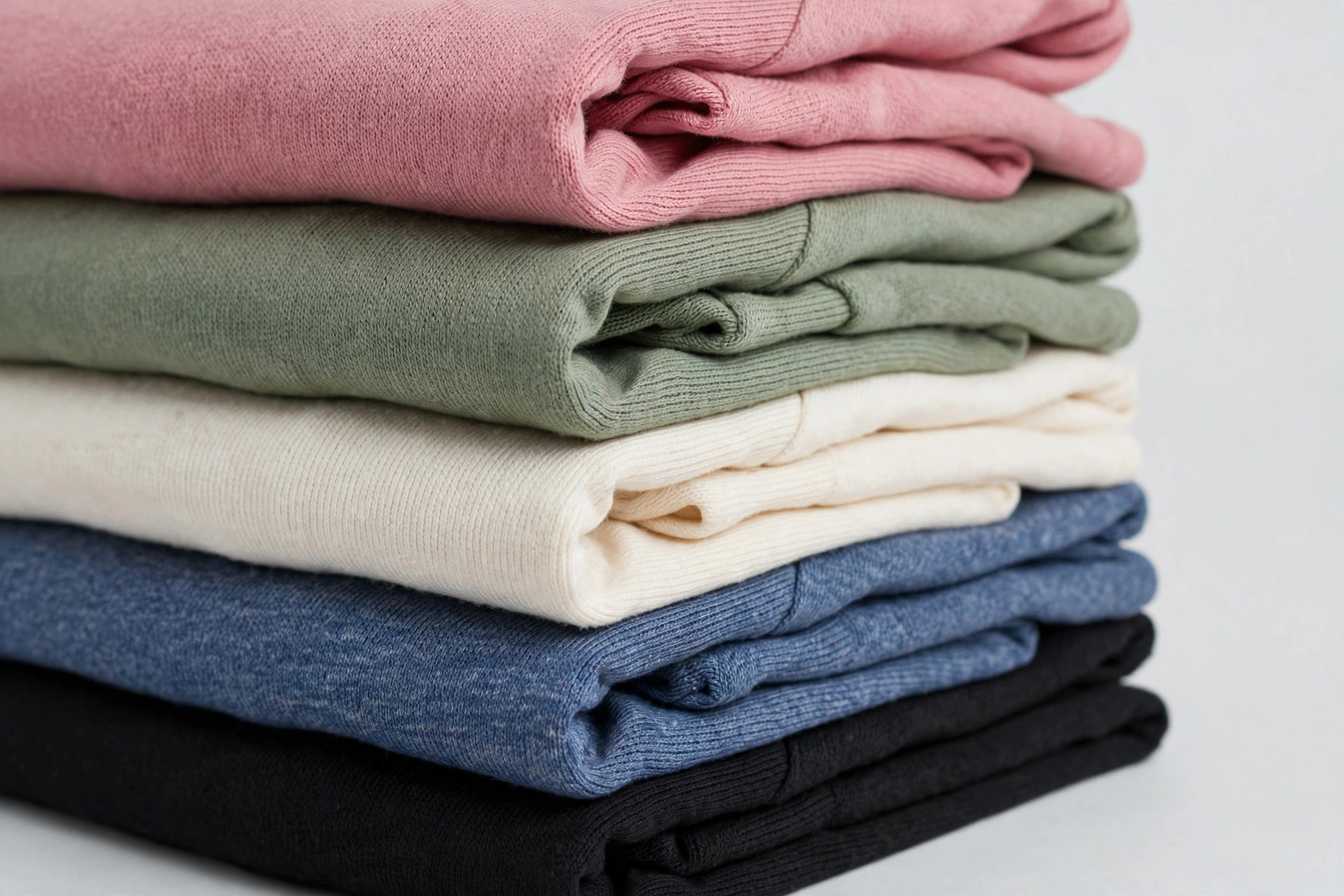
Jersey is the stretch knit behind most T-shirts, dresses, and casual wear. Buying well means understanding weight and stretch - two jerseys that look alike can behave very differently.
Types of Jersey
- Single jersey - the classic T-shirt knit; curls at cut edges, moderate stretch.
- Double jersey / interlock - knitted double-faced; stable, smooth both sides, barely curls.
- Ponte - a firm double knit with structure; ideal for pants, skirts, and blazers.
- Rib knit - vertical ribs with strong crosswise stretch; used for cuffs, neckbands, and fitted tops.
- Slub and specialty jerseys - textured surfaces for visual interest in casual tops.
Choosing Jersey
Weight is measured in GSM (grams per square meter): 120-160 GSM is light T-shirt weight, 160-200 medium, 200+ heavyweight for structured garments. Stretch the fabric and let go - good jersey snaps back without rippling. Check the stretch percentage on the bolt end; 5% elastane gives comfortable recovery. Hold it to the light to judge opacity - cheap lightweight jerseys go sheer.
Best Uses
T-shirts and tops, casual dresses, leggings, loungewear, children's clothing, and underwear. Ponte works for tailored-looking knit pants and jackets.
Sewing Tips
- Use a ballpoint or stretch needle and a stretch stitch or narrow zigzag so seams move with the fabric.
- Stabilize shoulder seams with clear elastic or stay tape to stop stretching out.
- A walking foot prevents the layers from shifting; reduce presser-foot pressure if your machine allows.
- Pre-wash jersey - cotton knits can shrink noticeably on the first wash.
- For hems, a twin needle gives a professional coverstitch look.
Care
Machine wash cold and tumble dry low or line dry. High heat breaks down elastane and causes shrinkage. Turn printed jerseys inside out to protect the design.
Also see the Jersey in the Fashion Glossary and the jersey definition.
Explore more: Fabric Directory | Fabric Industry Guide