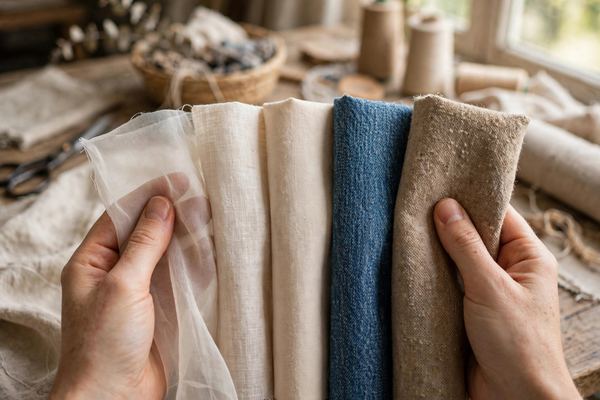
GSM stands for grams per square meter - the standard measurement of fabric weight. A higher GSM means a heavier, usually thicker fabric; a lower GSM means a lighter, often sheerer one.
Why GSM Matters
Fabric weight affects everything: how a garment drapes, how warm it is, how it washes, and what it's suited for. Two t-shirts can look identical on a hanger but feel completely different because one is 140 GSM and the other is 220 GSM. When you understand GSM, you can predict how a fabric will behave before you ever touch it.
Typical GSM Ranges
- Under 100 GSM - sheer and lightweight: chiffon, voile, organza. Think blouses and linings.
- 100-150 GSM - light: standard t-shirt jersey, summer shirting.
- 150-200 GSM - medium: quality t-shirts, polo shirts, light denim shirting.
- 200-300 GSM - medium-heavy: sweatshirts, heavier denim, upholstery-weight cottons.
- 300+ GSM - heavy: fleece, canvas, winter coatings, premium denim.
GSM vs Thread Count
Don't confuse the two. Thread count measures how many threads are woven into a square inch (mostly used for bed sheets). GSM measures weight per area and applies to all fabrics, knits included. For apparel, GSM is the more useful number.
GSM FAQs
- What is a good GSM for t-shirts?
- Most quality t-shirts fall between 150 and 200 GSM. Under 150 feels thin and may show through; over 200 feels substantial and structured.
- Does higher GSM always mean better quality?
- No - it means heavier, not better. A 120 GSM silk can be exquisite; a 400 GSM polyester can be poor. Match the weight to the garment's purpose.
- How is GSM measured?
- A circular sample of known area (usually 100 square centimeters) is cut from the fabric and weighed on a precision scale. The weight is then converted to grams per square meter.
- Is GSM the same as ounces per square yard?
- They measure the same thing in different units. Denim in the US is often sold by ounce weight (e.g., 12 oz denim); multiply ounces by about 34 to get the approximate GSM.
Glossary: see also related guides in our fabric guides section and the full fashion glossary.