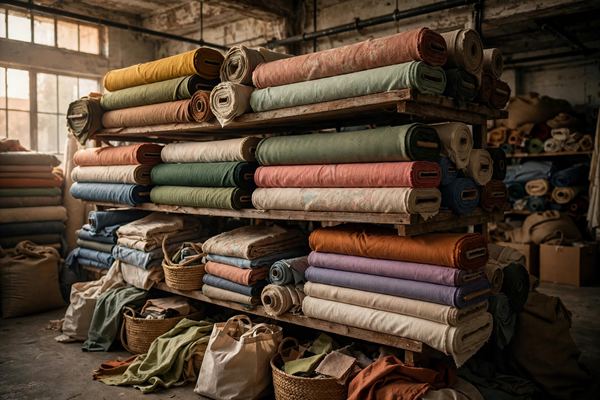
Deadstock fabric is surplus textile that was produced but never used - leftover rolls from mills, cancelled orders, or overproduction. Instead of going to landfill, it's resold to designers and makers, often at a discount.
Where Deadstock Comes From
Mills routinely produce more fabric than ordered to account for defects and shrinkage. Brands cancel orders after fabric is already woven. Colors get discontinued. All of this creates a constant stream of high-quality surplus - sometimes from the same mills that supply luxury houses.
Why Designers Love It
- Price - deadstock often sells well below original wholesale cost.
- Quality - it's frequently premium fabric: silks, wools, and designer overruns.
- Uniqueness - limited quantities mean limited runs; once it's gone, it's gone.
- Sustainability - using existing fabric avoids the water, energy, and chemicals of new production.
The Trade-offs
Deadstock isn't perfect. Quantities are limited, so you can't reorder the same fabric next season. Provenance can be murky - you may not know the exact fiber content or origin. And "deadstock" doesn't automatically mean eco-friendly if it encourages overconsumption. Smart designers treat it as a creative constraint, not just a bargain.
Deadstock FAQs
- Is deadstock fabric really sustainable?
- Mostly yes - it diverts usable textile from waste. But the fashion industry still overproduces; deadstock is a symptom of that problem, not the cure. The most sustainable choice remains buying less and wearing longer.
- Can you reorder deadstock fabric?
- Usually not. That's the defining limitation - when the roll runs out, the design can't be reproduced identically. Many brands design specifically around this constraint with limited editions.
- Where can I buy deadstock fabric?
- Specialty deadstock dealers operate online and in garment districts (New York and Los Angeles have the most). Some sell by the roll, others by the yard for smaller makers.
- How is deadstock different from vintage fabric?
- Deadstock is unused surplus, often recent production. Vintage fabric is old - sometimes decades old - and may have age-related weakness. Both are finite resources.
Glossary: see also related guides in our fabric guides section and the full fashion glossary.