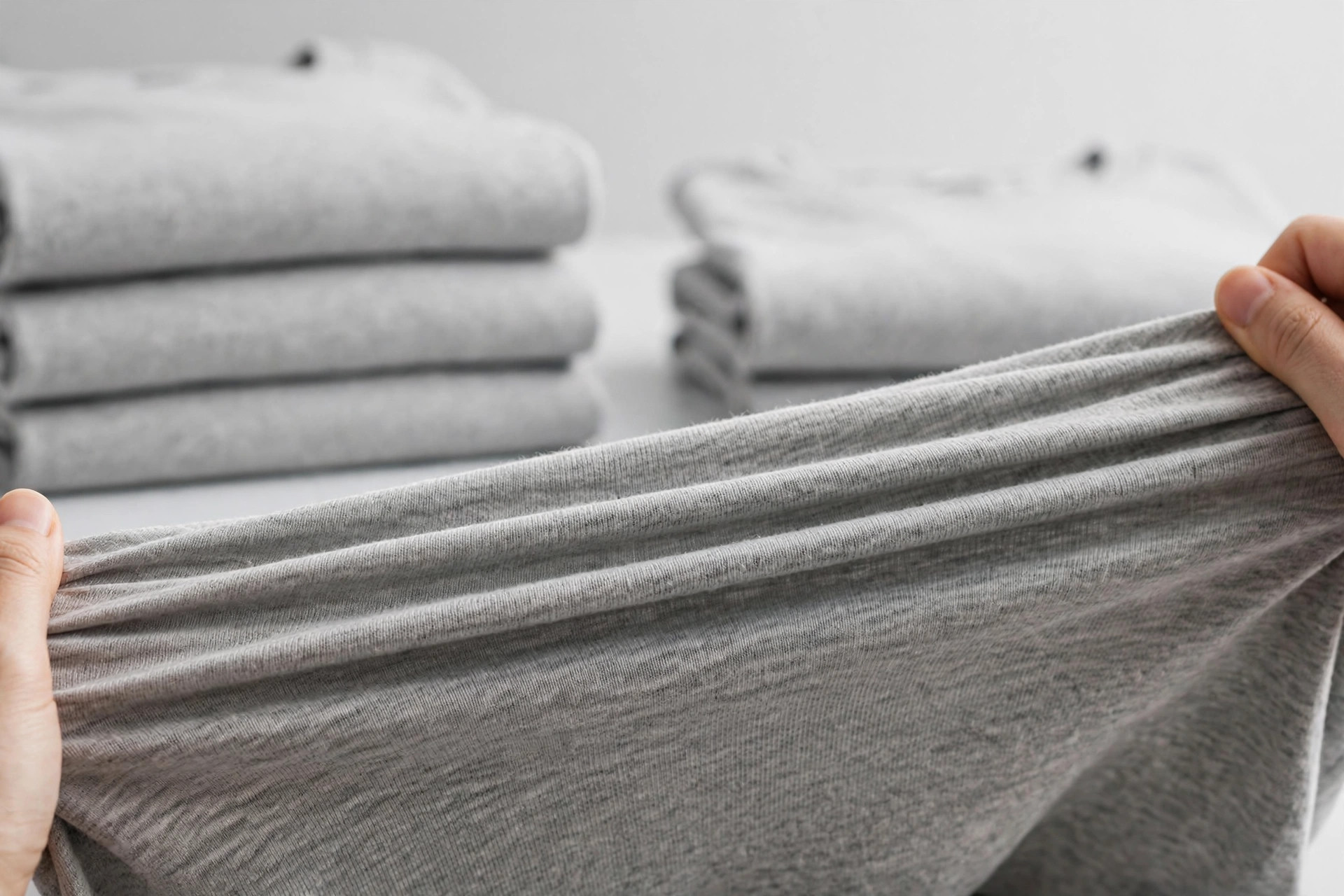
Jersey is a single-knit fabric made with the plain knit stitch — the same structure as a hand-knitted stockinette. Lightweight, stretchy, and soft, with a smooth face and a slightly textured back, jersey is the fabric of T-shirts, dresses, and underwear. It curls at cut edges, which is its telltale sign.
How Jersey Knits Work
Jersey is a weft knit: one continuous yarn loops across the fabric in horizontal rows. Because the loops all face the same way, the fabric stretches more across than lengthwise and the raw edges roll toward the smooth side.
Double-knit versions — interlock, ponte — use two needle beds for a thicker, stable, non-curling cloth. Single jersey stays the lightest and drapes best.
Jersey Through History
Jersey began as fishermen's underwear on the Isle of Jersey. In 1916, Coco Chanel shocked Paris by cutting suits from it — then a humble menswear knit — and made softness fashionable.
The T-shirt carried jersey into every wardrobe on earth, and athleisure made it the default texture of modern casual dress. More garments are cut from jersey than any other single fabric.
Working With Jersey Today
Use a ballpoint or stretch needle and a narrow zigzag or stretch stitch so seams move with the fabric. Cut on a single layer to prevent shifting, and never let the fabric hang off the table while cutting — gravity stretches it out of shape.
Stabilize shoulder seams with clear elastic, and hem with a twin needle or coverstitch for a professional finish that still stretches.
FAQs
- What is the difference between jersey and interlock?
- Jersey is a single knit that curls at the edges; interlock is a double knit that lies flat, is thicker, and stretches less. Interlock suits structured tees and baby clothes.
- Why does my jersey curl?
- The knit loops pull the cut edge toward the smooth face — it is structural, not a defect. Staystitch or hem promptly after cutting.
- How do I stop wavy seams in jersey?
- Do not pull the fabric as you sew; let the feed dogs do the work. A walking foot and slightly reduced presser-foot pressure help enormously.
- Cotton or polyester jersey?
- Cotton jersey breathes and feels natural but can bag out; polyester jersey wicks, holds shape, and resists wrinkles — the athletic choice.
Glossary: see the full fashion glossary for more apparel industry terms.