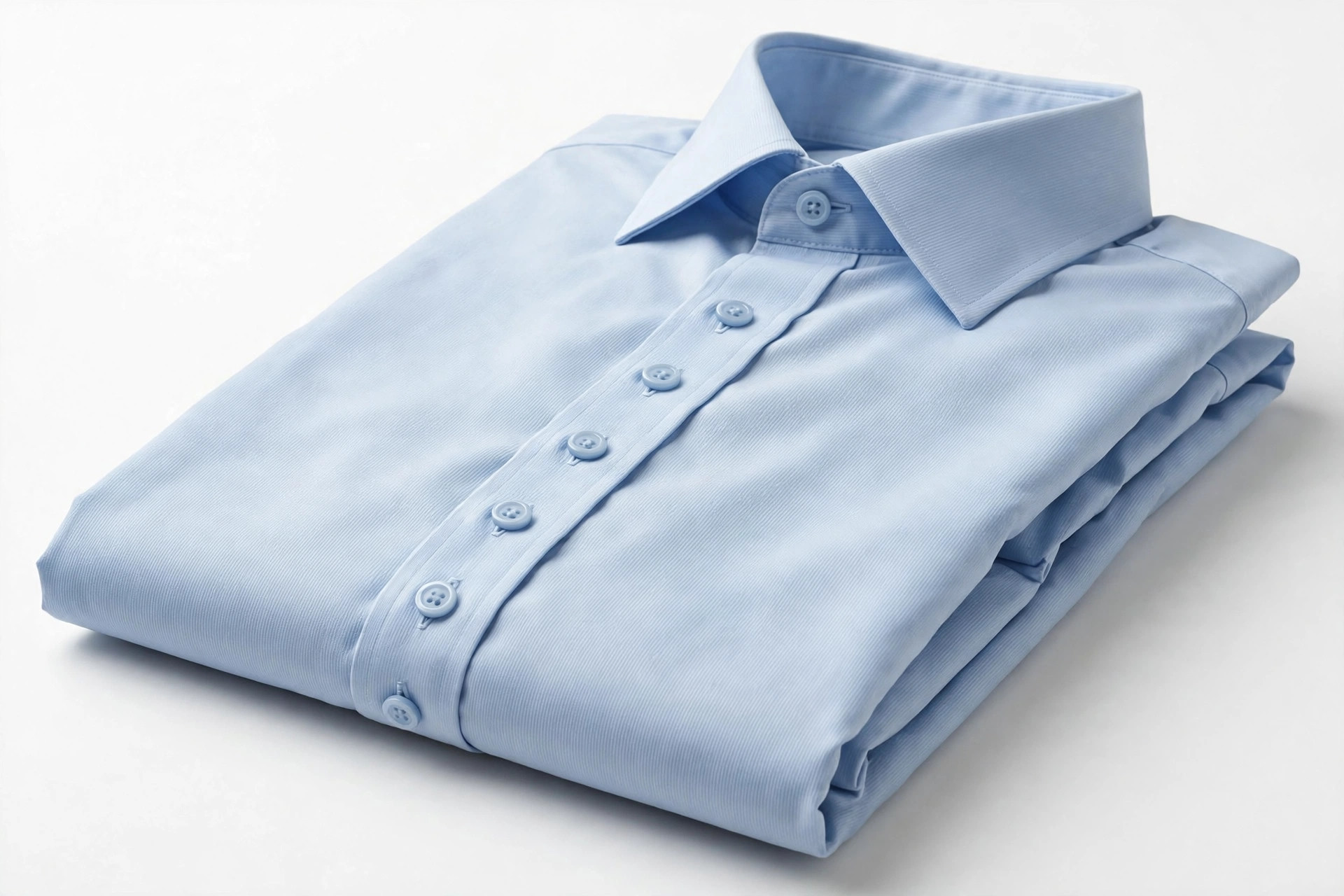
Poplin is a plain-weave fabric with a fine crosswise rib, made from yarns that are finer in the warp than the weft. The result is smooth, crisp, and lightweight with a subtle corded texture — the classic cloth of dress shirts, uniforms, and summer dresses. Cotton poplin is the benchmark; polyester and blends add wrinkle resistance.
How Poplin Gets Its Crisp Hand
Poplin is woven one-over, one-under like any plain weave, but the weft yarns are thicker than the warp. Those heavier crosswise yarns pack tightly and create the fine horizontal rib you can feel with a fingertip.
The tight, balanced weave gives poplin a clean surface that takes print beautifully and a body that holds a collar's shape without stiffness.
Poplin in the Wardrobe
The name comes from papeline, a silk fabric once made in Avignon — the papal city. Cotton poplin took over as the shirting standard, from Brooks Brothers oxfords' smoother cousin to military and medical uniforms.
Beyond shirts, poplin makes excellent dresses, lightweight jackets, children's clothes, and quilting cottons — anywhere a smooth, stable, easy-care cloth is wanted.
Working With Poplin Today
Poplin is a beginner-friendly sew: stable, non-slippery, and honest under the iron. Press seams open or to one side; the ribbed texture hides stitching well.
Prewash cotton poplin to settle shrinkage, and expect some wrinkling — polyester blends stay crisper through the day. A hot iron with steam gives the sharpest finish.
FAQs
- What is the difference between poplin and broadcloth?
- Very little — the terms are nearly interchangeable in the U.S. Traditionally broadcloth is slightly finer, but most retailers use them for the same shirting fabric.
- Does poplin wrinkle?
- Cotton poplin wrinkles moderately; polyester or blended poplin resists wrinkles much better. A quick press restores either.
- Is poplin good for summer?
- Yes — it is lightweight and breathable, which is why it dominates warm-weather shirting and dresses.
- Cotton or polyester poplin?
- Cotton feels better and breathes; polyester blends iron less and last longer. A cotton-poly blend splits the difference.
Glossary: see the full fashion glossary for more apparel industry terms.