Poplin
Fabric Definitions — fabric and textile definitions from Apparel Search
Search Apparel Search
At a Glance
Definition: Poplin is a heavy, durable plain-weave fabric with a fine rib running across it from selvage to selvage, the rib formed by coarse filling yarns woven among much finer warp yarns.
Category: Fabric Definitions
Word Origin
Poplin comes from papeline, a fabric made at Avignon, France, in the 1400s and named for the papal residence there; the first poplin was made from silk.
Poplin is a heavy, durable fabric with a ribbed appearance. It is made with wool, cotton, silk, rayon, or any mixture of these fibers. The ribs run across the fabric from selvage to selvage, and they are formed by using coarse filling yarns in a plain weave — an ordinary weave structure given an extraordinary surface purely by the proportions of its yarns.
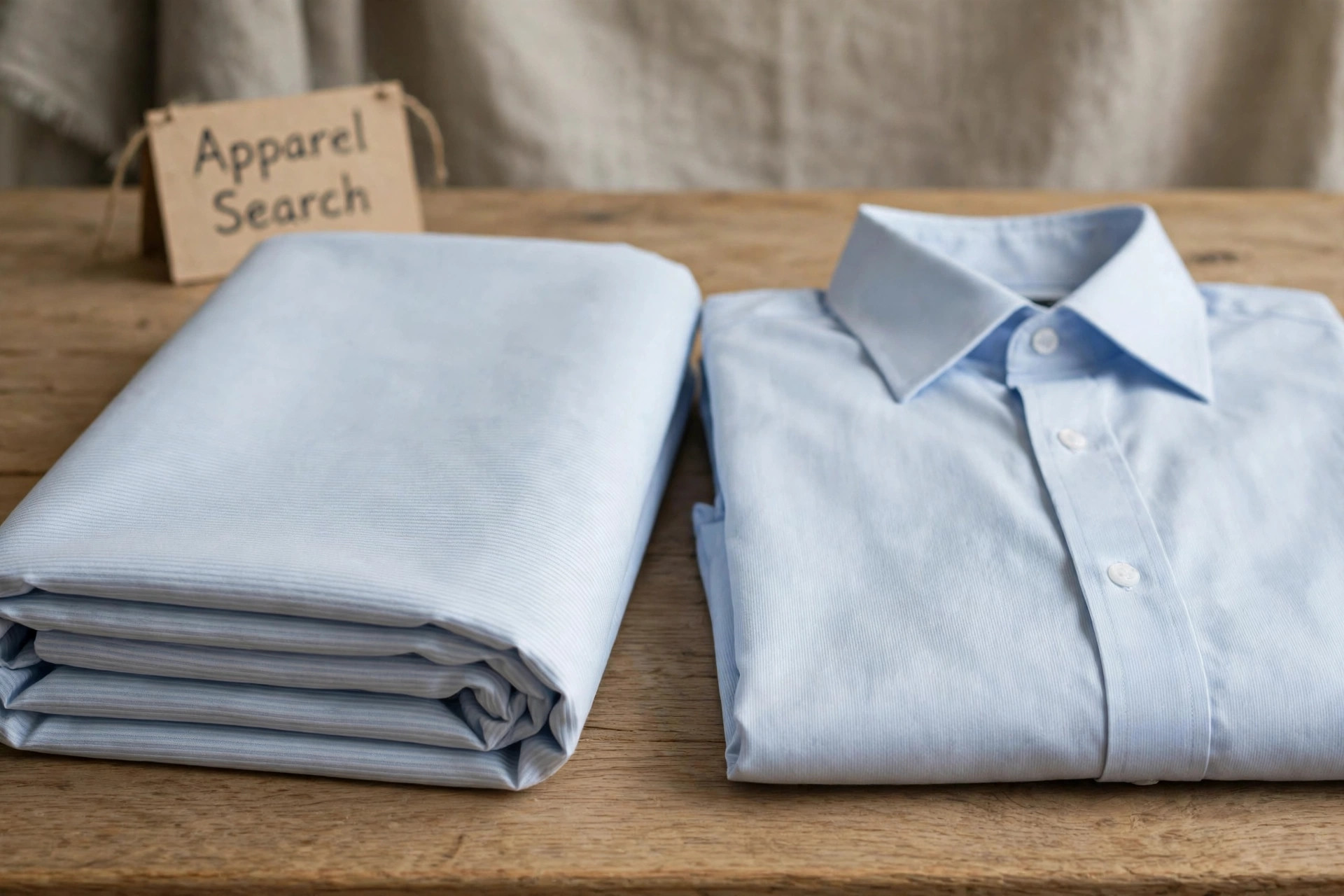
A Rib Built Into a Plain Weave
Poplin looks ribbed, but it is not woven in a rib weave. Its ridges come from a deliberate mismatch of yarn sizes inside an ordinary plain weave. The warp is set with many fine yarns to the inch, while the weft is inserted as a much coarser yarn. As each fine warp yarn bends over and under the thick filling, the filling tents the surface into a low, regular ridge, and multiplied across thousands of picks those ridges become the fine horizontal rib that runs from selvage to selvage and gives poplin its identity.
The arrangement divides the work elegantly. The coarse filling supplies body, weight and durability cheaply, while the fine, dense warp supplies the smooth, abrasion-resistant face that meets the world. That is how poplin can be heavy and durable, as the definition describes, yet still present a refined surface suitable for shirts and dresses. The rib is fine enough to read as texture rather than pattern, it catches light in soft horizontal lines, and it helps the cloth resist the glazed shininess a flat plain cotton can develop.
From Papal Avignon to the Everyday Shirt
The name remembers the fabric's first prestige. Papeline was made at Avignon in the 1400s, when the papal court resided there, and took its name from that papal residence; the first poplin was a silk fabric, a luxury ribbed weave for formal dress. As production spread and the fiber list widened to wool, cotton, silk, rayon and mixtures of them, poplin kept its structure and became a workhorse: cotton poplin shirts and shirt dresses, uniforms, rainwear shells in tightly woven versions, and durable casual trousers and jackets.
The comparison with percale shows how much yarn proportion alone can do. Both cloths are plain weaves, but percale balances fine warp against fine weft to make a flat sheeting, while poplin deliberately unbalances its yarns to raise a rib. One weave family produces two distinct fabrics, decided entirely by the sizes of the yarns fed into it.
Wearing and Caring for Poplin
Shirts made from this material are easy to iron and do not wrinkle easily, and the structure explains the reputation. The dense plain weave is firm and stable, creases show less against the fine rib texture, and the smooth warp face presses flat readily, so a poplin garment looks pressed longer through a day than a flat plain weave does. Poplin's closest relative is broadcloth: both are plain weaves with a fine crosswise rib from heavier filling yarns, and the terms overlap in the shirting trade. Poplin is the older and more general name, defined by the ribbed structure across fibers from silk to cotton, while broadcloth is used mainly for the smooth cotton shirting version.
Not to Be Confused With
Poplin is often confused with Oxford cloth, the other classic textured shirting cotton. Poplin's texture is a fine crosswise rib raised inside a plain weave — fine warp yarns bending over much coarser filling yarns — so its face stays comparatively smooth, with ridges running in fine lines from selvage to selvage. Oxford cloth is a basketweave, woven with yarns travelling in pairs or small groups, and its face breaks into a visible checkerboard of small blocks: more matte, more textured and a little more substantial in the hand. Fine lines mean poplin; tiny squares mean Oxford.
Common Questions
How does poplin get its ribbed surface?
The ribs are structural. Poplin is a plain weave built from fine warp yarns and noticeably coarser filling (weft) yarns: the fine warp packs closely over the thick weft, so each coarse filling yarn raises a fine ridge, and the ridges repeat across the fabric from selvage to selvage as a fine crosswise rib.
Is poplin the same as broadcloth?
They are very close relatives — both are plain weaves with a fine crosswise rib from heavier filling yarns — and the terms overlap in the shirting trade. Poplin is the older and more general name, defined by the ribbed structure across fibers from silk to cotton; broadcloth is used mainly for the smooth cotton shirting version.
Why are poplin shirts easy to care for?
The dense plain weave and the ribbed surface work together: the cloth is firm and stable, creases show less against the fine rib texture, and the smooth warp face presses flat without a fight, so shirts of this material are easy to iron and do not wrinkle easily.