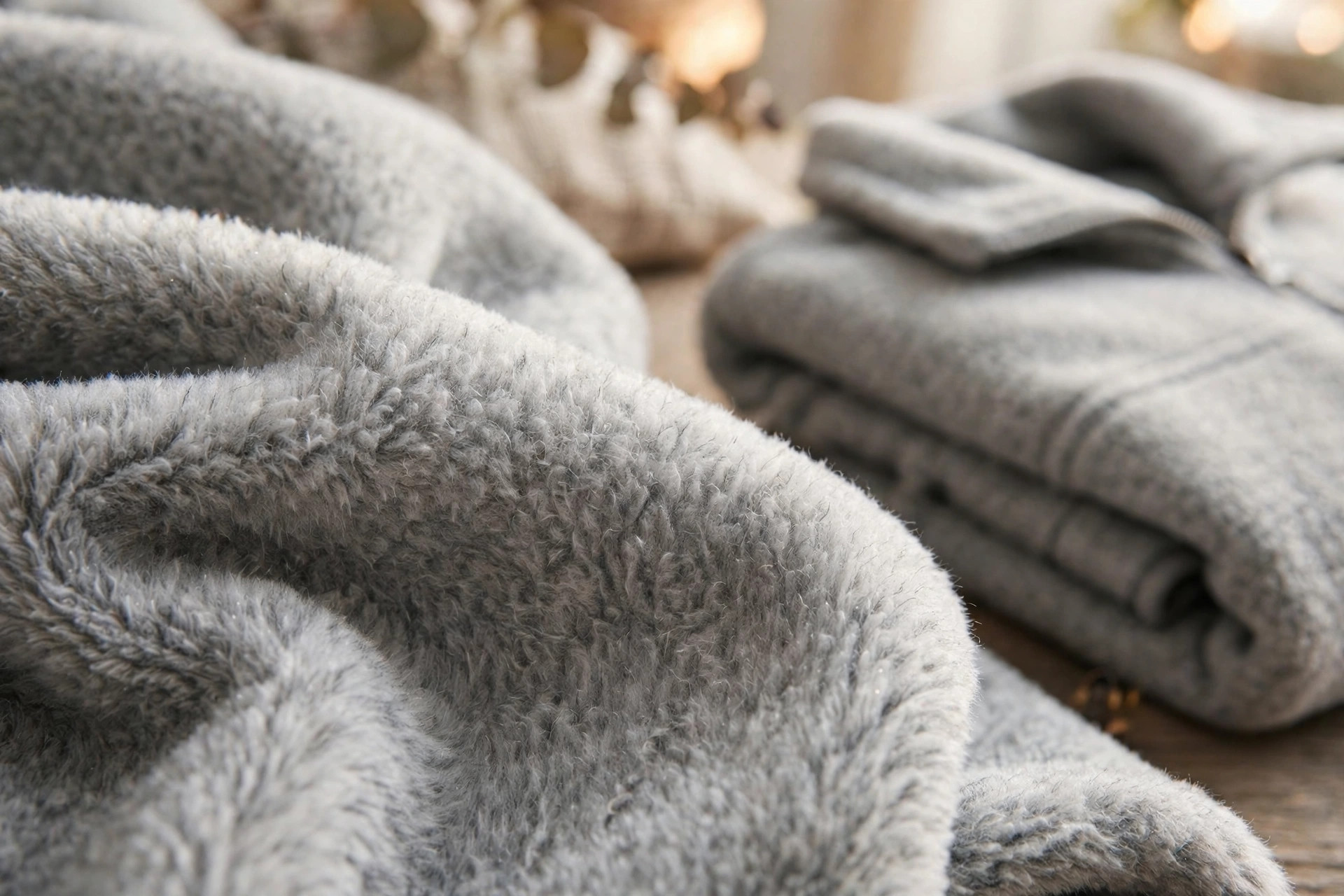
Fleece is a soft, brushed knit fabric — almost always polyester — with a napped surface on one or both sides that traps warm air. Invented as a lightweight alternative to wool, polar fleece keeps its insulating power even when damp and dries fast. It is the fabric of outdoor jackets, sweatshirts, blankets, and activewear mid-layers.
How Fleece Is Made
Fleece starts as a polyester knit, usually with a lofty pile face. The surface is brushed — mechanically raised into a soft nap — and then sheared to a uniform height. Anti-pill finishes keep the surface smooth through washing.
Weights run from microfleece (light base layers) through midweight to heavy expedition fleece. The thicker the nap, the more air it traps, and the warmer it wears.
Fleece in Modern Dress
Polar fleece was developed in the late 1970s and commercialized in the 1980s as a humane, washable alternative to wool for climbers. It escaped the mountain in the 1990s and never went back.
Today fleece spans technical shells, campus sweatshirts, and recycled-polyester versions that turn plastic bottles into jackets — one of the textile industry's best-known recycling stories.
Working With Fleece Today
Fleece does not fray, so seams need no finishing — a gift to home sewers. It is bulky, so trim seam allowances, use a longer stitch, and avoid ironing directly; heat melts polyester.
Wash in a garment bag to reduce microfiber shedding, skip fabric softener (it coats the fibers and cuts absorbency), and tumble dry low or line dry.
FAQs
- Is fleece waterproof?
- No — fleece is water-resistant at best and actually absorbs some moisture. Its trick is staying warm even when damp, which is why it layers under waterproof shells.
- Why does my fleece pill?
- Friction breaks surface fibers into balls. Anti-pill fleece resists it; washing inside out and avoiding the dryer also help.
- What is recycled fleece?
- Fleece knit from recycled PET — usually plastic bottles melted into polyester yarn. It performs like virgin fleece with a much smaller footprint.
- Fleece vs. wool — which is warmer?
- Wool insulates slightly better weight-for-weight and resists odor, but fleece is lighter, cheaper, dries faster, and is fully machine washable.
Glossary: see the full fashion glossary for more apparel industry terms.