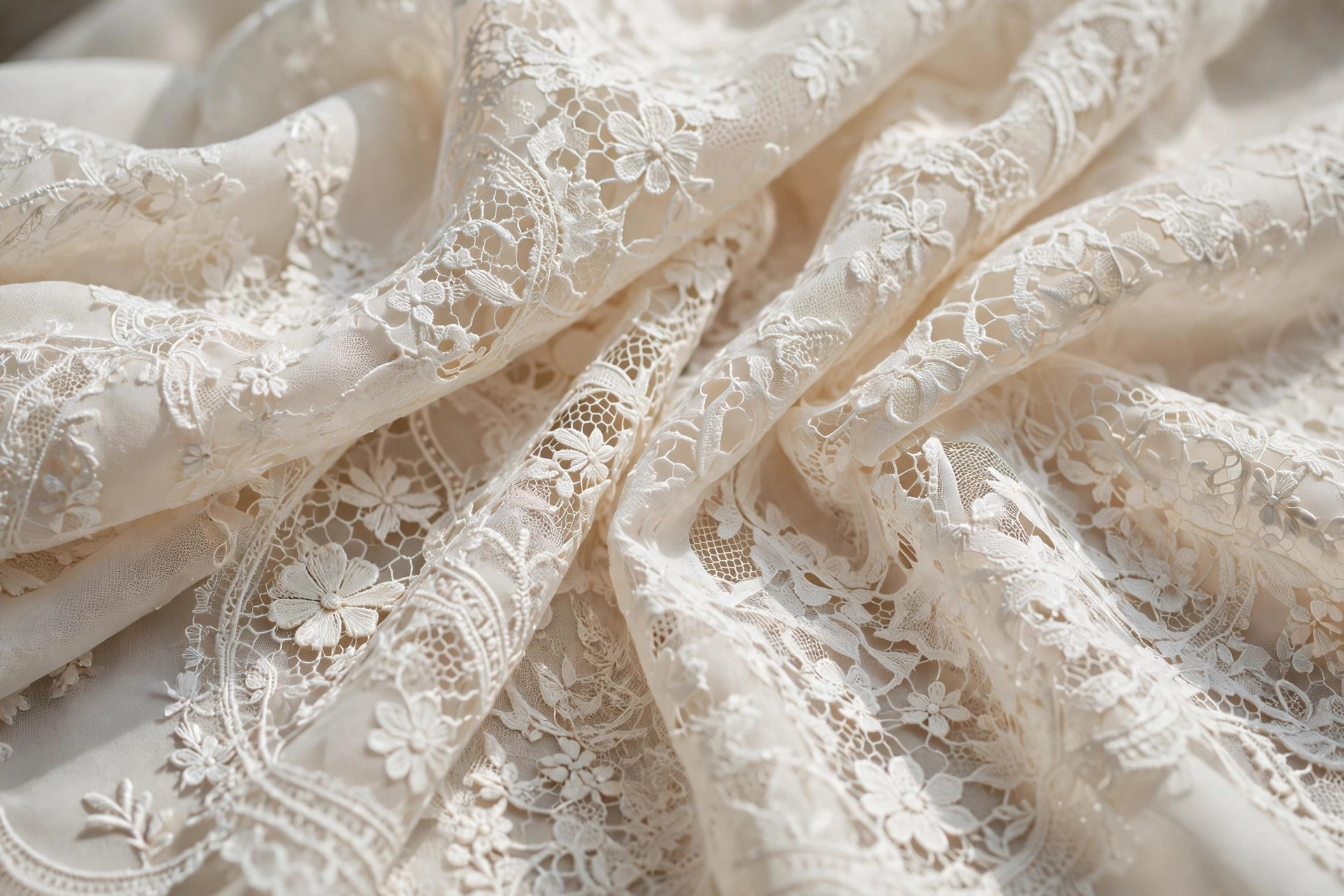
Lace is an openwork fabric made by looping, twisting, or knotting threads into decorative patterns of solid motifs and sheer grounds. Unlike woven cloth, lace is built thread by thread — by hand on bobbins or needles, or by machine. It is the signature textile of bridalwear, lingerie, and occasion dressing.
How Lace Is Made
Handmade lace falls into two families: bobbin lace, worked with dozens of thread-wound bobbins on a pillow, and needlelace, built with a single needle in buttonhole stitches. Both are slow, skilled work — a single flounce could take months.
Machine lace, especially Leavers lace from enormous 19th-century looms, imitates hand techniques at scale. Modern raschel knits produce stretch laces for lingerie and ready-to-wear.
Lace Through History
Lace-making centers in Venice, Flanders, and France made the textile a currency of status from the 1500s onward — ruffs, cuffs, and veils announced rank. Alençon and Chantilly became legendary names.
The 20th century put lace within every budget, from 1920s flapper overlays to Madonna-era lingerie-as-outerwear to the royal wedding veils watched by millions.
Working With Lace Today
Cut lace as a single layer, following motif lines rather than straight grain when the design demands it. Appliqué motifs by hand or zigzag onto base fabrics for couture effects.
Match thread to the lace, use a fine needle, and support seams — lace has little strength on its own. Most laces prefer hand washing or a mesh bag on delicate.
FAQs
- What is the difference between handmade and machine lace?
- Handmade lace shows slight irregularities and remarkable fineness; machine lace is perfectly regular and far cheaper. Leavers lace is the closest machine imitation of the real thing.
- How do you sew lace without it tearing?
- Back it with tulle or organza for strength, use French or bound seams, and never press hard — steam lightly from the wrong side.
- Can lace be washed?
- Hand wash in cool water with mild soap, or machine wash in a mesh bag on delicate. Never wring; roll in a towel and dry flat.
- What is Chantilly lace?
- A fine French bobbin lace on a delicate hexagonal ground with outlined floral motifs, traditionally black or white — a bridal classic.
Glossary: see the full fashion glossary for more apparel industry terms.