Poplin Fabric Directory
Poplin is the smooth shirting with the barely-there rib: a plain weave built from a fine, dense warp and a slightly heavier weft, so the surface shows fine horizontal cords under a clean, crisp face that irons beautifully and prints sharply. This directory explains how poplin is woven and where it works, and carries the eleven manufacturers this section lists under poplin fabric factories, in Pakistan, India, China, Bangladesh and Honduras. Learn more about poplin from our textile industry glossary.
Shop Poplin Fabric Now
Shop Poplin Fabric on Amazon Shop Poplin Fabric on eBayThe Amazon and eBay links on this page are affiliate links. If you make a purchase through them, Apparel Search may earn a commission.
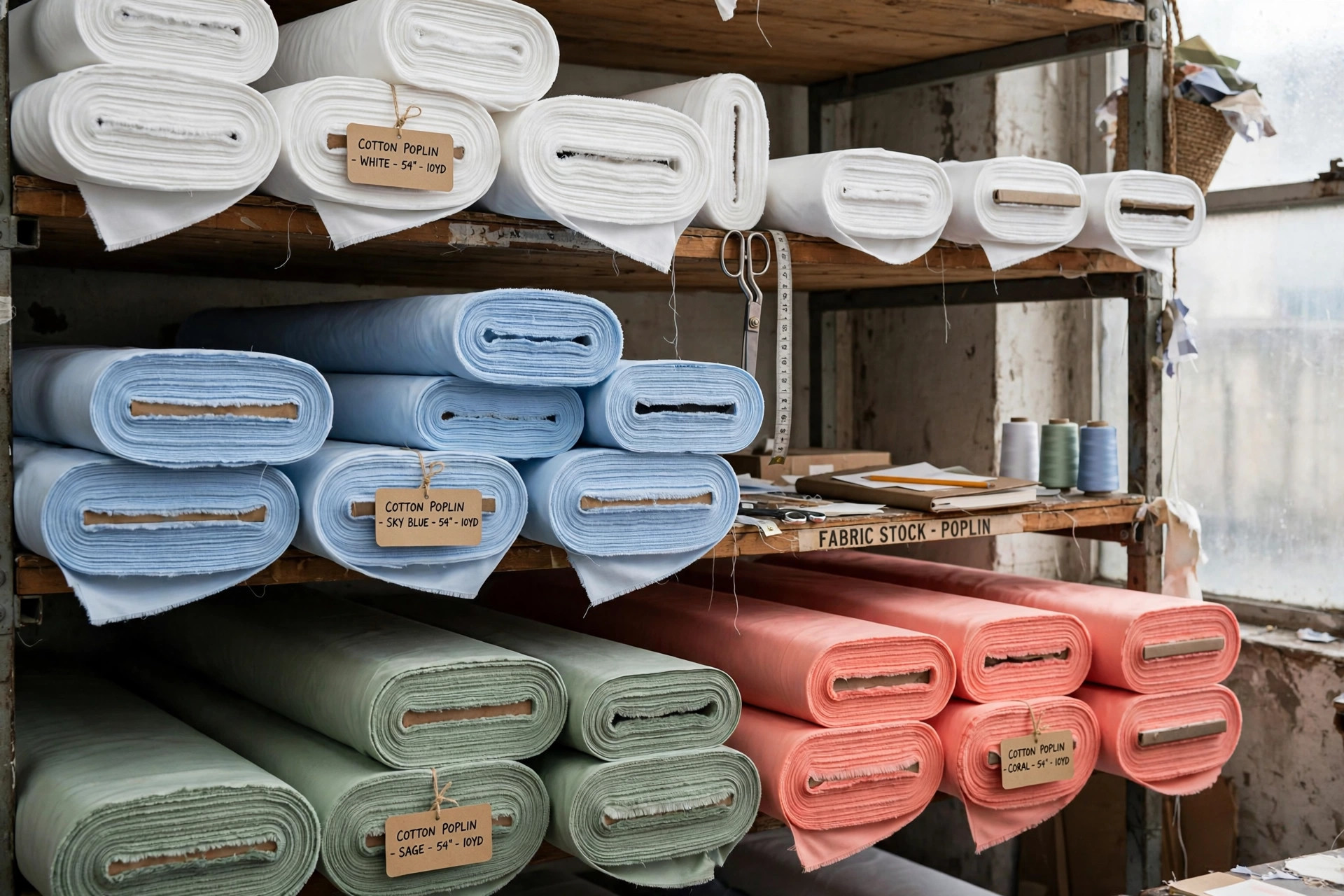
What Poplin Fabric Is
Poplin began as a luxury cloth, a silk warp with a worsted weft woven in Avignon and named, by tradition, for the Pope's residence there; the modern cloth keeps the structure and changes the fibres. Today's poplin is a plain weave in which many more fine warp threads than weft threads are packed into each inch, and the weft is a touch heavier, so the warp wraps slightly around it and the cloth shows a fine rib running across its width. Cotton is the standard fibre, with polyester-cotton poplin woven at volume for uniforms and easy-care shirting, and silk and wool poplins surviving at the dressy end. The result is a fabric denser and crisper than a lawn, smoother than its rib suggests, and strong for its weight.
That combination, a fine rib you feel more than see, a surface that takes print and embroidery crisply, and a body that holds a crease, is why poplin became a default rather than a specialty. It is not a soft, draping cloth: poplin stands a little away from the body, which suits structured shirts, dresses and uniforms, and it wrinkles in wear, honestly, the way crisp cottons do. Weights run from light shirting to a medium cloth used for trousers and light jackets, and the rib should be perfectly even, since any irregularity in the weft shows across a plain-dyed shirt front as a bar the mill cannot argue away.
Where Poplin Fabric Is Used
Shirting leads: men's and women's shirts and blouses, school and service uniforms, and medical and hospitality workwear in poly-cotton, where the cloth's crispness reads as cleanliness. Dresses and skirts take poplin for its structure, summer trousers and shorts for its cool, dry hand, and children's clothing for a fabric that washes and irons back to smart. Poplin is also a printing ground for fashion cottons, a lining and pocketing cloth, and in its coated and heavier forms a light outerwear and trench cloth, the role that made cotton poplin a raincoat staple. Stretch poplin with a touch of elastane has widened the shirting and trouser market the cloth already owned.
The eleven listings below are this directory's poplin manufacturers, each linked to its Fabric Mills by Name profile: Ahmed Fine Textile Mills Limited of Pakistan, Alok Textile Industries of India, Best Textiles International Co.,Ltd, Flytex Fabric Company Limited, Shanghai Best Linen Cotton Textile Factory and Shenghong Group Co Ltd of China, Beximco Group of Bangladesh, Shamala Textiles, Supreme Textile Industries (Pvt) Limited, Textiles Rio Lindo, S.A. de C.V. of Honduras, and Xiamen C and D Inc. of China. None has been removed: no listing was verified dead, and this directory's standing rule is to keep a listing when in doubt. Thank you for using the Apparel Search Fabric Mill Directory.
Specifying and Caring for Poplin
Specify poplin by fibre and blend, warp and weft counts where the mill publishes them, weight, and finish, and inspect plain-dyed samples across the full width under good light, because barré, the faint horizontal striping from weft variation, is poplin's characteristic fault and hides in folded swatches. Check the rib by touch: it should be fine, even and identical from selvedge to selvedge. For shirting, confirm shrinkage and easy-care finish claims together, since a resin finish that controls wrinkles also slightly reduces tear strength, a trade the uniform trade accepts and the fashion trade should make knowingly.
Care matches the cloth's crisp character. Cotton poplin washes warm, benefits from being removed slightly damp and ironed, when it gives one of the cleanest finishes in the cotton family, and softens gradually without losing its structure. Poly-cotton poplin needs less ironing and dries faster, at a small cost in the pure cotton hand. Wash poplin with similar colours, avoid over-drying, which sets wrinkles into the dense weave, and store shirts hung. A poplin garment that has gone limp usually needs nothing more exotic than a proper wash and a firm iron to return to itself.
Poplin Fabric Manufacturers Listed Here
Ahmed Fine Textile Mills Limited (Pakistan)
Listed in this directory. Follow the company name to its Fabric Mills by Name profile, which carries its full directory record.
Alok Textile Industries (India)
Listed in this directory. Follow the company name to its Fabric Mills by Name profile, which carries its full directory record.
Best Textiles International Co.,Ltd (China)
Listed in this directory. Follow the company name to its Fabric Mills by Name profile, which carries its full directory record.
Beximco Group (Bangladesh)
Listed in this directory. Follow the company name to its Fabric Mills by Name profile, which carries its full directory record.
Flytex Fabric Company Limited (China)
Listed in this directory. Follow the company name to its Fabric Mills by Name profile, which carries its full directory record.
Shamala Textiles
Listed in this directory. Follow the company name to its Fabric Mills by Name profile, which carries its full directory record.
Shanghai Best Linen Cotton Textile Factory (China)
Listed in this directory. Follow the company name to its Fabric Mills by Name profile, which carries its full directory record.
Shenghong Group Co Ltd (China)
Listed in this directory. Follow the company name to its Fabric Mills by Name profile, which carries its full directory record.
Supreme Textile Industries (Pvt) Limited
Listed in this directory. Follow the company name to its Fabric Mills by Name profile, which carries its full directory record.
Textiles Rio Lindo, S.A. de C.V. (Honduras)
Listed in this directory. Follow the company name to its Fabric Mills by Name profile, which carries its full directory record.
Xiamen C and D Inc. (China)
Listed in this directory. Follow the company name to its Fabric Mills by Name profile, which carries its full directory record.
Common Questions
What is poplin fabric?
A plain-weave fabric with many more fine warp threads than weft threads per inch and a slightly heavier weft, which gives a fine horizontal rib under a smooth, crisp surface. Modern poplin is usually cotton or polyester-cotton, strong for its weight, and a standard cloth for shirts, dresses and uniforms.
Is poplin good for shirts?
Yes, it is one of the classic shirting cloths. Poplin's dense plain weave is smooth, prints and embroiders crisply, holds a crease, and stands slightly away from the body for a structured look. It wrinkles in wear like other crisp cottons; poly-cotton and easy-care finishes reduce that for uniform and travel shirts.
Which manufacturers does this directory list for poplin fabric?
Eleven manufacturers, each linked to its Fabric Mills by Name profile: Ahmed Fine, Alok, Best Textiles International, Beximco Group, Flytex, Shamala Textiles, Shanghai Best Linen Cotton, Shenghong Group, Supreme Textile Industries, Textiles Rio Lindo and Xiamen C and D.
More to Explore - The Full Fabric Directory A-Z
- Percale Fabric
- Pile Fabric
- Pique Fabric
- Pointelle Fabric
- Polar Fleece Fabric
- Polyester Fabric Mills
- Printed Fabric
- Ottoman Fabric Mills
- Oxford Fabric Mills
- Nylon Fabric Mills
- Quilted Fabric
- Fabric Mills - Fabric Section Hub
- Poplin Fabric Search
- Textile Machinery
- Embroidery Directory
- Printing Directory
- Ahmed Fine Textile Mills Limited
- Alok Textile Industries
- Best Textiles International Co.,Ltd
- Beximco Group
- Flytex Fabric Company Limited
- Shamala Textiles
- Shanghai Best Linen Cotton Textile Factory
- Shenghong Group Co Ltd
- Supreme Textile Industries (Pvt) Limited
- Textiles R�o Lindo, S.A. de C..V.
- Xiamen C and D Inc.
- poplin
- Clothing Industry Factories
- Yarn Factories
- Fabric Retail
- Fabric Wholesalers
- Fibers Directory
- Fabric Definitions
- Fashion Industry News
- Clothing Industry Employment
- Conversion Charts
- Antibacterial Fabric
- Bamboo
- Basalt
- Boucle
- Breathable
- Broadcloth
- Brocade
- Burlettes
- Canvas
- Carbon
- Chambray
- Chenille
- Chiffon
- Circular
- Corduroy
- Cotton
- Crepe
- Crochet
- Damask
- Denim
- Dobby
- Double Knit
- Drill
- Duck
- Dyed Fabric
- Embroidered
- Fiberglass
- Fil-a-Fils
- Filter Cloth
- Flame Retardant
- Fleece
- French Terry
- Gabardine
- Gauze
- Georgettes
- Ginghams
- Greige Fabric
- Herringbone
- Horse Hair
- Interlining
- Interlock
- Jacquard
- Jersey Fabric
- Lace
- Lacoste
- Linen
- Lining
- Long Fiber Reinforced Thermalplastics
- Metallic
- Mesh
- Muslin
- Narrow
- Net
- Non Woven Fabric
- Novelty
- Raschel
- Reflective
- Rib
- Sateen
- Satin
- Seersucker
- Silk Fabric
- Single Jersey
- Smart Fabrics
- Stretch
- Suede
- Taffeta
- Tassars
- Terry
- Thermal
- Tricot
- Tulle
- Tweed
- Twill
- Velcro
- Velour
- Velvet
- Viole
- Vynil
- Waffle
- Waterproof
- Wool
- Yarn Dyed
Looking for Fabric Mills and Suppliers?
Return to the Fabric Directory hub for the full fabric section, or browse the Fabric Manufacturers Directory page for the wider mill trade.