Chenille Fabric Mills
Chenille is the fabric of the caterpillar yarn - chenille is French for caterpillar, and the yarn's soft pile really does look like one. This directory lists the three chenille mills Apparel Search carries and explains how the yarn, and the fabric, are made.
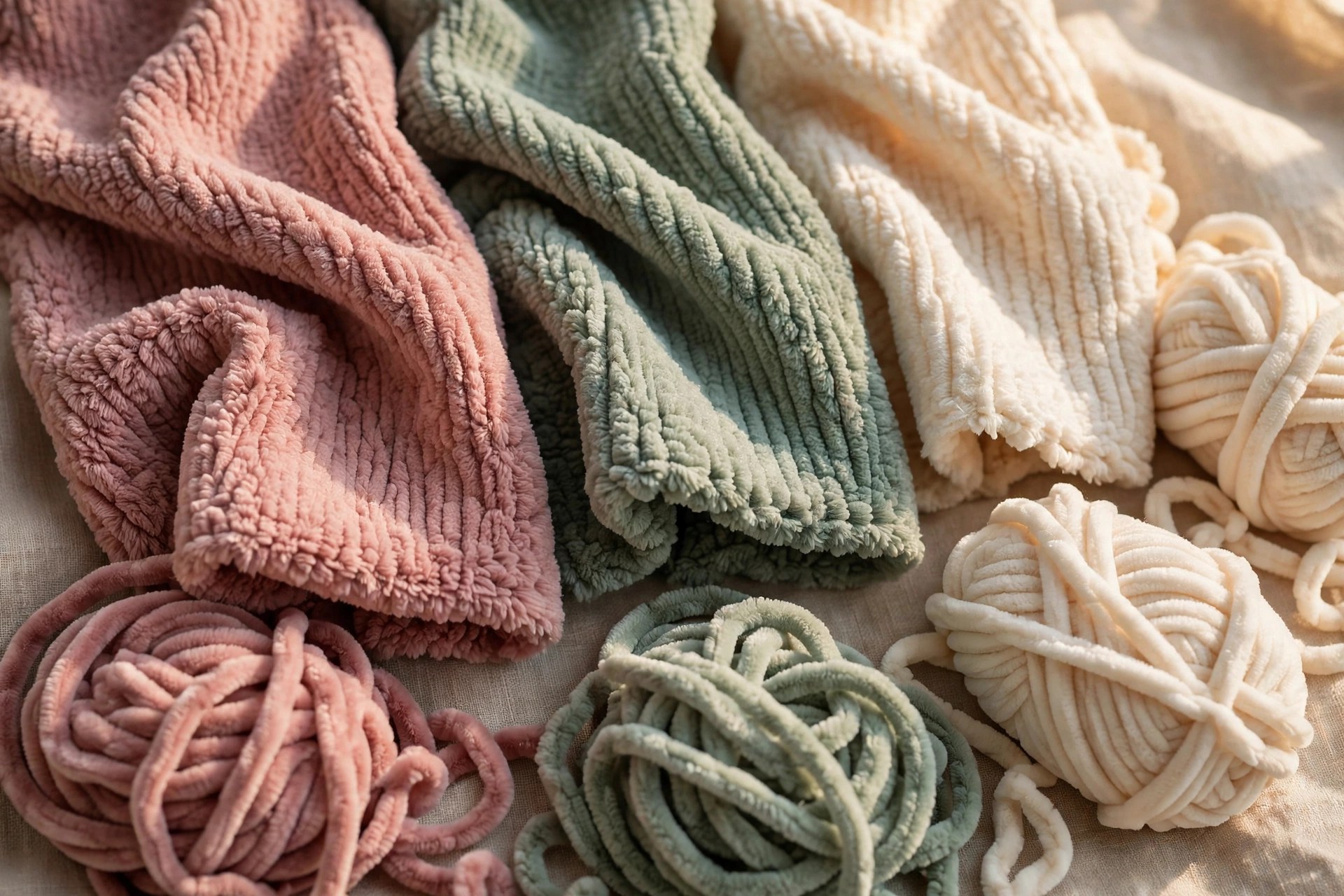
What Chenille Is
Chenille is defined by its yarn. A chenille yarn is built around a core: short lengths of pile fiber are trapped perpendicular between two twisted core yarns, so the finished yarn is a soft, fuzzy cord with pile standing out on every side - a caterpillar, as its French name says. Weave or knit that yarn into cloth and every thread carries its own pile with it, producing a fabric that is plush through its whole surface rather than brushed up afterwards. The effect is depth and softness at once: chenille catches light unevenly like velvet, feels warm and dense in the hand, and drapes with a weight plain yarns of the same fiber cannot match.
The yarn can be made from cotton, rayon, acrylic, polyester or silk, and the fiber decides the fabric's character more than the construction does. Cotton and rayon chenilles are the classic upholstery and throw fabrics, soft and matte; acrylic and polyester chenilles add washability and abrasion resistance for family furniture; fine silk and viscose chenilles appear in scarves and evening garments. The craft side of the fabric has its own teaching page in this directory's original links - Weaving Chenille Scarves - a reminder that chenille's softness made it a handweaver's favourite long before it filled furniture showrooms. Machine-made chenille yarn dates to the late eighteenth century, and tufted chenille - the yarn punched through a backing - built the famous bedspread trade of the American South.
Buying and Caring for Chenille
Two honest warnings belong in any chenille specification. First, the pile can shed and, in loosely built yarns, slip - the trade calls it worming when loops of pile yarn work loose on the surface - so abrasion and pile-retention testing matter more for chenille than for flat fabrics. Second, the pile crushes: chenille upholstery marks where it is sat on and brushed one way, which most owners read as character and shading, but a buyer expecting a uniform flat surface should choose something else. Weight, backing and fiber content are the specification trio; a latex or woven backing stabilises upholstery chenille considerably.
Care follows the fiber: sturdy synthetic chenilles tolerate gentle washing, fine rayon and silk chenilles want dry cleaning, and all chenilles prefer to be stored flat rather than hung, since the heavy pile yarn can stretch its own cloth. The mills listed below include a knitting factory - Lu Her of Taiwan appears in this directory under several pile and loop fabrics - because chenille yarn knits as happily as it weaves. Around this page, the Fabric Directory hub covers the pile family, and the trade runs through the Machinery directory, Clothing Industry Factories, Yarn Factories, Fabric Retail and Fabric Wholesalers, with the Fibers Directory and Fabric Definitions alongside.
Using This Directory
The listings below are the complete set for this category as Apparel Search carries it: three mills - Kuanging Industrial, Lu Her Knitting Factory of Taiwan and Shaoxing County Tiangong Knitting and Art of China - each linked to its own profile in the Fabric Mills by Name section. No listing has been added or removed. When you contact a mill, ask whether its chenille is woven, knitted or tufted, what the pile fiber and backing are, and what pile-retention and abrasion results it can show; those three answers separate the chenilles that furnish a decade from the ones that shed in a season. Industry readers also use Fashion Industry News, Clothing Industry Employment and Conversion Charts. Thank you for using the Apparel Search Fabric Mill Directory.
Chenille Fabric Mills Listed in This Directory
Kuanging Industrial Co. Ltd.
Company listed in the Apparel Search fabric mill directory under its own profile in the Fabric Mills by Name section. Open the linked profile for the company's directory record and contact details.
Lu Her Knitting Factory (Taiwan)
Company listed in the Apparel Search fabric mill directory under its own profile in the Fabric Mills by Name section. Open the linked profile for the company's directory record and contact details.
Shaoxing County Tiangong Knitting and Art Co., Ltd (China)
Company listed in the Apparel Search fabric mill directory under its own profile in the Fabric Mills by Name section. Open the linked profile for the company's directory record and contact details.
Common Questions
Why is chenille yarn called a caterpillar yarn?
Chenille is the French word for caterpillar. The yarn is built by trapping short pile fibers between two twisted core yarns so the pile stands out on all sides, giving the yarn a soft, fuzzy, caterpillar-like body - and the fabric woven or knitted from it a plush surface throughout.
What is chenille fabric used for?
Upholstery and throws are the biggest uses, followed by bedspreads (traditionally tufted chenille), scarves, sweaters and soft garments. The fiber decides the job: cotton and rayon for classic soft furnishings, acrylic and polyester where washability and abrasion resistance matter.
Which mills are listed for chenille fabric?
Three: Kuanging Industrial Co. Ltd., Lu Her Knitting Factory (Taiwan) and Shaoxing County Tiangong Knitting and Art Co., Ltd (China), each linked to its profile in the Fabric Mills by Name section.
More to Explore - Fabric Directories and Trade Links
- Canvas Fabric Directory
- Carbon Fabric
- Chambray Fabric Directory
- Chenille Fabric Mills
- Chiffon Fabric Directory
- Circular Knit Fabric Mills
- Corduroy Fabric Mills
- Cotton Fabric Mills
- Crepe Fabric Directory
- Crochet Fabric Mills
- Bamboo Fabric Mill Directory
- Basalt Fabric
- Boucle Fabric Mills
- Breathable Knit Fabric
- Broadcloth Fabric Directory
- Brocade Fabric Mills
- Burlettes Fabric Mills
- About Fabrics
- About Knitted Fabrics
- About Woven Fabrics
- Antibacterial Fabric Mills
- Fabric Mills - Fabric Section Hub
- Machinery
- Weaving Chenille Scarves
- Kuanging Industrial Co. Ltd.
- Lu Her Knitting Factory
- Shaoxing County Tiangong Knitting and Art Co., Ltd
- Clothing Industry Factories
- Yarn Factories
- Fabric Retail
- Fabric Wholesalers
- Fibers Directory
- Fabric Definitions
- Fashion Industry News
- Clothing Industry Employment
- Conversion Charts
- Damask
- Denim
- Dobby
- Double Knit
- Drill
- Duck
- Dyed Fabric
- Embroidered
- Fiberglass
- Fil-a-Fils
- Filter Cloth
- Flame Retardant
- Fleece
- French Terry
- Gabardine
- Gauze
- Georgettes
- Ginghams
- Greige Fabric
- Herringbone
- Horse Hair
- Interlining
- Interlock
- Jacquard
- Jersey Fabric
- Lace
- Lacoste
- Linen
- Lining
- Long Fiber Reinforced Thermalplastics
- Metallic
- Mesh
- Muslin
- Narrow
- Net
- Non Woven Fabric
- Novelty
- Nylon
- Ottoman
- Oxford
- Percale
- Pile
- Pique
- Pointelle
- Polar Fleece
- Polyester
- Poplin
- Printed
- Quilted
- Raschel
- Reflective
- Rib
- Sateen
- Satin
- Seersucker
- Silk Fabric
- Single Jersey
- Smart Fabrics
- Stretch
- Suede
- Taffeta
- Tassars
- Terry
- Thermal
- Tricot
- Tulle
- Tweed
- Twill
- Velcro
- Velour
- Velvet
- Viole
- Vynil
- Waffle
- Waterproof
- Wool
- Yarn Dyed
- Textiles
- Fabric
Looking for Fabric Mills and Suppliers?
Return to the Fabric Directory hub for the full fabric section, or browse the Fabric Manufacturers Directory page for the wider mill trade.